
To
lead a happy life, what do we need? Wealth? Acceptance? Friendship? Love? Or
sage advice? Methinks it is a little bit of all-of-the-above. In a rapidly
changing world, we have witnessed ourselves as well as others as being unhappy
and dissatisfied. Our life has become a challenge that needs to be met head-on;
a progression from being sad to satisfied, from being nobody to somebody. But
this path is not so easy, fraught as it is with many obstacles. And as assistance,
we have all come across books that act as guides to happiness and success.
One such book is John M. Alfonso’s Jinnechi Vatt (2009). A Carmelite monk
hailing from Canacona, Alfonso has a post-graduate diploma in Counselor
Training programme and as such has given lectures on life skills and good
living. He is a regular contributor to Konknni mastheads and the present book
is the compilation of his essays that were first published in Gulab and The Goan Review. Sukhi Jinn was the author’s first book.

John M. Alfonso writes about life
skills because he is of the opinion that though injustice is rampant in the
society, we – or the ones who perpetrate these injustices – are part of the
society, and by focusing on the root causes and fundamentals of our behaviour,
we would be able to take steps to resolve the problems facing our society.
John M. Alfonso’s text, as mentioned
earlier, primarily deals with the leading of a fulfilled life and finding
happiness. Being the subject of the author’s specialization and training, he
draws on the already established literature in this field as the brief
bibliography at the end of the book demonstrates. This goes to the credit of
the author as the works are in English and John M. Alfonso has taken pains to
adapt the terminology and concepts of such specialized literature into Konknni
– a task by no means simple! It must also be said that the author advocates the
greater use of counseling and therapy for resolving the issues that people
might face. Having said so, one wishes that John M. Alfonso had introduced such
works and the authors in an elaborate manner, considering the fact that many of
his readers would not be familiar with such literature and their authors. A
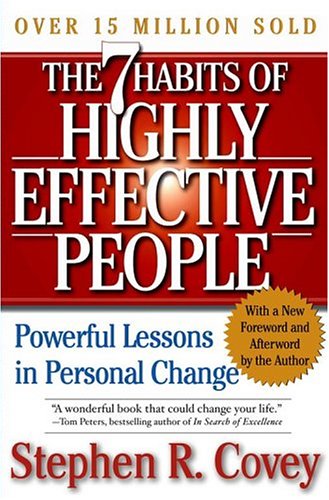
case in point would be Stephen R. Covey, the internationally renowned author
and motivational speaker whose books have sold millions of copies.
In introducing the subject of the
essays, John M. Alfonso generally starts by using a statement of a person and
then proceeds to expound his thoughts and reflections and at the same time
providing some useful advice. This literary device helps him to get straight to
the point, a necessity for writers in newsmagazines who have to be economical
with words. But as I have pointed out in some of my previous reviews dealing with columnists who have compiled their works in a book, the topics could have been introduced in a much more leisurely manner. Konknni, as Dr. (Fr.) Pratap
Naik points out, is our kallzachi bhas [language
of our hearts] and as such I personally prefer some generous doses of florid
prose!
What I gather from the essays is
that the aim of the arguments is to ultimately provide the keys to happiness to
the reader. Very well! At the expense of sounding like a whiny skeptic, I would
begin by questioning the actual concept of ‘happiness’. What is happiness? John M. Alfonso does not
dwell on what is his idea of
happiness. I would also maintain that this is not a simple concept and that
‘happiness’ could be very confounding. I recall a poem by E. A. Robinson called
Richard Cory, where we encounter a similar
question as posed above and whether true happiness always evades human beings.
The protagonist of the poem had everything (or at least it seems to the
observer): respect, wealth and acceptance. Yet, the poem ends tragically with
Richard Cory committing suicide. Here is the poem:
Whenever Richard Cory went down town,
We people on the pavement looked at him:
He was a gentleman from sole to crown,
Clean favored, and imperially slim.
And he was always quietly arrayed,
And he was always human when he talked;
But still he fluttered pulses when he said,
‘Good-morning,’ and he glittered when he walked.
And he was rich – yes, richer than a king –
And admirably schooled in every grace:
In fine, we thought that he was everything
To make us wish that we were in his place.
So on we worked, and waited for the light,
And went without the meat, and cursed the bread;
And Richard Cory, one calm summer night,
Went home and put a bullet through his head

In
suggesting a way to a fulfilled and enriched life, John M. Alfonso sees the
individual as the driving force in the scheme of things and therefore s/he is
the one who has to take steps to reform his/her life. Alternatively, I would
like to stress on the role of the structures and processes of society that can
also work in a counter-productive manner, restricting an individual to access a
happy and contented life. I am highly doubtful whether such abstract concepts
like happiness and satisfaction (though necessary) can be cast in a polarity of
borem (good) and vaitt (or bad). Doesn’t it oversimplify things? Here is a quote
which more-or-less, illustrates my point: Amchi jinn moladik. Tacho samball koso korop
hem amcher dhorlolem asa. Tornatteponn, vo duddu asa mhunn somazant sobona
toslem jivit jiyevpache yotn zaunche nhoi. Fattlea jivitant jem kitem ghoddlem
tache bolli zavop amkam sobona. Moslotdaracho adhar gheun sodanch togta tosli
khuxalkay zoddchi. Kitem mhonntat tumi? [Our life is valuable. How we
nurture it depends, solely, on ourselves. Just because one possesses youth or
wealth doesn’t mean that one can act as s/he pleases in society. Our past
should not hold us down. Through counseling we can try to obtain everlasting
happiness. What do you think?]
My attempt to provide an alternate
view to the major arguments and themes of John M. Alfonso is not to dispute his
work; rather I want it to be an exercise in dialectics and heuristics, since
the subject is so subjective! To end, I maintain that the work of John M. Alfonso
is an insightful one, leading one to think further – and deeper.
Jinnechi
Vatt by John M. Alfonso (Margao: Carmelite Monastery),
2009; pp. 136, Rs. 60/-
(A version of this article appeared on Gomantak Times, dt: September 5, 2012).


