by Albertina Almeida, Amita Kanekar, Dale Luis Menezes, Jason Keith Fernandes, and R. Benedito Ferrão
Can a Goan Catholic be
Hindu? Can Catholics professing a tradition of Catholicism that is over five
centuries old be considered Hindu in culture? This is what
the Chief Minister of Goa, Manohar Parrikar, sought to suggest in a recent
interview with Sambuddha Mitra Mustafi of the New
York Times India blog India Ink, where
he said,
I
am a perfect Hindu, but that is my personal faith, it has nothing to do with
government. India is a Hindu nation in the cultural sense. A Catholic in Goa is
also Hindu culturally, because his practices don’t match with Catholics in
Brazil [a former Portuguese outpost like Goa]; except in the religious aspect,
a Goan Catholic’s way of thinking and practice matches a Hindu’s. So Hindu for
me is not a religious term, it is cultural. I am not the Hindu nationalist as
understood by some TV media – not one who will take out a sword and kill a
Muslim. According to me that is not Hindu behavior at all. Hindus don’t attack
anyone, they only do so for self-defense – that is our history. But in the
right sense of the term, I am a Hindu nationalist.
Parrikar’s bizarre
statement was in response to the question of whether he saw himself as a Hindu
nationalist.Of course, a quick and easy response to his statement would be to summarily
dismiss it as expected rhetoric flowing from his saffron affiliations; yet,
questions persist, not least because of the peculiar and oft-misrepresented
Goan scenario.
More than meets the eye
Goan Catholics today
find themselves in a strange situation. On the one hand they are summoned to
maintain a distinct Goan identity which rests in large part on the Portuguese
past of the territory. This distinct identity is called upon not merely by an
officially approved tourism policy and practice, but also by local elites who
use the claim of a distinct identity to cyclically generate local mass
movements that help them maintain their dominance. On the other hand, as Victor
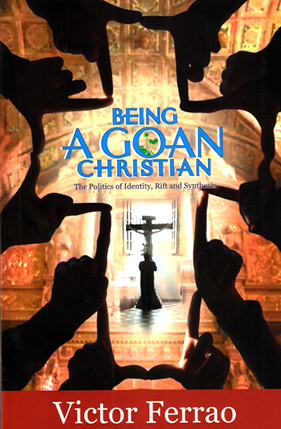
Ferrão argues in his recent book Being a Goan Christian: The Politics of Identity, Rift and Synthesis (2011),there is a simultaneous suggestion
that this Catholic ‘cultural’ element is not compatible with a Goan and Indian
identity; this is precisely what Parrikar is proposing here. What he further does
is to paint the community as a monolithic entity, despite a situation where
large segments of the Catholics are being delegitimized by dominant-caste members
of their own faith who participate in a Hindu nationalist reading of Goan
history. Parrikar’s statement also distorts history through a saffron lens,
contributing to the further marginalization of not only Goan Catholics, but
also Goan Muslims, Dalits, and Adivasis.
Finally,when Parrikar
says that his Hindu faith has nothing to do with governance, he is cleverly skirting
the intimate connection that religion and caste ideologies, including the
right-wing one he professes, have with state apparatuses in post-1947 India.In
the political mobilizations of the dominant as well as the subaltern sections
in India, religion has emerged as a potent and important factor. Our contention,
not necessarily a new one, is this: that religion in post-1947 India is not a personal affair; it is deeply
public and profoundly political, and has now become even more overtly so with
the rise of the BJP.
Goa’s encounter with Christianity
This background of
political machinations and mobilizations makes it even more necessary to unpack
Parrikar’s statement against the actual historical context in which Goa and
Goans encountered Christianity.
As has been pointed out
by the historian R. E. Frykenberg in his book Christianity in India: From the Beginning to the Present (2008),
despite appearances to the contrary, the transmission of Christianity from the
proselytizer to the converted always involved shifts in practice. These shifts
resulted in new and unique forms of Catholicism or Christianity as the
converted took in the message of the faith and made it their own. Thus, when
Parrikar views a Goan Catholic as different from “Catholics in Brazil”, he is
right only to the extent that there would be some ethno-local differences,
because the local culture of Goan Catholics is Goan culture in its multiple
variations, including, but not limited to, Hindu culture. Further, just as there
are many shades in Goan identity, as also with the universality of Catholicism,
there are many identities of the Brazilian Catholic. So which Brazilian Catholic
is Parrikar referring to? Or is this also part of the fascist project - to
understand every community or region everywhere in terms of its majority or
dominant group?
Pre-Portuguese Goa was not a Hindu Space
When Parrikar suggests
that the Catholic in Goa is culturally a Hindu, and that Hindus and Catholics
in Goa match in their practices and ways of thinking, he lends weight to a
particular assumption about pre-Portuguese Goa: that it was a Hindu space. The
truth, however, is that the territories that became Goa following Portuguese
conquest in 1510were, if anything, Islamicate spaces. This means that,although
the majority of the people were not Muslim, they were culturally influenced by
the Persian, Arabic,and Turkic traditions of dominant Muslim groups. As Phillip
Wagoner and other scholars of the Deccan have pointed out, the notion of
kingship in the early modern Deccan was firmly fixed within Perso-Arabic, and
Turko-Afghan traditions that had taken root among the elites of the peninsula. Even
the ostensibly Hindu kings of Vijayanagara adopted a vast variety of Islamicate traditions,
in addition to styling themselves as “Sultans among Hindu kings”. The control
of pre-Portuguese Goa shuffled between the Delhi Sultanate, the Deccan
Sultanates, and the Vijayanagar kingdom for close to two centuries before the
arrival of the Portuguese. In turn, this laid the ground for an Islamicate
culture in the territories. So, when Parrikar proposes that Goan Catholics are
culturally Hindu, he effectively obliterates the vibrant erstwhile and
contemporary manifestations of the Islamicate in Goa by suggesting that the
state’s society is one of Hindus and Catholics (with putative Hindu pasts) alone.
Goa’s pre-Portuguese history
prior to the Islamicate period similarly reflects a complex diversity. There
were communities who followed indigenous belief systems which cannot be
considered Hindu, and ruling classes that were only recently Hindu. There is
strong evidence of Jain and Buddhist communities in the Goan region in the
first millennium of the Common Era, communities who were wealthy enough and
politically dominant enough to leave behind fairly substantial architectural
remains. While there are those who would lump both Buddhist and Jain ideas into
Hinduism today, the fact is that these faiths arose and developed in opposition
to brahmanical ideas. Parrikar’s statement thus erases the complex cultural life
of pre-Portuguese Goa, collapsing it all into ‘Hindu Culture’ even as Hindu
“practices” become the benchmark of evaluating the Goanness and Indianness of a
Goan Catholic.
Parrikar’s logic implies that Goan Catholics are lesser
citizens
Parrikar’s assertion
that Catholics are culturally Hindus has another insidious side to it, for it draws
from the old accusation of Hindu nationalist historians that Christianity and
Islam are foreign to India. While Parrikar may not have actually said that
Christianity is foreign, his statement makes it foreign. The truth though
is that just as the Christians of the subcontinent are not foreign,their
practices embody the culture of the land too.To label such culture as Hindu is
not just erroneous, but also pernicious. As a corollary question to Parrikar’s
logic, are Hindus living in Christian-dominated countries ‘culturally
Christians’?
As Victor Ferrão demonstrates
in his book, assuming and asserting a Hindu or brahmanical character to
pre-colonial Goa has another ramification.It brings into play the purity and
pollution principle that structures caste life within the political realm. The
colonial period, and the colonial introduction of Christianity, is seen as
polluting the former purity of the Hindu body politic. Consequently, Catholics
are placed outside the purview of legitimate citizenship in Goa and India,
because the nation’s purity is predicated upon assumptions of its essential
brahmanical Hinduness. In Ferrão’s words: “Being polluted by the colonial era,
[the Catholics] are thought to have lost their ability to take Goa to the path
of authentic progress”. The Catholics may remain in Goa, but every time they
make a demand that challenges the assumptions of Hindu nationalism, they are
charged as being anti-nationals. This can be seen in the response to the
demands for the recognition of the Konkani language in the Roman script, as
also the demand for state grants for primary education in English. Thus, even
though Parrikar’s statement on the cultural essence of Goan Catholics may seem
to embrace, it is in fact a reminder of the second class location of that
community within the Goan polity.
Reinforcing clichés of the nationalist historiography of
India
The assertion that the
term ‘Hindu’ “is cultural” rather than “religious” privileges only a certain
rigid notion of Hindu culture and way of life, while relegating anything that
is not Hindu to a second class status; this of course also begs the questions
as to which religion is not a prescription for a way of life? It also relegates
everybody in India who is not of the ‘Semitic’ faiths into the category of
‘Hindu’ by default.Such co-option has been challenged in Jharkhand where a
struggle is on to give official status to the local Sarna religion. Dr. Ram
Dayal Munda, the former Vice-Chancellor of Ranchi University, has written in
detail about how the Sarna faith differs in cosmology, myths, deities, rituals,
priesthood, and other details, from Hinduism. Yet for many like Parrikar,
non-Christian and non-Muslim Adivasis are ‘automatically’ Hindu. Kancha Ilaiah
also discusses similar processes in his path-breaking book Why I am not a Hindu (1996). Ilaiah points out that for many
children of subaltern communities even in the 20th century, the
introduction to Hindu deities, epics, rituals, and other traditions happened
only when they joined school, and the novelty was on par with learning Christian
faith traditions.
Parrikar’s assertion
that Hindus do not attack except in self-defence, i.e. they are a peaceful and
tolerant people, is another myth that has been successfully contested by
historians as well as scholars of contemporary caste society. That the Hindu nationalists
play the card of perpetual victimization, as Parrikar does, when in reality it
is the Dalits, Adivasis and many minority groups who are violently oppressed
and abused by the caste nature of South Asian society, a society whose ethos,
traditions and survival are now championed by Hindutva politics, is an old
irony. As for peacefulness, Parrikar may never take up a sword to kill, but he
is already neck-deep in a discourse that is violently casteist, racist, and – not
to forget – Islamophobic. Furthermore, he does not have to personally pick up a
sword because the Hindu right-wing has set up several proxy organizations that do
the job,while political leaders like him either plead helplessness or
remonstrate that such violence is not ‘true’ Hinduism.
A ‘Universal’ Church divided in itself
What Parrikar and
others who think like him should acknowledge is that many of the converts to
Christianity were from the subaltern communities. But it is also necessary to
acknowledge that the Church hierarchy in Goa is not only dominated by
upper-caste Catholics, but displays a tendency to discriminate against the
subalterns in a manner similar to that of Hindu caste society. There are many
examples of this, as when the demand for the Roman script of the Konkani language
to be given official recognition in the state, which was made by
subaltern-caste and -class Catholics, was opposed by the sections of the
Catholic clergy. Ironically, many of those clergy members themselves use the
Roman script on a daily basis. The discrimination against the subaltern
Catholic groups is intensified by the tendency of the Hindu Bahujan Samaj to ally
with the Hindu dominant castes. This tendency is most evident in the way the
Saraswat-led Konkani language establishment allied with the Hindu Bahujan
leadership to ensure that English language education at the primary school
level was denied state grants; a move that the Catholic hierarchy acquiesced to.
Grants were thus reserved for schools offering education in Marathi or official
(Nagri) Konkani, a move which seriously hurt only poorer (and subaltern-caste) Catholic
families, the wealthy being able to shift their wards to private schools where
they could continue with an education in English.
Summing up
Goan Catholics are not
Hindu. Most never were.The reality and history of Goa militate against the
simplistic concepts offered by Parrikar. His understanding of universal
Hinduness deliberately excludes the minorities while at the same time
strait-jacketing and leveling any differences from the point of view of the dominant
sections of the majority community. Such notions may appear to unite
communities but in reality foster discrimination.
Albertina Almeida is a lawyer and activist who holds a
PhD in law; Amita Kanekar is an architectural historian and writer based in
Goa; Dale Luis Menezes studies medieval history at JNU, New Delhi, and blogs at
daleluismenezes.blogspot.in; Jason Keith Fernandes has formal training in law
and a PhD in Anthropology and blogs at dervishnotes.blogspot.com; and R.
Benedito Ferrão researches Goan diasporic literature and blogs at
thenightchild.blogspot.com.
(A version of this post first appeared on kafila.org on 16 September, 2013. For an abridged version of this essay see The Goan on Saturday, dt. 21 September, 2013, p. 11.)




/398_FeministNuns02.jpg)

