Showing posts with label Goanness. Show all posts

Wednesday, March 16, 2016

THE NATION AND THE MARGINS

The almost month-long ‘anti-national’ saga played out from the Jawaharlal Nehru University (JNU) and the newsrooms in Delhi has brought some problems within India’s national identity forcefully and violently to the fore. The public spectacle that was created out of the alleged seditious speech of some student leaders of JNU has damaged the thin veneer of secularism and liberalism that Indian nationalism claimed to represent and embody. Thus the questions of what does it mean to be ‘Indian’ and who can be rightfully Indian is now being debated furiously in the national press and the national centers of power and learning. Though these debates seem to be reinforcing the ideals enshrined in the Constitution of India, one can arguably see the superficiality of these if we think about the JNU incident from a politicized Goan Catholic perspective. After all, were not Goan Catholics suspected of being ‘anti-national’ decades before this event?

Let’s start from the beginning. Goa was not a part of the Indian state in 1947. Thus, Goa was not part of the founding moment of the Indian state and the debates surrounding the formation of the Constitution of India and the linguistic re-organization policy. Thus also, the Indian identity of Goa and Goans had to be fitted in almost 15 years after the establishment of the Indian state. This identity was largely negotiated through linguistic markers. Though tourism also played a part later on, I will not dwell on it in this article.

Let us consider how the Konkani language in the Nagri avatar was recognized in the ’70s and ’80s by the Indian government and its national body of letters – the Sahitya Akademi. Konkani as a language had to produce a classical and Sanskritic past in order to be recognized as a legitimate Indian language. This was a blessing for the proponents of the Nagri script as the superficial similarities with the script would easily allow them to latch onto a Sanskritic norm defined by Indian nationalism. So in effect, what we have here is a nation that would only accept the Konkani language as belonging to the illustrious lists of ‘national’ languages only if it had a justification in a Sanskritic culture and past, as Rochelle Pinto observed, while participating in a session on ‘Rewriting Goan History’ at the Goa Arts and Lit Fest, 2015. Thus there was a scramble to find and publish Sanskrit classical texts that were rendered in Konkani. The Konkani renderings of the Ramayana and Mahabharata were obtained from the Municipal library of Braga, Portugal, and published in Goa. And what is also interesting is that somehow the Konkani language could produce such a Sanskritic heritage only thanks to the Catholic missionaries, who had written down these renderings in the Roman script, in the sixteenth century!

This Sanskrit-privileging linguistic culture and policy in India was also very much disrespectful of the diversity and history of the Konkani language. We have over the years witnessed the scorn that is poured on Romi Konkani and the cultural artifacts that are produced in that script. Romi was (and is) considered ‘foreign’ (read as not Indian) and hence it is argued that it had no space in the cultural/literary life of India. Thus, the largely (but not entirely) Catholic users of the script were asked to give up Romi in favour of the more Indian, though artificial, Nagri variant. In the ’70s and ’80s, people like the Gandhian Konkani litterateur Ravindra Kelekar was quite blatantly making such arguments.

Unfortunately, the project to expand a Nagri and Sanskritic culture, like other national projects, was not an innocent one. It was marked by a considerable degree of cultural violence against the Catholics in Goa. Catholics in Goa – especially from Bahujan backgrounds – were subjected to casteist and communal abuse. Further, they were told that they were culturally inadequate, or carriers of a culture that was fundamentally flawed and impure. All for the purpose of making Goan Catholics better Indians.

Merely demanding that the Roman script and its cultural productions be recognized within the culture and constitutional rights of the Indian state earned Goan Catholics the ire of the Hindu upper-castes, and it also led to Catholics being branded as ‘anti-national’. In fact it is not just the Roman script, but Catholic food-habits, dressing, and life-styles which have come under tremendous attacks for being deviant to the established Indian norm.
So, the issue is not simply about who is a ‘patriot’ and who is an ‘anti-national’. When groups in Delhi that are aligned to the left and center-of-left political ideologies, in other words the traditional guardians of Indian secularism, claim that the Hindu-right has no business in issuing certificates of nationalism and patriotism because they are nationalist and patriotic enough, it seems that there is no regard and concern for the pernicious effects of Indian nationalism on several thousands of communities for over half a century. The marginalization that Indian nationalism creates needs to be confronted; and precisely at a time like this, when the confidence of the secular-liberal Indian elite is jolted. Goans have to think about the nation through their own experience rather than passively accepting a national discourse.


The fact that none of these ongoing debates would consider the Goan Catholic experience as important would tell us how blind they are to multiple experiences in different parts of India. Once again, what it means to be Indian and nationalist/patriot will be defined by those who are unaware of and uninterested in our experience. The question ultimately is, do we have a choice and a say in this national politics?

(First published in O Heraldo, dt: 16 March, 2016)

Tuesday, October 28, 2014

GOAN HERITAGE AND MUSEUMS OF INNOCENCE


A number of Goans tend to be very proud of their cultural heritage and traditions. With the changing political, economic, social, and demographic scenarios in Goa as well as across the globe, fears are being increasingly expressed that the cherished traditional ways of Goan life will be lost and the future generation would have no knowledge of their cultural heritage.

Of the many responses to such anxieties of losing a cherished way of life, one is to go back to these traditions and celebrate them anew, by organizing public displays of old Goan traditions, food, and cultural practices. Enthusiasts of the villages of Soccoro and Carmona recently organized the Patoianchem Fest and Ekvotacho Dis respectively in the month of August. These festivals were also given rave reviews in the media. From what was reported and broadcast on social networking sites like Facebook, it is noticed that these festivals, while concerned with showcasing and preserving Goan traditions, were also deeply affected by ecological concerns affecting Goa.


From the photos available online of the festival at Soccoro, one can observe that the organizers had managed to get people engaged in traditional occupations such as making brooms, peeling coconuts, and even massaging infants with coconut oil to create a live demonstration or tableaux. Goan food and games were also featured. What can be suggested is that a ‘makeshift museum’ was created as part of these celebrations. This is not the only time we create museums when talking about Goan heritage and culture, but many of the discussions about Goan culture are centered around preserving this culture in its pristine authenticity and purity, the way objects of art are preserved in a museum.

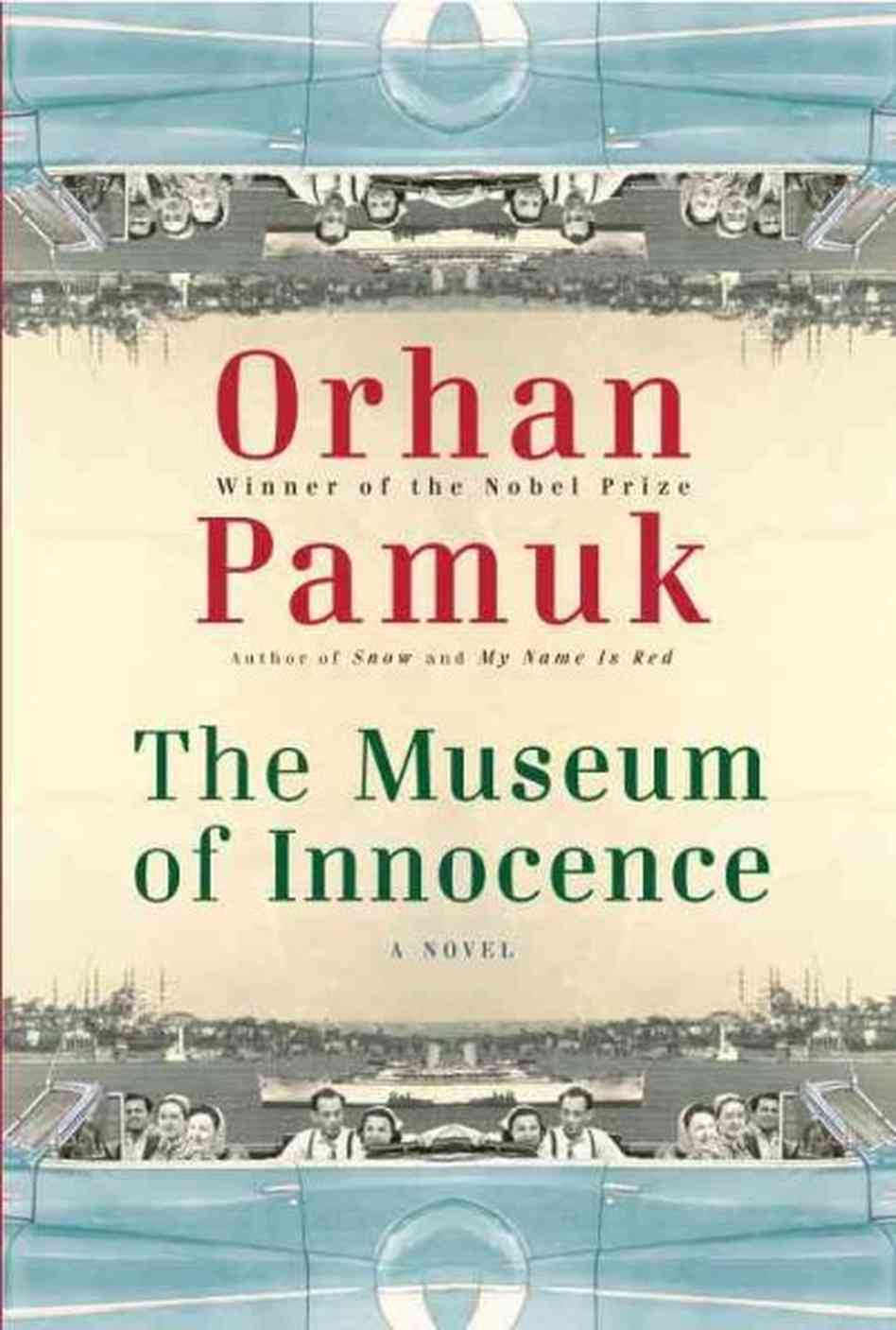
Orhan Pamuk’s novel The Museum of Innocence (2009), could serve as a useful metaphor for thinking about ‘museums’ – whether makeshift or otherwise – and the seemingly innocent enterprise of preserving Goan culture and heritage.

Pamuk’s novel, set in Istanbul, is about a love affair that a rich, bourgeois Kemal has with a breathtakingly beautiful shop-girl, Füsun, who also happens to be his distant cousin. Pamuk portrays the conflicts within Turkish high society, of the need to be modern like Western Europe and also balance the demands of a tradition inflected by Islam. Since Kemal is engaged to another girl who is his class- and social-equal, his love for Füsun pretty soon runs into troubled waters, just as his affair with Füsun also leads to the break-up of his engagement.

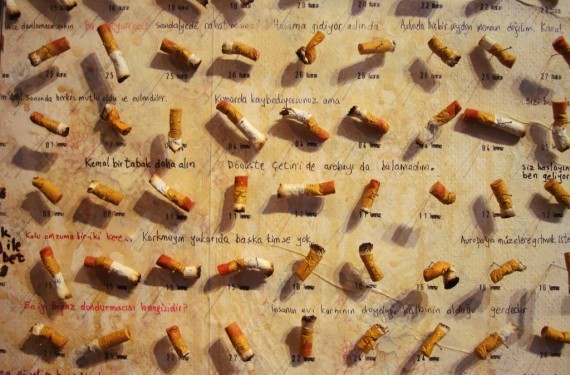
Love soon turns into an obsession, with Kemal desperately clinging to any small thing that Füsun used or touched, finding solace in them for his aching heart. In fact, his obsession goes so far that he even collects the cigarette butts that Füsun had smoked and other trinkets that she may have touched, and so great is his longing, he even starts stealing them. Füsun knows exactly the price she has paid for her love for Kemal, by keeping her dreams and aspirations of being an actress on hold. Kemal loses Füsun under tragic circumstances and decides to establish a museum in her honour and in memory of the love that they had shared, by displaying the seemingly insignificant items that he had collected over all those years.

Kemal’s museum project is not solely to commemorate Füsun, for he also has a message for the Turkish people. He says, “With my museum I want to teach not just the Turkish people but all the people of the world to take pride in the lives they live. I’ve traveled all over, and I’ve seen it with my own eyes: While the West takes pride in itself, most of the rest of the world lives in shame. But if the objects that bring us shame are displayed in a museum, they are immediately transformed into possessions in which to take pride.”

In the Goan scenario, are we not battling the same sort of problems that the characters in Pamuk’s novel deal with? Are we not also under undue pressure from the demands of tradition and modernity, albeit of a different type? Are not many of the Goan traditions also associated with shame? The argument that I would like to make is that it is because of multifarious pressures that are exerted on the Goan from various directions that the celebration of Goan traditions – indeed taking pride in them – becomes necessary. Perhaps, it is here that we need to ask ourselves: what is it that we are celebrating?

The problem is that these museums contain a selective display of cultural artifacts that we are proud of. But what they can hide is the fact that many of these traditional occupations and practices are based on caste; that those engaged in these occupations even today are not paid more than a pittance; that in trying to celebrate certain cultural practices we might forget the real people who toil behind them. While not being against the idea of celebrating Goan culture for a better Goan identity, a case needs to be made that the welfare of the Goan must be given priority before any Goan traditions and cultural practices.

Thus, taking cultural practices and people out of their specific contexts can mask certain unpalatable realties that can challenge our very understanding of Goanness and Goan culture. This masking prevents us from understanding why these practices were given up in the first place. Füsun may have been commemorated in a museum, but she suffered in real life. The problem with museums that take into consideration only a part of reality, is that they fail to look at the suffering and pain hidden behind commemorations of pride.

Photos: Joel D'Souza and Socorro Socio-Art and Cultural Association.

(First published in  O Heraldo, dt: 29 October, 2014)

Wednesday, August 6, 2014

THE ‘DOUBLE BIND’ OF MINORITY IDENTITY


Regular viewers of prime time national news would remember the recent incident where India’s tennis star Sania Mirza broke down on live television, following some legislators from Telangana questioning her right to be the brand ambassador of the newly formed state of Telangana. In an exclusive interview given to NDTV’s Barkha Dutt, Mirza said that it was “Extremely hurtful” that she has to “keep justifying our Indianness, keep asserting our Indianness again and again, and time and again…I don’t know why…” On her part, Dutt tried to brush aside the controversy claiming it to be “unnecessary”, “petty”, “absurd”, and “an aberration”.

However, to her credit, Dutt did broach Mirza’s Muslim identity as perhaps causing the said controversy. But Mirza still maintained that she did not know why. This column is in agreement with Dutt and Mirza that the nature of the comments made were indeed sexist and patriarchal. However, if we also factor in the ‘patriotism’ that both Dutt and Mirza defended – indeed asserted – as a way out of the unholy mess that was created, reality appears to be much more complex. That the identity of a ‘woman’ and an ‘Indian’ took precedence over Mirza’s Muslim identity allows us to analyze minority identity politics afresh.

Mirza’s interview allows us to approach the problem of a ‘double bind’ that minorities have to face in India. This ‘double bind’ holds the loyalty of the Indian Muslim as suspect (being anti-national) on the one hand; while on the other, the Indian Muslim is simultaneously called upon to actively participate in the workings of the secular nation-state, by asserting themselves as Muslims. But the problem gets further complicated as such participation can only happen by consciously sidetracking one’s Muslim identity. So in other words, one is damned if one does participate and damned if one doesn’t. The historian Ayesha Jalal, in her essay ‘Exploding Communalism: The Politics of Muslim Identity in South Asia’, puts the matter in a longer historical context when she says, “The original sin of being communalist for the most part have been reserved for the [Indian] subcontinent’s Muslims”. Further, Jalal also echoes the argument that has been made by other scholars as well when she says, “The tolerant secularist and the bigoted Hindu are really after the same pound of flesh – Muslims have to stop drawing upon the religious and cultural strands of their identity if they want complete integration in the secular and democratic framework of the Indian nation-state”.

The abovementioned interview provides another perspective for those of us who are worried about the growing communalization in Goa to understand the problem. We should recognize that the predicament that the Muslims find themselves in is not very different from that which the Catholics in Goa experience. On the one hand the Catholic cultural practices informed and inflected by the Portuguese presence were and are used to define Goa to a larger Indian imagination (via the manner in which tourism is marketed, for instance), and on the other hand any political demands that are perceived to come from a Catholic location (though the reality may suggest otherwise) exposes Catholics in Goa to charges of being communal and anti-national. In other words, the loyalty of the Goan Catholic to Goa (as well as India) is held suspect, a point that Fr. Victor Ferrao makes in his Being a Goan Christian.

Recognizing the similar ways in which Muslims and Catholics have to negotiate a tricky dance with the working of the nation-state one can see how particular lines can or cannot be crossed by certain persons. Thus in September 2013 when the Chief Minister Manohar Parrikar had erroneously asserted that a Goan Catholic is culturally Hindu, it had resulted in a national controversy. Cut to 2014, when the Deputy Chief Minister, Francis D’Souza asserted that he is a “Christian-Hindu”, it also resulted in a controversy at the national level. But here is a twist that I would like to draw attention to: bowing to intense pressure and criticism, D’Souza retracted his statement and apologized for it, maintaining that it was his personal opinion and he was not wrong to make such a statement. Parrikar, on the other hand, did not withdraw his statement and neither did he apologize for it. It must be noted that D’Souza’s statement, in essence, is no different from Parrikar’s. The asymmetry that exists in the two incidents is clearly visible. An asymmetry that exists, I suspect, due to this selfsame ‘double bind’ of minority identity in India.

The controversy that D’Souza raked up was followed by predictable assertions of ‘Goanness’ and ‘Indianness’ on social media. Indeed some even went to the extent of suggesting that if we consider ourselves ‘humans’ first and foremost, it would be enough. Well, clearly it is not enough. Making such overarching, ‘national’ assertions only obscures the complexity of identity politics. In the case of Goa, the observable fact is that one cannot participate in Goan political, public, and cultural life by simply being Catholic; one has to also give in to certain notions of ‘Hinduness’.

Linking the predicament of Muslims in India to that of the Catholics in Goa may seem like a long shot to some. However, I would like to suggest that by juxtaposing the problems of the Muslims and Catholics with each other, one can broaden one’s understanding of how minority identity and the concomitant politics works in India. Though the comments referred to above were made in seemingly different contexts, yet recognizing the similarity of the politics and power structures that drive the visions behind them, can allow us to think about ourselves in new ways. The drive towards asserting one  identity, but remaining willfully blind to other identities – even suppressing them – will only allow inequalities to thrive.

Thanks to Shahrukh Alam and Rubina Jasani.
  
(First published in  O Heraldo, dt: 6 August, 2014)