Showing posts with label Goan food. Show all posts

Tuesday, October 28, 2014

GOAN HERITAGE AND MUSEUMS OF INNOCENCE


A number of Goans tend to be very proud of their cultural heritage and traditions. With the changing political, economic, social, and demographic scenarios in Goa as well as across the globe, fears are being increasingly expressed that the cherished traditional ways of Goan life will be lost and the future generation would have no knowledge of their cultural heritage.

Of the many responses to such anxieties of losing a cherished way of life, one is to go back to these traditions and celebrate them anew, by organizing public displays of old Goan traditions, food, and cultural practices. Enthusiasts of the villages of Soccoro and Carmona recently organized the Patoianchem Fest and Ekvotacho Dis respectively in the month of August. These festivals were also given rave reviews in the media. From what was reported and broadcast on social networking sites like Facebook, it is noticed that these festivals, while concerned with showcasing and preserving Goan traditions, were also deeply affected by ecological concerns affecting Goa.
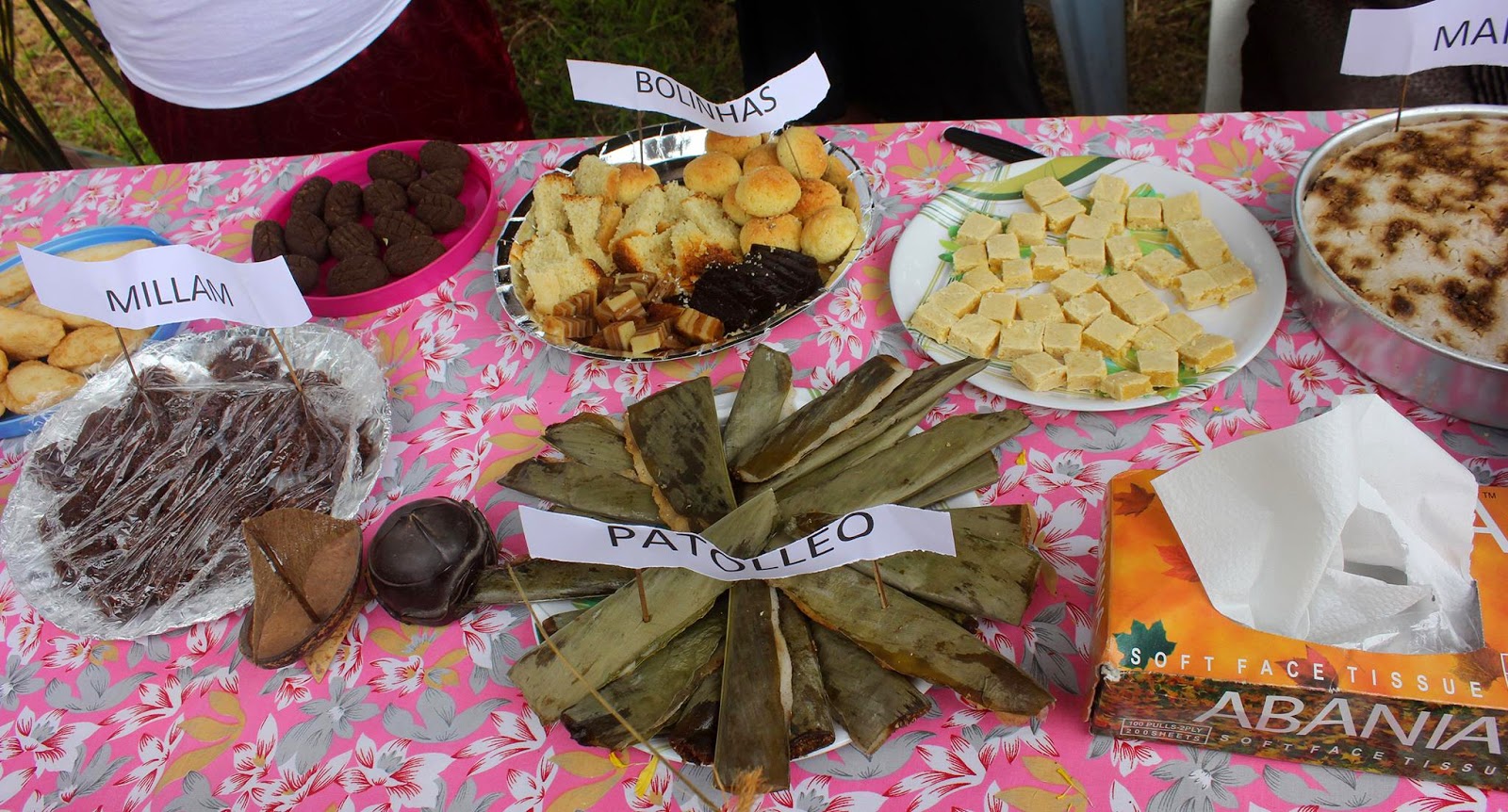


From the photos available online of the festival at Soccoro, one can observe that the organizers had managed to get people engaged in traditional occupations such as making brooms, peeling coconuts, and even massaging infants with coconut oil to create a live demonstration or tableaux. Goan food and games were also featured. What can be suggested is that a ‘makeshift museum’ was created as part of these celebrations. This is not the only time we create museums when talking about Goan heritage and culture, but many of the discussions about Goan culture are centered around preserving this culture in its pristine authenticity and purity, the way objects of art are preserved in a museum.

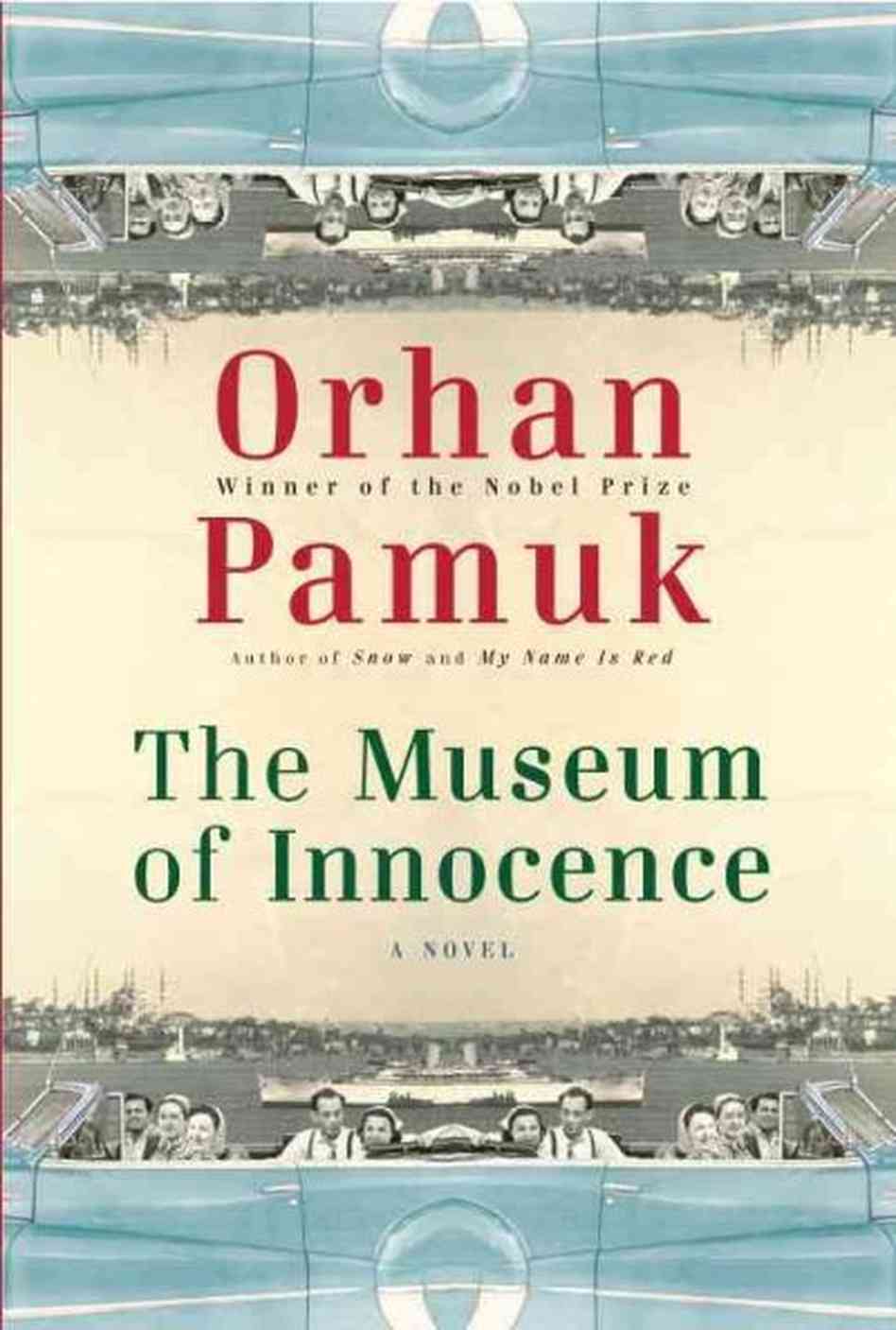
Orhan Pamuk’s novel The Museum of Innocence (2009), could serve as a useful metaphor for thinking about ‘museums’ – whether makeshift or otherwise – and the seemingly innocent enterprise of preserving Goan culture and heritage.

Pamuk’s novel, set in Istanbul, is about a love affair that a rich, bourgeois Kemal has with a breathtakingly beautiful shop-girl, Füsun, who also happens to be his distant cousin. Pamuk portrays the conflicts within Turkish high society, of the need to be modern like Western Europe and also balance the demands of a tradition inflected by Islam. Since Kemal is engaged to another girl who is his class- and social-equal, his love for Füsun pretty soon runs into troubled waters, just as his affair with Füsun also leads to the break-up of his engagement.
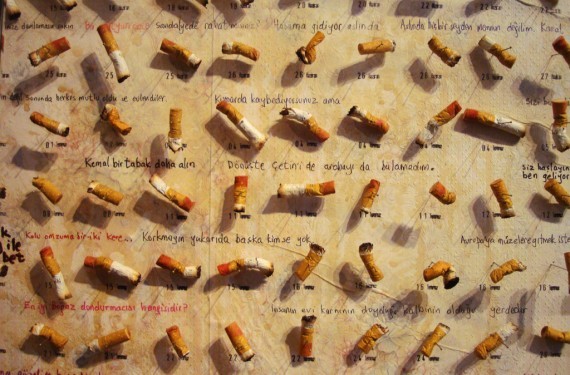
Love soon turns into an obsession, with Kemal desperately clinging to any small thing that Füsun used or touched, finding solace in them for his aching heart. In fact, his obsession goes so far that he even collects the cigarette butts that Füsun had smoked and other trinkets that she may have touched, and so great is his longing, he even starts stealing them. Füsun knows exactly the price she has paid for her love for Kemal, by keeping her dreams and aspirations of being an actress on hold. Kemal loses Füsun under tragic circumstances and decides to establish a museum in her honour and in memory of the love that they had shared, by displaying the seemingly insignificant items that he had collected over all those years.

Kemal’s museum project is not solely to commemorate Füsun, for he also has a message for the Turkish people. He says, “With my museum I want to teach not just the Turkish people but all the people of the world to take pride in the lives they live. I’ve traveled all over, and I’ve seen it with my own eyes: While the West takes pride in itself, most of the rest of the world lives in shame. But if the objects that bring us shame are displayed in a museum, they are immediately transformed into possessions in which to take pride.”

In the Goan scenario, are we not battling the same sort of problems that the characters in Pamuk’s novel deal with? Are we not also under undue pressure from the demands of tradition and modernity, albeit of a different type? Are not many of the Goan traditions also associated with shame? The argument that I would like to make is that it is because of multifarious pressures that are exerted on the Goan from various directions that the celebration of Goan traditions – indeed taking pride in them – becomes necessary. Perhaps, it is here that we need to ask ourselves: what is it that we are celebrating?
The problem is that these museums contain a selective display of cultural artifacts that we are proud of. But what they can hide is the fact that many of these traditional occupations and practices are based on caste; that those engaged in these occupations even today are not paid more than a pittance; that in trying to celebrate certain cultural practices we might forget the real people who toil behind them. While not being against the idea of celebrating Goan culture for a better Goan identity, a case needs to be made that the welfare of the Goan must be given priority before any Goan traditions and cultural practices.

Thus, taking cultural practices and people out of their specific contexts can mask certain unpalatable realties that can challenge our very understanding of Goanness and Goan culture. This masking prevents us from understanding why these practices were given up in the first place. Füsun may have been commemorated in a museum, but she suffered in real life. The problem with museums that take into consideration only a part of reality, is that they fail to look at the suffering and pain hidden behind commemorations of pride.

Photos: Joel D'Souza and Socorro Socio-Art and Cultural Association.

(First published in  O Heraldo, dt: 29 October, 2014)

Friday, August 10, 2012

TABLE FOR TWO: HISTORY AND TRADITION OF GOAN FOOD


If one were to browse through the cookery section of any reputed bookshop, one would definitely find a book (or many books) about Goan cuisine and gastronomy amidst several books dealing with diverse cuisines. What we eat and how we eat becomes part of our culture and identity. Food-related stereotypes are perhaps the few that we may not resent; that Goans are like fish out of water without fish, for there are Goans who are vegetarians and some do not like the taste of fish.
            For a person whose relationship with food has thus far been confined to only consuming it, reviewing a book about cooking and the history and tradition that surrounds such an act can be an unnerving task. Cozinha de Goa by Fátima da Silva Gracias is not a cookbook per se. It deals with the history and tradition of Goan food and includes some recipes as well. Along the way, Mrs. da Silva Gracias also reminisces about her own experiences with cooking and researching about Goan food. A historian who has authored books on colonial health and hygiene and women in Goa, Mrs. da Silva Gracias has crafted Cozinha de Goa in a Maria Aurora Couto-esque fashion, providing us with a daughter’s story in between.
            Along with acquainting the reader with the text of Mrs. da Silva Gracias, I would also like to situate her work as primarily trying to assert a Goan identity. I would try to point out a few possibilities and limitations as well. In trying to link cookbooks or books that deal with a particular cuisine to questions of identity, I shall refer the reader to a study of Caribbean cookbooks published in English which would help us in charting new understandings of books on gastronomy. B. W. Higman, the author of the paper titled, ‘Cookbooks and Caribbean Cultural Identity: An English-Language Hors D'Oeuvre’ says, “It can be argued that the emergence of the cookbook marks a critical point in the development of any cuisine and that the specialization and ramification of texts has much to tell about the character of national, regional, and ethnic identities. For these several reasons, a study of the history of cookbooks published in and having to do with the Caribbean can be expected to throw some light on what it means to be Caribbean or to identify with some smaller territory or grouping, and how this meaning has changed in response to social and political development.”
            The basic position that Mrs. da Silva Gracias assumes in writing this book and one theme that runs through the entire book is that of the east meets west. The meeting of east and west may have greatly influenced our food habits and culture but the use of this cliché over simplifies our understanding. Although Mrs. da Silva Gracias recognizes that Arab, Chinese, Brazilian, African, Anglo-Indian and other influences have enriched Goan food, the same is not reflected in the text; the treatment to these influences is meager. On the other hand, the picture that forms in the reader’s mind is that of Goan food being composed of the Catholic and Hindu cuisine. Such a line of thought is limiting, as is demonstrated by the following quote: “Portuguese rule created a culinary gap between the Hindus and Christians. On conversion, meat became part of the new diet of the Christians. Different measures and decrees introduced new food habits and discarded old ones.” We know today that tribal or aboriginal populations of South Asia before Hinduism and the advent of the Portuguese consumed meat on a regular basis and by making such assertions, Mrs. da Silva Gracias’ claims search for a pre-Portuguese past that is Hindu by conception.
            Food can be used to challenge the fascist arguments of what is Indian and foreign. This ‘Indian’ versus ‘foreign’ debate today has been defined by right-wing understandings of our history and culture. But nobody is aware about many of the food ingredients that were not native to the land and which should have effectively led us to question the whole idea of what is foreign in other spheres of social life: for instance, our dress. Although Mrs. da Silva Gracias could have used food to comment on such narrow tendencies, I still hold that some of her claims are useful to us, “The chili revolutionised Indian cuisine. Few realize that the chili, now widely used and deeply embedded in Goan and Indian cuisine, was a stranger to our continent and that it had been brought in from the Americas only a few centuries ago.” Or consider the following where the native is not Indian but Brazilian, “During my earlier visit to Brazil I noticed that even canjee [pez in our language] was popular in some parts. Some Brazilian researchers believe it came to them from sixteenth century Goa. In Brazil it went through changes. The Portuguese had already added chicken or chicken broth. The Brazilians included bay leaf, garlic, onions, pimenta-do-reino (pepper), carrots, cubed potatoes and so on. King D. Pedro II of Brazil, is said to have loved canja de galinha and even had it during intervals at the theater.”
            Mrs. da Silva Gracias, as mentioned before, peppers (to use a food metaphor!) her text with her own experiences and reminisces about Goan cuisine and food and also connects traditional practices to the preparation and consumption of food in her narrative, as food is an intrinsic part of any traditional practice and festivity. She is an accomplished writer and hence this account is delightful and one written with a pinch (food metaphor again!) of nostalgia. But she could have easily critiqued her own position and her memories. In recounting her memories, Mrs. da Silva Gracias paints a rosy picture of the past. “The life of a Hindu woman changed drastically when she became a widow. Although she cooked food for the rest of the family she could eat a very limited vegetarian diet.” This quote is cited as an example where a critical position could have been adopted by Mrs. da Silva Gracias.
            The book is written with much imagination and effort. The section where Mrs. da Silva Gracias has described a day in a Goan kitchen, albeit that of a rich family, is a splendid example of her imagination at work. In between the text, she has also provided trivia and recipes in a way that do not obstruct the main flow of the book.
            Although Cozinha de Goa is about the history and tradition of Goan food, it also concerns itself with the Goan identity in a subtle way. The parting lines of the book, in a way, make this concern abundantly clear, “Which road will Goan food take? Will it survive and thrive? Will it evolve further? Or will it simply lose out to stronger global trends? Only time can tell…whatever the outcome, this is undeniably an interesting cuisine, of a tiny region shaped by history from far and wide across the globe. It needs to be understood. It deserves to be cherished.”


(A version of this article appeared on Gomantak Times, dt: August 11, 2012).