Showing posts with label Shabnum Tejani. Show all posts

Wednesday, October 28, 2015

DADRI AND THE ‘IDEA OF INDIA’


The gruesome lynching of a 50-year old man, Muhammad Akhlaq by a frenzied mob has led many in India to question the direction in which the country is headed. Muhammad Akhlaq, as we know, was murdered on the mere suspicion of having stored beef in his house. This lynching and other instances of violence in the past was followed by many Indian writers returning their literary awards in protest against the rising intolerance in India. The debates surrounding the death of Muhammad Akhlaq, and other such incidents in the past, took an interesting though predictable turn.

The debate around the ‘idea of India’ and ‘secularism’ within the secular-liberal media was the most interesting and predictable. One could see many laments about the loss of the ‘idea of India’. At this point, it is important to ask what this ‘idea of India’ means. To put it simply, the ‘idea of India’ imagines the modern nation (and state) of India as an ancient and glorious civilization, having a history of more than 5000 years. This unbroken history was believed to have sustained a remarkable artistic and literary tradition (exemplified by Sanskrit texts) and a cultural efflorescence that was inclusive and tolerant, despite ‘minor’ irritants like the subjugation of millions of people under the caste system and the deplorable condition of women. Though Jawaharlal Nehru apparently envisioned a ‘modern’ India (though it was far from it), the ‘idea of India’ as an ancient and timeless civilization gained prominence from his time onwards, and one can observe many prominent public intellectuals and academics actually defending and indeed longing for this ‘idea of India’ which is Nehruvian to the core.

As an example of the reiteration of the Nehruvian ‘idea of India’ following the growing number of incidents like the death of Muhammad Akhlaq, one can read Shyam Saran’s article. Saran, a former Foreign Secretary and current chairman of the Research and Information System for Developing Countries (an independent think-tank), opens his article by asking, “What is left now of the idea of India? The expansive cultural sensibility, the persistent sense of wonder and curiosity, the delight in open discourse and debate with no point of view discarded, and above all the embrace of humanity with all its quirks and eccentricities – these have been the hallmark of a civilisation which has mostly seen itself as a journey not a destination”.

Lofty poetic exhortations are but poor guides out of any problem. For despite acknowledging that for most of India’s post-colonial history has “been a relentless slide towards…a tragic parody” of the ideals enshrined at the moment of Independence, Saran closes his article by forcefully arguing that “[i]f we value the idea of India we must not only Make in India but defend the idea of India too”.
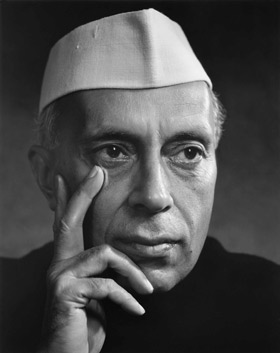
At this point it is imperative to ask if the ‘idea of India’ was really all-inclusive, as the Nehruvian secular-liberal intellectuals are inclined to believe. Given that rapes, murder, and lynching are routine for many Dalit communities in India, and that the rise of banal violence and rioting against minority communities is not a recent phenomenon, one wonders how the notion of plural and inclusive ethos of the ‘idea of India’ can be sustained. To understand why, despite having a seemingly inclusive and progressive vision, violence is regularly visited upon marginalized and minoritized communities in India, one need not look at India’s ancient history but the modern debates by which a ‘secular’ India was constructed.

To begin with, the ‘idea of India’ was not at all inclusive. Shabnum Tejani, studying the development of the idea of ‘secularism’ in India in her book Indian Secularism: A Social and Intellectual History, 1890-1950, argued that rather than creating conditions for a just and equal society, the powers-that-be who debated about the nature and essence of Indian secularism, broadly wanted to create a political structure based on Hindu majoritarianism. What the defenders of the ‘idea of India’ miss is that right from the 1950s, the equation of power has been firmly in the hands of the Hindu upper-castes and a more equitable distribution of power has not been achieved. For instance, it can be observed that many of the cow-protection laws in various states were first legislated under the aegis of the Congress party. Similarly, suspicion and targeting of Christian missionaries (foreign or otherwise) was routine from the 1950s.
 
There is also no reason to believe that ancient India was a tolerant space, as we can observe that Buddhism as a religious movement arose against the excesses of Brahmanism. Similarly, a literary tradition that saw the production of the Manusmriti cannot be, by any stretch of imagination, considered as tolerant. That access to the knowledge produced in Sanskrit was the exclusive privilege of brahmins and the glorification of the same exclusive knowledge today as “wisdom”, should be enough to dispel any myths of inclusivity and sagacity.

Considering the above mentioned facts it seems a bit silly that someone would, in the face of rising violence, argue for a defense of the ‘idea of India’ even though, like Saran, many observe that “churches [are] being burnt or Dalits being hacked to death”. If at all there is any seriousness in countering the rising trend of intolerance, it is not by defending this ‘idea’ which has no real basis in history or reality, but by rigorously questioning it.

(First published in O Heraldo, dt: 28 October, 2015)

Wednesday, July 9, 2014

WHEELS WITHIN WHEELS: THE AGENDAS OF ‘SECULARISM’


With Pramod Muthalik of the Sri Rama Sene threatening to set-up his base in Goa, the last two weeks have seen spirited debates about the place of ‘secularism’ and ‘communalism’ in the public sphere of Goa. To add to the conundrum, Goans have been at the receiving end for their own elected representatives making sexist and anti-women remarks, with very little done to curb the Hindu right. This is not the first time that such remarks have been made that have blatantly abused the dignity of the minorities and women living in Goa. As such, asking the same questions or reacting in the same manner as done in the past does little good. While it is certainly true that such tendencies should be vehemently protested and opposed, this column would like to suggest that a rather critical look at the history and politics of Indian secularism would provide fresh perspective into the problem.

Since the Indian nation-state was founded on secular ideals, it is important for us to know how this came about. The present understanding of ‘secularism’ is an ahistorical and timeless one. In other words, a term like ‘secularism’ is believed to have a universal and unchanging meaning across time and political realities. It is this very fact that Shabnum Tejani in her book Indian Secularism: A Social and Intellectual History, 1890-1950 points out. If today the binary opposition of ‘secular’ with ‘communal’ is well established and entrenched in our minds, Tejani demonstrates that in a longer historical context this was not the case. She notes that between the years from 1928 and 1931, a broad range of political opinion considered Indian nationalism as a “unity of the (Hindu) majority” with any challenge to this understanding by marginalized non-Hindu and Dalit communities being branded as communal.

Shifting the focus from a concern of religion to a concern of caste, the abovementioned study has shown that the creation of a liberal democracy in India was shaped by an imperative to create a “definition of a democratic majority as broadly Hindu”. Tejani also states that the reason why ‘secularism’ became important in Indian nationalist thought was due to the fact that “the architects of the new nation-state – overwhelmingly middle-class, upper-caste Hindu men – saw it as providing a counterpoint to challenges posed from the margins by Muslim and Dalit communities”.

Immediately, what we can recognize is that ‘secularism’ as an ideology was used as a bulwark against sharing power and privilege with the minority and disempowered groups. The problem of ‘communalism’ and the apparent challenge it poses to ‘secular’ ideals is not just confined to hard-line right-wing persons like Pramod Muthalik. Part of the problem also lies with secular-liberal Hindus in the context of how they understand ‘secularism’ and its place in the Indian identity and how these two ideas are uncritically conflated. For many secular Hindus (as well as Christians) the ideal of ‘secularism’ is only threatened when right-wing groups create a ruckus. The inadequacy of ‘secularism’ as an ideal as well as an analytical category is seen when anti-women and anti-minority remarks are made by persons who are not perceived to be of the extreme right.

Take the recent comments of Sudin Dhavalikar, the PWD minister in Manohar Parrikar’s cabinet. His comments about pubs, drinking, and short skirts not being compatible with Indian culture, were largely seen as sexist and anti-women. The point I am trying to make is that such comments are not just anti-women, they are also anti-minority. How? In Goa, Catholic women wear skirts and consumption of alcohol (along with meat such as beef and pork) is a necessary component in celebration in all Catholic households, indeed their everyday diet as well. Why hasn’t this being perceived as going against the tenets of Indian secularism?

Dhavalikar’s case and the reaction to it is a recent one. One can also excavate the case of the Romi script and hold it up to the assertions of ‘secularism’. When the demand for the Romi script was made, Goan Catholics were seen as anti-national, their demand was considered as “emotional” and hence irrational, and the demand was viewed as a very threat to the ‘secular’ fabric and unity of Goa. The Goa government is yet to recognize Konkani in the Romi script as an official language, despite the fact that Goan Catholics are not the only users of the Romi script in Goa. Why isn’t the denial of the Romi script to the people of Goa a problem for ‘secularism’? Why don’t we beat our chests and cry hoarse about the loss of ‘secular’ ideals? It must be noted that whether it is Muthalik, or Dhavalikar, or the Romi issue, or even the Medium of Instruction fiasco, what is threatened is either Indian culture or the unity of Goa/India or both.


If the ideology of ‘secularism’ worked as a tool to obstruct the sharing of power with Muslim and Dalit groups in the context of the Indian nationalist movement, I would suggest that a similar situation occurs in Goa as well, wherein power is not adequately shared with groups such as Catholics and Muslims in Goa. That Hindus are a majority in Goa and control most positions and institutions of power is a fact that gets erased when ‘secularism’ is debated in the Goan public sphere. If we are really serious about maintaining peace in Goan society, power needs to be shared with minority groups, and greater representation needs to be granted to marginalized groups across religion, caste, and class in Goan society and politics (and not just confined to electoral representation). It is not just enough to throw out Muthalik and his ilk. What do we do about Hindu majoritarianism that has been a part of Indian ‘secularism’ for such a long time?

See also 'Not Skirts or Bikinis, but the very Idea of Goa is at Stake' by Rochelle Pinto here

(First published in  O Heraldo, dt: 9 July, 2014)