Showing posts with label Hindu majoritarianism. Show all posts

Tuesday, June 4, 2019

A REPUBLIC ALWAYS IN CRISIS


The Indian Republic is, was, and will be in crisis. And perhaps the biggest issue that dogs the Republic is social and economic inequality. Seventy years of electioneering has not solved the problem. Successive governments and civil society groups have failed to address the issue of inequality. The social and economic inequalities manifest in the form of routinized violence and discrimination in everyday life for the marginalized and minoritized communities. The crisis will only deepen in the future if these inequalities remain unaddressed.

The routinized violence and discrimination against the marginalized and minoritized communities are not new; it is a way of life since the establishment of the Indian Republic. Ever since its founding, the Indian Republic has been unable to stop the discrimination and atrocities committed against its marginalized and minoritized communities. The most recent and shocking revelations of the death of Dr. Payal Tadvi, a resident doctor at a hospital in Bombay, exposes yet again the casteist way of life in India. Barely three years after the institutional murder of Hyderabad Central University scholar Rohith Vemula, Dr. Tadvi’s institutional murder (now suspected to be cold-blooded murder) is déjà vu for those familiar with the discrimination, harassment, and violence against marginalized and minoritized communities.

The recent deaths contradict the democratic vision enshrined in the constitution of India. The routine violence and harassment fly in the face of political grandstanding about the greatness of Indian culture and its ability to harmoniously bond the various communities now and in the future. Fractures of caste and religion are often used—especially during elections—to polarize and scapegoat many marginalized communities. The result of almost seven decades of polarization, scapegoating, and a deepening of casteism is the spread of Hindu majoritarianism. Any attempts at realizing democracy and equality in India have to confront the juggernaut of religious majoritarianism—whether under the guise of secularism or a theocratic ideology.

The Indian Republic, emerging after the transfer of power from the British Raj, faced a crisis in the sharing of power with marginalized caste and minoritized religious groups. The elite Hindu groups, who controlled politics after the departure of the British, kept most of the power for themselves and their kin, while there were thousands of religious and caste communities, socially subordinated to the Hindu upper-castes, who expected to share power and influence in a new Republic. In such a scenario, the elite groups of the country, mostly Hindu, nurtured a political illusion of equal rights for all, while they maintained their hegemony. In other words, the Indian polity was actually based not on equality but clientelism. Most of the marginalized caste and religious communities have to play second fiddle to one or more upper-caste Hindu communities.

The contradictory nature of the Indian Republic whereby the elites sought (and seek) to hold on to power while employing a language of liberalism, secularism, and democracy obstructed any meaningful changes in terms of social justice. The culture of the new Republic too was overwhelmingly upper-caste Hindu. Thus, communities which did not emerge out of an upper-caste Hindu location had to change their culture to make it compatible with Hindu, or euphemistically, Indian cultural forms. The public culture in the new Republic was also marked by those cultural forms deemed appropriate by Hindu culture in terms of food, drink, and dress.

With their hold on power, elite Hindus (as well as non-Hindu elites), ensure that insignificant social and economic mobility for marginalized caste and religious communities. True, the constitution of India provides many safeguards against oppression and promotes affirmative action, but the push-back from the elite sections has resulted in the dilution of the progressive vision of the constitution. In publicly-funded universities and government employ, persons such as Tadvi and Vemula face constant and vicious harassment. It is not an exaggeration to say that persons from marginalized castes and minority religions are often unwelcome in the public institutions of the Indian Republic.

The problem of an equal, or at least a fair, sharing of power has dogged the Republic since the beginning. If one thinks about politics—and not just elections alone—in the Indian Republic, the elites shared power only on limited occasions. They have done so begrudgingly if at all power has been shared in the first place. One could think of the recommendations of the Mandal Commission and the deep-seated resentment that many elites in the country feel even today, as an example. The resulting concentration of power within the hands of a few is the cause of the continued crisis facing the Republic.

The crisis that confronts the Indian Republic is an old one: How to eradicate the deep-seated inequalities to build a community that looks after its own and nurtures its citizenry to its full potential? It is this question that most public intellectuals do not confront. Of late, there is the talk of the fundamental ethos of the Indian Republic being in danger. There is no doubt that it is in danger. However, one must bear in mind that the progressive ethos of the Republic has always been in danger. There has always been strong opposition to any progressive politics that goes beyond just words, that actually empowers the weak and shares power with the downtrodden.

The way out of the crisis of inequality, violence, and minoritization is to recognize that chest-thumping nationalism—of any shade—only diverts attention from the real issues. It allows those in power to engage in further polarizing the polity and permit the wholesale diversion of resources to crony capitalists from those who need them the most. 

(First published in O Heraldo, dt: 4 June, 2019)

Wednesday, May 13, 2015

MISSION SCHOOLS, SECULARISM, AND HINDUTVA


A month ago, news broke in the national press that Lata Dhavalikar, the wife of Dipak Dhavalikar, State Factories and Boilers Minister, had exhorted all Hindus in the name of Indian culture to not send their wards to convent schools. As many would remember, boycotting Christian educational institutions was part of a longer list that Mrs. Dhavalikar urged Hindus to adopt, including sporting tilaks and bindis, and greeting each other with ‘namaskar’. Mrs. Dhavalikar’s comments, or rather hate speech, only seemed to fuel the already existing suspicion about Christian educational institutions as promoting Western culture and even of forcible conversion amongst a large number of Indians, not necessarily confined to those who support the Hindu Right. However, by mid-April, a video also started circulating of Piyush Goyal, Minster for State (Independent Charge) for Power, Coal, and New and Renewable Energy. This was a video of a keynote address delivered on 6 November, 2014 on the occasion of the 3rd National Education Conference of Don Bosco Schools, at his alma mater, Don Bosco’s, Matunga, Bombay.

The said keynote address has been available for viewing on YouTube since 7 November, 2014. In brief, Goyal’s keynote address can be seen as a testimony of the good intentions of Christian mission schools, and hence it can be suggested that the video was circulated from April 2015 as a counter to the wild allegations that were rampant on social media against Christian educational institutions.

What is interesting about this keynote address by Goyal is that it was largely a recollection of his school days some forty years ago. He seemed to be transported back in time to the days when he was a school boy and, as such, was giddy with excitement. In a sense it was like homecoming for him. While Goyal’s keynote address raises many issues that are problematic, it is also closest to a testimony by a person in the current government in favor of Christian schools, asserting that they did not have an agenda limited to forcibly converting Hindus and imposing Western culture on them.

Goyal first credited the immense role that his teachers and the Salesian priests played in shaping his personality. He stressed the values of forgiveness and patience that his teachers practiced. Narrating an incident of indiscipline he was involved in, Goyal said that he should have been rightly suspended or rusticated for a misdemeanor during a school picnic. However, the principal of the school, Fr. Bonnie, did no such thing. Rather, Fr. Bonnie told him where he went wrong, and “held his hand”. Goyal, not being able to hold back his emotions, suggested that if he was not given an opportunity to reform and was not counseled, then his life could have gone down a different path altogether.

Another important point that Goyal made in his keynote address is the values of secularism that are nourished in an institution like Don Bosco’s. Goyal recollected that never in all the years that he spent at Don Bosco’s was he or any other non-Christian student made to “compulsorily” attend church. In fact, Goyal emphatically said that he had attended church several times, but always “voluntarily”. It is this experience that forms the basis of Goyal’s assertion that he learned true secularism in the course of his schooling at Don Bosco’s from the Salesian priests.

The problem with Goyal’s assertion is that although he may have experienced secularism in flesh and blood in his school, the party that he belongs to has consistently made sure that the rights of the minoritized groups in India are denied. The problem lies not so much in the fact that a person who learnt secular ideals is part of a government that came to power on the basis of Hindu majoritarianism, but that secularism in India has always meant that the wishes and whims of the majority become the ‘national’ norm that everybody must follow. Isn’t it rather disturbing to note that those non-Christians who have been educated through Christian institutions never openly protest when Christians or their property – religious and other – are attacked? November-December 2014 was also about the time when the attacks on churches and the threats of ‘ghar wapasi’ had intensified, and any condemnation of such acts from those within the present government came after a lot of delay. Such are the limits of Goyal’s Don Bosco-created secularism. What this anecdote thus actually indicates is not how Christian schools have boosted Indian secularism, but how they have actually compromised with dominant norms of Indian nationalism that produces the hegemony of the majority.

This is so because if one looks at some of the top Christian schools and colleges in India, one realizes that these institutions have been supremely elitist spaces, dedicated to nurturing the children of the rich and the mighty. Though it is also true that a large number of children from the marginalized sections have been served by Christian educational institutions, such educational institutions have not managed to change the oppressive power relations in India. Which is why when Goyal talks about his school upholding “merit”, “fairness”, and “equal opportunity for all”, one wonders if the ideal of charity and service or caritas embodied by Christian educational institutions is really responding to the social reality in India.

Goyal said that if Don Bosco’s took education to the poorest of the poor, it was because it came from the heart and was not out of “compulsion”. What he meant by it was that one could not be coerced into reaching out to the poor and marginalized in the society. But the truth is that in India, resources like education need to be compulsorily made available to the marginalized and the oppressed, whether one likes it or not; whether it comes from the heart or not.

This is an area, I think, where Christian educational institutions need to give out of “compulsion”. In other words Christian educational institutions have to specifically reach out to groups that are oppressed due to caste, gender, and religion. I admit that this is happening in many parts of India, but one does not see a systematic policy and its implementation emerging from the Church leadership in India. Of late Christian institutions have been needlessly demonized. If at all they need to be criticized, it is because they have failed in their Christian duty to reach out to the poorest of the poor. Christian institutions have not always worked against oppressive structures, but oftentimes have compromised with them.


So while Goyal’s testimony and his heartfelt recollection of his schooling days need to be welcomed, it also should make us ask what role Christian educational institutions played in past and what role they should play in the future.

(First published in  O Heraldo, dt: 13 May, 2015)

Monday, February 2, 2015

GHORACHO ‘OWNER’ KAI ‘CHAKOR’?


borovpi DALE LUIS MENEZES ani AMITA KANEKAR

Lok Sobhechea venchnukam uprant, BJP-cho sorkar sodrer ailolean olp-sonkhechea lokancher ani tanchea dev-mondirancher hol’le chodda promannan zalole amchea khobra-potrancher ani TV news-acher amkam disun yetat. Fattlea don mhoineanchea kallant ‘ghar wapasi’-che chollvollicho bhorpur bovall amkam aikonk yeta. Tor hem ‘ghar wapasi’-chem prokoronn kitem? Tache fattlo itihas kitem? Ani xevottak Hindutva zome ‘ghar wapasi’- itlea nettan kiteak fuddem vhorunk mukhar sorleat? Hem zanna zaunk kaim itihasik khinnancher ani ghoddnnukancher hea lekhachea survatekuch nodor ghalop gorjechem thorta.
***
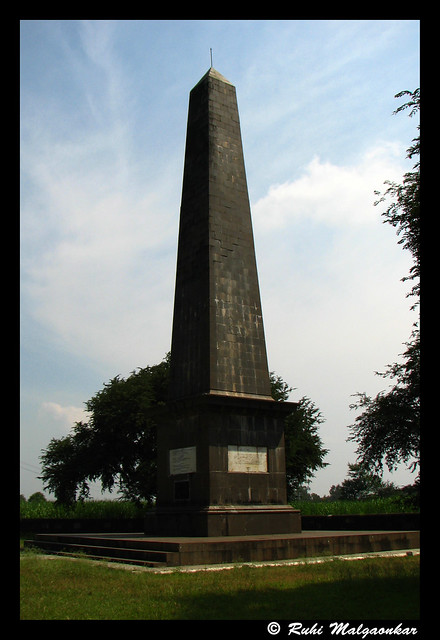
1818 vorsa, Janer mhoineant Peshwa rajshahi ani British soinikam modem tisrem ani xevottachem Anglo-Maratha gher’r pettlem. British soinikam borobor, hea gher’rant zaite Mahar soinik-ui zhogoddle. Hem gher’r bhov ‘heroic’ zaun aslem, ani hachem karonn mhollear British foujent fokot 250 ghoddekaranchi poltonn (cavalry) ani 500 pãy-soinik (infantry) asle, ani hantuntle choddxe soinik Mahar vortoule. Dusre vatten Peshwa Bajirao Dusro hache fattlean 20,000 ghoddekaranchi poltonn ani 5000 pãy-soinik asle. Bhima Koregaon hea zagear zalolea zhuzant, Peshwa rajshahi tea dis harli.

Punn hea gher’rak aiz ami titlem mhotv dinant. Hachem karonn mhollear hea gher’rant Mahar soinikamni Britisham borobor ravon Peshwa (vo Bharoti) soinikank haroilole dekhun. Amche ‘textbooks’ Peshwanchi har hi amchea raxttrak ek dukhachi gozal oxem manun choltat. Amkam sodanch sangot aileat ki vosnnukponna (colonialism) udexim British Raj amchea raxttrachea lokank damun dovortale mhunnon. Punn amchea ani dusrea kaim borovpianchea mota pormonnem, Britishanchem zoit asa titlench tem Mahar somudayechem zoit-ui aslem. Ami hem monant dovrunk zai ki Peshwa rajshahi hache khal Mahar lok chidd’ddon aslolo, ani 1818 vorsa zalolea gher’rant tankam suttka mell’loli, oxem amcheamni mhonnom-ieta.

Tor osli suttka ji lokank koxtt korun ani zhogddun mellta tachi ami dobajean ugddas dovrunk zai aslo nhoi? Punn ami oxem korinant. Hatunt amchea raxttrvadi (nationalist) itihas likhnnent unneponn disun yeta. Unch zatinchea mon’xank vosnnunkponnacho kall (colonial period) ho zaun aslo opman ani lojecho kall; jea kallant tanchem boll unnem zalolem ani rajniticher tancho probhav komi zalolo. Punn dusre zatinchea lokank hoch vosnnunkponnacho kall niticho ani suttkechea survatecho kall zaun aslo. Dekhik, jea disa Vasco da Gama, Calicut pavlolo, to dis aiz zaite Dalit lok tanchea suttkecho oromb zaun asa oxem man’tat (polle Aditya Nigam, The Insurrection of Little Selves, 2006, pan 182).
***
Arya Samaj Ani Tanchem Karya
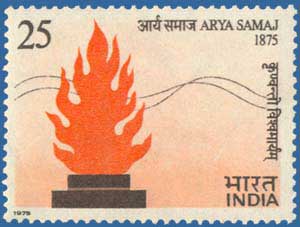
1880 hea doskant Arya Samaj hi sonstha zolmant aili. Tancho mukhel hetu Hindu dhorm’ ‘reform’ korpant aslo. Hie sonvsthecho promukh mhollear Swami Dayanand Saraswati. Swami Dayanandachea mota pormonnem tea kallacho Hindu dhorm’ matso pirddear zalolo. Hindu dhorm’ adle bhaxen ‘pure’ ani ‘Vedic’ sounskruticho ascho ani dekhun tachem ‘reinterpretation’ korunk Swami Dayanand fuddem sorlo. Atam Hindu dhorm’ ‘reform’ kiteak korchi goroz poddli haka sabar karonnam asat, punn ami tim bariksannin hanga niyallpache nant. Itlench mhollear puro ki ho ‘reform’ ek ‘reaction’ aslem (1) sabar ‘untouchable’ ani sokoilea-zatichio somudayo Kristi dhorm’ apnnaitolea karonnak lagon, (2) Musolman somaz rajkaronnant apleak manyatay magta dekun, (3) Hindu dhormant zativad asa to kabar korunk, ani (4) British-anchem vosnnukponn. Arya Samajacho vaur chodd korun Panjab prantant kherit bhaxen yexosvi zalo.

Swami Dayanand ani Arya Samajachea mon’xank hem sot somzolem ki dhormantoram zait ravlim zalear unch-zatinchea Hindu lokancho Bharatachea rajkaronnant probhav unno zatolo mhonn. Haka lagon Swami Dayanand-an êk yevzonn sodun kaddli ani ti mhollear shuddhi pod’doticho rosto. Shuddhi pod’dote khala Arya Samaj lokank porte Hindu dhormant haddunk vavrunk lagle. Tanchea hie yevzonnek zaitem yes mell’llem karonn atam Arya Samaj Kristi misionaram bhaxen lokank xikxonnachio ani bholaikechio sovlotio divunk lagle, ani vorna-vevosthechea (four-fold hierarchical system) faske bhitorleanuch thoddi bhov ‘social mobility’ ani ‘self respect’ diunk lagle.

Shuddhi pod’dot Swami Dayanand hachea poilim savn pasun asloli. Ti fokot unch zatinchea lokank ‘purify’ korunk uzar kortale. Swami Dayanandan tika novem rup dilem, ani atam shuddhi mhollear dhormantor korpachem sadhon zalem (polle Maria Misra, Vishnu’s Crowded Temple: India Since the Great Rebellion, 2008, panam 70-3).
***
‘Ghar wapasi’-cho sarko orth ‘re-conversion’ nhoi punn ‘conversion to Hinduism’
Aiz zor ami ‘ghar wapasi’-chi khobor kortanv zalear, ami tacho itihas sarke toren zanna zaun ghevpacho proyotn korinant. Mahar soinikanche khobrek ani Arya Samajak  kosloch ‘direct’ som’bondh nam, punn hio don itihasik ghoddnuko amcheamni ‘indirectly’ zoddunk zata ‘ghar wapasi’-chem pulitik zanna zaun ghevpak. Jednam kaim Dalit somudayo Peshwa rajshahi harovpant aplem gorv ani suttka asa oxem somzotat ani Vasco da Gama Calicut pavlolo tednam apleak ani aplea sangatiank suttka mellpacho oromb zalo oxem somzotat, tednam hio somudayo ‘ghar’-antlean bhair sorunk proyotn kortat, oxem disun yeta. Dusre vatten jednam Arya Samaj sarkio sonstha shuddhi sarkea pod’doticho vapor kortat tednam heach lokank te ‘ghar’-ant haddun, tankam damun dovorpacho proyotn-ui amkam disun yeta.

Khoreponnim choddxea lokanchi shuddhi vo ‘ghar wapasi’ zata te Hindu dhormant poile suvater kednanch nasle. Dekun, ‘ghar wapasi’-cho sarko orth ‘re-conversion’ nhoi punn ‘conversion to Hinduism’ oso zata. Why I am not a Hindu (1996) hem Kancha Ilaiah hachem pustok oso vichar manddtta ki zaitio porompora ani rit-roviso jio Dalit-bahujan lok palltat taka unch-zatinchea Hindu lokam koddem kainch sombondh nam. Dekhun, Dalit-bahujan lokank ‘Hindu’ oxem vollkhop sarkem nam, oxem to sangta. Punn Dalit-bahujan lokank ‘Hindu’ mhonn vollkhotat tem rajki, ani nhoi dhormik karonnank lagon.

Toxench Christophe Jaffrelot sangta te bhaxen, British Bharotant yeunche poilim, sabar karagiri korpi somudayo (artisanal castes) Islam dhormant bhitor sorlolio, zativada pasun pois vochonk. Jaffrelot-achea mota pormonnem hi osli rajkornnik halchal korop mhollear Hindu hacho ankddo vo lok-sonkhya vaddovpacho yotn. Dekunuch anti-conversion kaideanchi magnnim fattlea kaim vorsam savn zait asa (polle Jaffrelot, Christophe. “India: The Politics of (Re)Conversion to Hinduism of Christian Aboriginals.” Annual Review of the Sociology of Religion hea pustokant, sompadon korpi Patrick Michel and Enzo Pace, vol. 2: Religion and Politics:197–215. Leiden: Brill, 2011, pan 205). Hea ‘ghar wapasi’-chea prokoronnant ek mat thavem zaun ailam: ‘anti-conversion’ kaide zai hacho orth oso-i zaunk xokta ki hozaramni lokank hem ‘ghar’ soddun diunk zai. Ek xekddo adim zoso Arya Samaj vavurtalo Hindu ‘ghar’ ani tachi lok-sonkhya samballun dovrunk, tosoch aiz Raxttra Seva Sangh (RSS) vavurta oxem mhollear, otitay zaunchi nam. RSS ani her sonstha ‘ghar wapasi’ kortat dekun zaito lok atam Buddhist zaunk lagla, zoxe porim Gaya (Bihar) hea ganvant halinch disun ailam.

‘Ghar wapasi’-cho ‘target population’ mhollear, zoxem Dalit zannkar Kancha Ilaiah Asian Age hea potracher boroun sangta, Dalit, Adivasi, ani OBC hea vorgantle lok je aiz ‘evangelical Christianity’ ani ‘prayer groups’-ant vanttekar zatat. Hea lokam modem RSS akant toyar korunk sodta, oxem to mhonntta. Kancha Ilaiah amkam fuddem sangta ki jea disa savn Dr. B. R. Ambedkar-an Nagpur xarant aplo dhorm’ bodol’lolo tea disa savn Dalit-bahujan lokank dhormantor mhonnche ek otmik ani lokxahik (spiritual and democratic) hok’k zaun urlo. Kancha Ilaiah fuddem mhonntta ki adim Dr. Ambedkar-an Buddhism appnailolem, aiz chodd so Dalit-bahujan lok Kristi dhormak akorxit zalolo asa.

Arya Samaj-an ji shuddhi pod’dot chalu keloli ti aiz RSS-an tika ‘ghar wapasi’-chem nanv dilam. Ek amkam saf disun yeta ki shuddhi ani ‘ghar wapasi’ vorna-vevosta ani zativad  posraita, ani dhormantoram (conversions) eka mon’xak hantuntlean bhair sorunk adar dita. Katolk ani Islam dhormantui zativad asa, amkam to lipoun dovrunk naka. Punn Katolk ani Islam dhormachi ‘theology’ sogleank ekuch nodrentlean polleta. Tor hea dhormanchea ‘theology’-intlean zativadak addavunk zata, dekunuch aiz amkam ‘Dalit theology’-cher sahit’ya vachunk mellta.
***
Sogllinch  dhormantoram zobordosten kelolim oxem nhoi
Hem soglem jem ami voir sanglam tem Gõychea lokank ani Gõyank lagu zata. Karonn ‘ghar wapasi’ amchea kallar kiteak korunk zai haka ek ‘argument’ oso asa ki sogllim dhormantoram jim sollavea xekddeant savn kelolim asat tim ‘forced’ asat mhunnon. Gõyant tor soglleamni aikolanch astolem ki koxem porim Purtugez kallant amkam soglleank Kristanv kelole te. Novo sôd-vavr zo itihaskaramni laila tachê udexim amkam oxem disun yeta ki sogllinch  dhormantoram zobordosten (forced conversions) kelolim oxem nhoi. Hacher itihasant purave asat (polle Ângela Barreto Xavier. “Disquiet on the Island: Conversion, Conflicts and Conformity in Sixteenth-Century Goa.” Indian Economic & Social History Review vol. 44, no. 3 (2007): 269–95). Soglinch dhormantoram tor zobordosten zalolim zalear aiz lakhamni lok (Kristanv toxech dusrea dhormache) Gõychea Saibachea bhoktek yetole asle, vhoi?

Fuddem, Gõyant zobordosten dhormantoram zalolim hache purave diunk zaite lok oslio kannio sangtat: konnui xit (cooked rice) gheun Hindu lokanche bãynt khoim tea kallar uddoitale, ani hea karonnank lagun to monis (ani tacho kuttumb) bhoxttovtalo ani taka kaim upay nam zaun Kristanv zaunk poddtalem. Hie kannientlean ek disun yeta ki hio oslio kannio chodd korun unch zatinchea bod’dol uloitat mhonnon, kiteak ‘private’ bãycho ani bhoxttavpacho ul’lekh kelolo asa dekun. ‘Private’ bãyio khonnpak khorch khub aslo ani thoddeach lokam koddem tem zomtalem. Fuddem, bhoxttovpachi bhirant chodd korun unch zatichea mon’xak astali, karonn ek favtt bhoxttovlo zalear vorna-vevosthent to sokol poddtalo. Punn oxem astonam ami haka ‘forced conversion’ mhonnpachem kai Hindu dhormantlean ‘excommunication’ korop vo bohixkar ghalop? Kristi dhorman oslea bohixkar ghatlolea ani bhoxttovlolea mon’xank zago diun, tankam man dilo, oxem amcheamni mhunnonk zainam?

Zoxe toren ami aiz Gõyant dhormantoram somzun ghetat, ti somzovnni ‘ghar wapasi’ korpant Hindutva rajkaronnak protsahon ditat. Konnakui hie dhormantorachie somzonnent unneponn asa tem soroll disun yeta. Gõyant ami dhormantoram mhonnche kitem, ani tim koxim zatat, ani lok dhormantoram kiteak kortat hacher bariksannin kednanch vichar korunk nam; tacher bhasabhas-ui kednanch zaunk nam.
***
Hea lekhant ami ‘ghar wapasi’ ani dhormantor he mud’de niyallun polleleat. Hea vorvim amkam ek disun yeta tem mhollear prosn jednam dhormantorancho aslo tori khoreponnim zhogddem ani zhuz zata tem zativadak lagon. Hatunt ‘ghar wapasi’-cho ‘secret’ vo ghutt liplolo asa.

(Dale Luis Menezes ‘medieval history’-nt sod-vavr korta Jawaharlal Nehru Universidadint, Novi Dill’li; ani Amita Kanekar-an A Spoke in the Wheel hi Gautam Buddha-chea jivitacher adarloli kadombori boroilea)

(Ho lekh Gulab, Voros 33, Ank 2, Febrer 2015-cher uzvaddak aila)