Showing posts with label Christophe Jaffrelot. Show all posts

Friday, March 13, 2015

‘GHAR WAPSI’: OWNER OF THE HOUSE, OR SERVANT?


By
DALE LUIS MENEZES and AMITA KANEKAR

With the BJP coming to power in the last Lok Sabha elections, we have witnessed increasing violence against religious minorities and their places of worship. There has been no action to curb the violence, nor even a statement of condemnation from the Centre. Instead, in the last few months, we have a new campaign: ‘ghar wapsi’, again targeted at the religious minorities: Christians and Muslims are being asked to ‘return’ to Hinduism. How is one to understand this new movement, right in the middle of all the violence? What are its origins? And what is its agenda? To answer these questions, we think it would be useful to focus on a few events of the past.
***
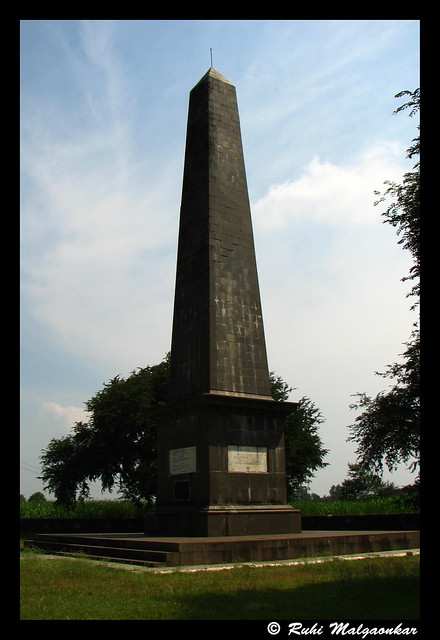
The first event is that of 1 January, 1818. On this day, the armies of the Peshwa and the British confronted each other in the third and final Anglo-Maratha War, in which the Peshwa was defeated. It was a heroic victory, since the British army comprised only a small regiment of 250 cavalry and 500 infantry, both dominated by men of the Mahar community, while the Peshwa had about 20,000 cavalry and 5000 infantry. Yet, on this day, in the village of Bhima Koregaon near Pune, the Peshwa army was routed.

The important thing to note is that this British victory was also a Mahar victory; it was the Mahars who ended Peshwa rule. This critical fact is, of course, never mentioned in our history books. Our school textbooks ignore the Mahars and write of the fall of the Peshwas as a tragedy; such is the nationalist version of events. But for the Mahars, and others oppressed and enslaved as untouchables under the Peshwai, the 1818 battle was a successful war of liberation.

For the dominant castes the colonial period was all about humiliation and loss of power, but for many others it was about the beginnings of liberation and justice. For instance, Vasco da Gama’s arrival in the Malabar in 1498 is considered by many Dalits to be a milestone event in the story of their liberation (Nigam, 2006, p. 182). Our nationalist histories ignore this.
***
The Movement Initiated by the Arya Samaj
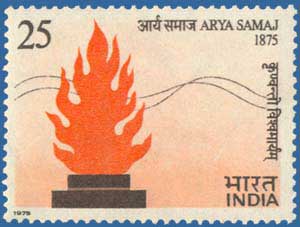
The second event we would like to recall is the birth of the Arya Samaj, sometime in the 1880s.  According to its founder, Swami Dayanand Saraswati, Hinduism had been corrupted and needed reform. That is, Hinduism had strayed away from its supposed Vedic origins and had to be brought back to its former purity and glory. Reform was also required, said the Arya Samaj, to exorcise casteism from the Hindu religion, though as the movement developed its anti-caste claims were seen to be limited. According to Maria Misra (2008, pp. 70-3) however, this reform was a reaction to many untouchable and lower-caste communities embracing Christianity, as well as to the demand from certain sections of Muslims for a greater representation in politics.

The real problem was that the British had introduced electoral politics in India, in which representation was provided for on the basis of religious community. As Misra points out, that the leaders of the Arya Samaj had realized that, “Christian conversion among low caste, untouchable and poor Muslim groups would weaken the power of Hindus in north India”. In other words, if the flow of conversions to Christianity and Islam had to be stopped, the blatant violence of caste-based discrimination had to be attacked. The critique of caste by caste Hindus, therefore, was a strategic act to perpetuate upper-caste dominance.

What was this reform that the Arya Samaj brought about? One of the main components of it was the programme of shuddhi, an old ritual re-invented by the Arya Samajists.  Shuddhi had been used earlier to purify caste Hindus after coming in contact with supposed agents of defilement or pollution. But the Arya Samajists gave it a new form and the shuddhi ritual became the tool of conversion, ‘purifying’ the former Christians or Muslims to make them Hindus, and thus also making a statement about the ‘pollution’ inherent in the non-Hindu religions.

Learning from Christian missionaries, the Arya Samaj also set up public health and educational facilities, and encouraged a modicum of social mobility and social respect within the four-fold varna system. As a result they were quite successful in their campaign of conversion, especially in the Punjab.
***
‘Ghar wapsi’ does not mean ‘re-conversion’ but ‘conversion’
Although there does not seem to be a direct link between the Mahar victory at Bhima Koregaon and the activities of the Arya Samaj, there is an important connection which tie them also to the ‘ghar wapsi’ campaign. The connection is the mass rejection of the so-called ‘ghar’. While the Mahars of Bhima Koregaon had greater affinity for the aims and culture of the British than those of the Peshwas, the Arya Samaj campaign of yesteryears, just like the ‘ghar wapsi’ one of today, is a recognition of a mass desire to reject Hinduism.

But the truth is that many of the people who underwent shuddhi in the past, or ‘ghar wapsi’ today, were never in the Hindu fold in the first place. So there is no question of ‘wapsi’. The Dalitbahujan communities of the subcontinent have always followed their own unique religious traditions, many of which, as Kancha Ilaiah (1996) has argued, do not have a link with those of caste Hindus. This difference may be eroding today, thanks to the growth in Hindutva propaganda and the widespread Hinduizing of the polity, but it is certainly erroneous to refer to Dalitbahujans of the past as ‘Hindu’. This identification of Dalitbahujans as Hindus happens not because of religious reasons, but political ones. 

Thus, ‘ghar wapsi’ is not about ‘re-conversion’ to Hinduism, but ‘conversion’. This will of course be contested by all the new ‘anti-conversion’ laws which have been in demand of late, some of which explicitly declare that conversion to Hinduism is fine because it is actually re-conversion. Along with shuddhi and ‘ghar wapsi’, these laws form part of the arsenal to maintain the demographic of caste Hindus in politics.

The RSS’ ‘ghar wapsi’ project especially targets the Dalit, Adivasi, and OBC population, says Ilaiah (Asian Age, 4 January, 2015), who today are embracing ‘evangelical Christianity’ and ‘prayer groups’ in large numbers. He makes the important point that, although many Dalitbahujans today are attracted to evangelical Christianity rather than the Buddhism embraced by Dr. B. R. Ambedkar, the fact is that ever since the day when Ambedkar converted to Buddhism in Nagpur, conversion became a spiritual and democratic right for the Dalitbahujan people. And this is what all these Hindutva movements – anti-conversion, shuddhi, ‘ghar wapsi’ – recognize, that thousands are just waiting to leave the ‘ghar’.

The reason is not difficult to fathom. Conversions to Christianity and Islam create an opportunity to escape caste. Jaffrelot (2011, p. 205) makes a similar argument: before the coming of the British many artisanal castes had embraced Islam to escape caste-based discrimination. We do not by any means claim that there is no casteism to be found among Christian and Muslim communities of South Asia. But both Christianity and Islam, in principle or theologically, uphold the equality of believers, providing scope for fighting casteism within the faith.
***
All Conversions are not Forced
One of the arguments made in favour of ‘ghar wapsi’, is that all conversions to Christianity and Islam were ‘forced’. In the context of Goa, this is of course a reference particularly to the Christianization of its populace during Portuguese rule. Within Goa, meanwhile, we have been fed on stories about how all of us were converted to Christianity by the Portuguese in one fell swoop, and also how ‘forced conversions’ to Christianity were effected by throwing cooked rice into the wells of Hindus, polluting them and forcing their owners to become Christian. Although claiming to be about Goa, it is clear that this latter story is only about brahmins and other brahmanized castes of Goa, given the references to private wells and pollution. Even so, does this story really speak of conversions that were forced, or rather excommunication from Hinduism enforced by the caste authorities? In such conditions, what was Christianity but a refuge to the excommunicated? It would not be the first time that brahmanical traditions of caste pollution and untouchability resulted in people leaving for more humane belief systems; they have been doing it right from the time of the Buddha, 2500 years ago.

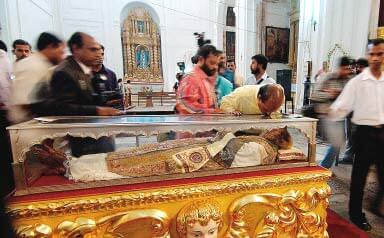
There is now copious documentation to attest to a history of voluntary conversions that resulted from caste-based conflicts. Ângela Barreto Xavier, for example, finds in her study of sixteenth-century Chorão that voluntary conversions took place most commonly among the most depressed sections of society, for whom it was a form of political dissent. Among the middle castes, however, the privileges and facilities offered to Christians were a great attraction, while among the elites – who had the most advantages in the old order – conversions were mostly either forced, or portrayed as forced so that their old positions in the village hierarchy remained unchanged (Xavier, 2007: pp. 269–95). Fr. Anthony D’Costa had meanwhile argued as early as 1965, through archival work on Jesuit letters, for genuine spiritual conviction in converting to Christianity in sixteenth-century Goa (see D’Costa, S.J., 1965, p. 50). The millions (both Catholic as well as non-Catholic) who flock to venerate the mortal remains of St. Francis Xavier, said to have been one of the leading proselytizers of his time, might argue that, for a multitude of people across castes and religion today, the history of Christianity is not marked by a memory of violence.  But popular memory aside, historical evidence shows conversions took place in Goa for a variety of reasons – from state pressure and incentives, to caste oppression and spiritual search.
***
The ‘ghar wapsi’ campaign thus exposes a longer history of caste-based and anti-minority violence that is both physical and intellectual. The launch of the present campaign is of course linked to the rise of Hindutva politics, and more recently to the coming of the BJP to power, but limiting it to these recent events negates both the history of violence and the consolidation of upper caste power in the subcontinent that has been going on for at least a century.

(A version of this essay was originally published in Gulab [February, 2015] in Romi Konkani. The authors wish to thank the editor of Gulab, Fausto V. da Costa, for allowing this translation and re-publication with some modifications, also Gaurav Somwanshi, whose Facebook status update is borrowed for the title, and finally our friends at the Al-Zulaij Collective, for reading the essay and offering important suggestions).

References
D’Costa, S.J., Anthony, The Christianisation of the Goa Islands, 1510-1567, 1965.
Ilaiah, Kancha, Why I am not a Hindu, 1996.
Jaffrelot, Christophe, “India: The Politics of (Re)Conversion to Hinduism of Christian Aboriginals”, in Annual Review of the Sociology of Religion, 2011.
Misra, Maria, Vishnu’s Crowded Temple: India Since the Great Rebellion, 2008.
Nigam, Aditya, The Insurrection of Little Selves, 2006.
Xavier, Ângela Barreto, “Disquiet on the Island: Conversion, Conflicts and Conformity in Sixteenth-Century Goa.” Indian Economic & Social History Review vol. 44, no. 3 (2007): 269–95.

(Dale Luis Menezes is based at the Jawaharlal Nehru University, New Delhi; and Amita Kanekar is the author of A Spoke in the Wheel, a novel on the life of the Buddha)

(Published on Round Table India, here).

Wednesday, February 18, 2015

CONVERSIONS AND THE SOUL OF INDIA


Due to the recent rise of anti-minority politics and violence, several of my columns over the last few months dwelt with, or at least tangentially mentioned, the issue of conversion and its faulty understanding within Indian nationalism. As things stand today in India, and also in Goa, this will, unfortunately, not be the last time I will write about conversions and its tortured relationship with Indian nationalism.

The reflection in this column is occasioned not only by the protests that followed the vandalization of the fifth church in Delhi, but also by some recent articles in the press that tried to tackle the issue of increasing communalization of the Indian public sphere. Let me make a particular reference to an article that appeared in The Guardian written by Aman Sethi, “‘Love Jihad’ in India and one man’s quest to prevent it” (29 January, 2015). Sethi talks about a Hindutva activist in Uttar Pradesh, Vijaykant Chauhan, and the increasing communal polarization following the Muzaffarnagar riots and the electoral victory of the Bharatiya Janta Party (BJP) in the last Lok Sabha elections. One of the issues that were highlighted in this article was that of ‘love jihad’ and how Vijaykant Chauhan understood Hindu-Muslim couples eloping and/or getting married as “deception and forcible conversion”.

While Sethi’s article, written in the voice of the secular-liberal Indian and with a touch of sarcasm, tried to show the obvious error in the ways of Vijaykant Chauhan, the larger issue of how conversion to Islam and Christianity is seen as a problem within Indian nationalism was not explored. In other words, while the much sensationalized issue of ‘love jihad’ got center-stage, what was missing was an explanation of the source of the problem. Though there is a very serious problem with the activism of persons like Vijaykant Chauhan, one wonders if such naming and shaming in the international press would ever address the fact that there are thousands of communities that have been systematically kept away from positions of power and privilege and the cause of increasing communalization may be traced to this systemic discrimination in social, economic, and political spheres. What needs to be understood is that within the framework of Indian nationalism, conversion is understood as an essentially violative act that destroys the soul of the nation. Thus, the loyalty of Christians and Muslims to the nation is held suspect. Within this understanding Christians and Muslims are required to continuously prove their Indianness and patriotism, as I had noted in a previous column.

Christophe Jaffrelot, focusing on the politics of the so-called re-conversion of Adivasi Christians to Hinduism, refers to the debates in the Constituent Assembly on Article 19 of the Constitution that guarantees the right to practice and profess any religion of one’s choice. Jaffrelot particularly refers to the comments of Loknath Misra, the then Congress MP from Orissa, who among other things stated that India would have been perfectly “secular” and “homogenous” if Islam had not imposed itself and if Christianity had not entered India peacefully by the back door. Such an understanding of Misra that was and is in no way confined to a small number reflects, as Jaffrelot points out, “a view of religious affiliation as a political act. It calls up an ethno-nationalist conception of religious membership: for an Indian to be Christian means that the person attaches himself to the Western world and is therefore a potential traitor to the Indian nation. This reasoning also applies to Muslims, who till Partition were readily accused of paying allegiance to Middle East-based religious authorities…[and since 1947], Muslims are also suspected to be Pakistan’s fifth columnists by the most militant Hindus”.


Seen from this perspective one can see how the issue of ‘love jihad’ and the vandalism and desecration of the churches in Delhi (as well as other churches in India) are connected. One particularly revealing instance was the protest that followed by some Christians in Delhi at the Sacred Heart Cathedral. This time around there was some ‘national’ media coverage of the protests. The Delhi police came in large numbers to this protest to disperse the crowd, bundling them in droves in buses. One of the protestors had a placard that said the following: “I am proud to be an Indian Christian”, and another one said, “Thank You Jesus I am an Indian”. These placards aptly describe what can be called as the ‘double bind’ of minority identity in India, wherein one is damned if one does, and also damned if one doesn’t, when it comes to adhering to dominant norms of Indian nationalism.

The question that needs to be asked is why does a community which is obviously the victim here, need to prove their Indianness, indeed profess it like it is a confessional faith? The reason is that both Christianity and Islam are even today seen as foreign religions. If one needs any convincing then he/she only needs to be directed to the incident wherein two bishops from the Vatican who were to travel to India to address a conference organized by the Conference of Catholic Bishops of India (CCBI), were denied a visa. Under such circumstances, Christians in India – even if a wrong has been done against them – need to first prove their loyalty and patriotism to the nation. At a time when ‘ghar wapasi’ is demanded to purge India of all ‘foreign’ influences and culture, is it surprising that churches are being regularly vandalized?

In the final analysis, I would suggest, the solution of increasing communalization in India might not lie in pointing to the obvious errors of activists like Vijaykant Chauhan, but in re-defining the secular understanding of conversion in India. One needs to see the problems that Indian nationalism has with conversions and one also needs to realize that the concentration of power and privilege in the hands of a few might itself also contribute to the growing communalization. As I have argued previously, and emphasize now, a truly secular public sphere in India should ideally be one where there is always an emphasis on a greater sharing of power and privilege amongst the marginalized and oppressed sections of the society.

(First published in  O Heraldo, dt: 18 February, 2015)

Monday, February 2, 2015

GHORACHO ‘OWNER’ KAI ‘CHAKOR’?


borovpi DALE LUIS MENEZES ani AMITA KANEKAR

Lok Sobhechea venchnukam uprant, BJP-cho sorkar sodrer ailolean olp-sonkhechea lokancher ani tanchea dev-mondirancher hol’le chodda promannan zalole amchea khobra-potrancher ani TV news-acher amkam disun yetat. Fattlea don mhoineanchea kallant ‘ghar wapasi’-che chollvollicho bhorpur bovall amkam aikonk yeta. Tor hem ‘ghar wapasi’-chem prokoronn kitem? Tache fattlo itihas kitem? Ani xevottak Hindutva zome ‘ghar wapasi’- itlea nettan kiteak fuddem vhorunk mukhar sorleat? Hem zanna zaunk kaim itihasik khinnancher ani ghoddnnukancher hea lekhachea survatekuch nodor ghalop gorjechem thorta.
***
1818 vorsa, Janer mhoineant Peshwa rajshahi ani British soinikam modem tisrem ani xevottachem Anglo-Maratha gher’r pettlem. British soinikam borobor, hea gher’rant zaite Mahar soinik-ui zhogoddle. Hem gher’r bhov ‘heroic’ zaun aslem, ani hachem karonn mhollear British foujent fokot 250 ghoddekaranchi poltonn (cavalry) ani 500 pãy-soinik (infantry) asle, ani hantuntle choddxe soinik Mahar vortoule. Dusre vatten Peshwa Bajirao Dusro hache fattlean 20,000 ghoddekaranchi poltonn ani 5000 pãy-soinik asle. Bhima Koregaon hea zagear zalolea zhuzant, Peshwa rajshahi tea dis harli.

Punn hea gher’rak aiz ami titlem mhotv dinant. Hachem karonn mhollear hea gher’rant Mahar soinikamni Britisham borobor ravon Peshwa (vo Bharoti) soinikank haroilole dekhun. Amche ‘textbooks’ Peshwanchi har hi amchea raxttrak ek dukhachi gozal oxem manun choltat. Amkam sodanch sangot aileat ki vosnnukponna (colonialism) udexim British Raj amchea raxttrachea lokank damun dovortale mhunnon. Punn amchea ani dusrea kaim borovpianchea mota pormonnem, Britishanchem zoit asa titlench tem Mahar somudayechem zoit-ui aslem. Ami hem monant dovrunk zai ki Peshwa rajshahi hache khal Mahar lok chidd’ddon aslolo, ani 1818 vorsa zalolea gher’rant tankam suttka mell’loli, oxem amcheamni mhonnom-ieta.

Tor osli suttka ji lokank koxtt korun ani zhogddun mellta tachi ami dobajean ugddas dovrunk zai aslo nhoi? Punn ami oxem korinant. Hatunt amchea raxttrvadi (nationalist) itihas likhnnent unneponn disun yeta. Unch zatinchea mon’xank vosnnunkponnacho kall (colonial period) ho zaun aslo opman ani lojecho kall; jea kallant tanchem boll unnem zalolem ani rajniticher tancho probhav komi zalolo. Punn dusre zatinchea lokank hoch vosnnunkponnacho kall niticho ani suttkechea survatecho kall zaun aslo. Dekhik, jea disa Vasco da Gama, Calicut pavlolo, to dis aiz zaite Dalit lok tanchea suttkecho oromb zaun asa oxem man’tat (polle Aditya Nigam, The Insurrection of Little Selves, 2006, pan 182).
***
Arya Samaj Ani Tanchem Karya
1880 hea doskant Arya Samaj hi sonstha zolmant aili. Tancho mukhel hetu Hindu dhorm’ ‘reform’ korpant aslo. Hie sonvsthecho promukh mhollear Swami Dayanand Saraswati. Swami Dayanandachea mota pormonnem tea kallacho Hindu dhorm’ matso pirddear zalolo. Hindu dhorm’ adle bhaxen ‘pure’ ani ‘Vedic’ sounskruticho ascho ani dekhun tachem ‘reinterpretation’ korunk Swami Dayanand fuddem sorlo. Atam Hindu dhorm’ ‘reform’ kiteak korchi goroz poddli haka sabar karonnam asat, punn ami tim bariksannin hanga niyallpache nant. Itlench mhollear puro ki ho ‘reform’ ek ‘reaction’ aslem (1) sabar ‘untouchable’ ani sokoilea-zatichio somudayo Kristi dhorm’ apnnaitolea karonnak lagon, (2) Musolman somaz rajkaronnant apleak manyatay magta dekun, (3) Hindu dhormant zativad asa to kabar korunk, ani (4) British-anchem vosnnukponn. Arya Samajacho vaur chodd korun Panjab prantant kherit bhaxen yexosvi zalo.

Swami Dayanand ani Arya Samajachea mon’xank hem sot somzolem ki dhormantoram zait ravlim zalear unch-zatinchea Hindu lokancho Bharatachea rajkaronnant probhav unno zatolo mhonn. Haka lagon Swami Dayanand-an êk yevzonn sodun kaddli ani ti mhollear shuddhi pod’doticho rosto. Shuddhi pod’dote khala Arya Samaj lokank porte Hindu dhormant haddunk vavrunk lagle. Tanchea hie yevzonnek zaitem yes mell’llem karonn atam Arya Samaj Kristi misionaram bhaxen lokank xikxonnachio ani bholaikechio sovlotio divunk lagle, ani vorna-vevosthechea (four-fold hierarchical system) faske bhitorleanuch thoddi bhov ‘social mobility’ ani ‘self respect’ diunk lagle.

Shuddhi pod’dot Swami Dayanand hachea poilim savn pasun asloli. Ti fokot unch zatinchea lokank ‘purify’ korunk uzar kortale. Swami Dayanandan tika novem rup dilem, ani atam shuddhi mhollear dhormantor korpachem sadhon zalem (polle Maria Misra, Vishnu’s Crowded Temple: India Since the Great Rebellion, 2008, panam 70-3).
***
‘Ghar wapasi’-cho sarko orth ‘re-conversion’ nhoi punn ‘conversion to Hinduism’
Aiz zor ami ‘ghar wapasi’-chi khobor kortanv zalear, ami tacho itihas sarke toren zanna zaun ghevpacho proyotn korinant. Mahar soinikanche khobrek ani Arya Samajak  kosloch ‘direct’ som’bondh nam, punn hio don itihasik ghoddnuko amcheamni ‘indirectly’ zoddunk zata ‘ghar wapasi’-chem pulitik zanna zaun ghevpak. Jednam kaim Dalit somudayo Peshwa rajshahi harovpant aplem gorv ani suttka asa oxem somzotat ani Vasco da Gama Calicut pavlolo tednam apleak ani aplea sangatiank suttka mellpacho oromb zalo oxem somzotat, tednam hio somudayo ‘ghar’-antlean bhair sorunk proyotn kortat, oxem disun yeta. Dusre vatten jednam Arya Samaj sarkio sonstha shuddhi sarkea pod’doticho vapor kortat tednam heach lokank te ‘ghar’-ant haddun, tankam damun dovorpacho proyotn-ui amkam disun yeta.

Khoreponnim choddxea lokanchi shuddhi vo ‘ghar wapasi’ zata te Hindu dhormant poile suvater kednanch nasle. Dekun, ‘ghar wapasi’-cho sarko orth ‘re-conversion’ nhoi punn ‘conversion to Hinduism’ oso zata. Why I am not a Hindu (1996) hem Kancha Ilaiah hachem pustok oso vichar manddtta ki zaitio porompora ani rit-roviso jio Dalit-bahujan lok palltat taka unch-zatinchea Hindu lokam koddem kainch sombondh nam. Dekhun, Dalit-bahujan lokank ‘Hindu’ oxem vollkhop sarkem nam, oxem to sangta. Punn Dalit-bahujan lokank ‘Hindu’ mhonn vollkhotat tem rajki, ani nhoi dhormik karonnank lagon.

Toxench Christophe Jaffrelot sangta te bhaxen, British Bharotant yeunche poilim, sabar karagiri korpi somudayo (artisanal castes) Islam dhormant bhitor sorlolio, zativada pasun pois vochonk. Jaffrelot-achea mota pormonnem hi osli rajkornnik halchal korop mhollear Hindu hacho ankddo vo lok-sonkhya vaddovpacho yotn. Dekunuch anti-conversion kaideanchi magnnim fattlea kaim vorsam savn zait asa (polle Jaffrelot, Christophe. “India: The Politics of (Re)Conversion to Hinduism of Christian Aboriginals.” Annual Review of the Sociology of Religion hea pustokant, sompadon korpi Patrick Michel and Enzo Pace, vol. 2: Religion and Politics:197–215. Leiden: Brill, 2011, pan 205). Hea ‘ghar wapasi’-chea prokoronnant ek mat thavem zaun ailam: ‘anti-conversion’ kaide zai hacho orth oso-i zaunk xokta ki hozaramni lokank hem ‘ghar’ soddun diunk zai. Ek xekddo adim zoso Arya Samaj vavurtalo Hindu ‘ghar’ ani tachi lok-sonkhya samballun dovrunk, tosoch aiz Raxttra Seva Sangh (RSS) vavurta oxem mhollear, otitay zaunchi nam. RSS ani her sonstha ‘ghar wapasi’ kortat dekun zaito lok atam Buddhist zaunk lagla, zoxe porim Gaya (Bihar) hea ganvant halinch disun ailam.

‘Ghar wapasi’-cho ‘target population’ mhollear, zoxem Dalit zannkar Kancha Ilaiah Asian Age hea potracher boroun sangta, Dalit, Adivasi, ani OBC hea vorgantle lok je aiz ‘evangelical Christianity’ ani ‘prayer groups’-ant vanttekar zatat. Hea lokam modem RSS akant toyar korunk sodta, oxem to mhonntta. Kancha Ilaiah amkam fuddem sangta ki jea disa savn Dr. B. R. Ambedkar-an Nagpur xarant aplo dhorm’ bodol’lolo tea disa savn Dalit-bahujan lokank dhormantor mhonnche ek otmik ani lokxahik (spiritual and democratic) hok’k zaun urlo. Kancha Ilaiah fuddem mhonntta ki adim Dr. Ambedkar-an Buddhism appnailolem, aiz chodd so Dalit-bahujan lok Kristi dhormak akorxit zalolo asa.

Arya Samaj-an ji shuddhi pod’dot chalu keloli ti aiz RSS-an tika ‘ghar wapasi’-chem nanv dilam. Ek amkam saf disun yeta ki shuddhi ani ‘ghar wapasi’ vorna-vevosta ani zativad  posraita, ani dhormantoram (conversions) eka mon’xak hantuntlean bhair sorunk adar dita. Katolk ani Islam dhormantui zativad asa, amkam to lipoun dovrunk naka. Punn Katolk ani Islam dhormachi ‘theology’ sogleank ekuch nodrentlean polleta. Tor hea dhormanchea ‘theology’-intlean zativadak addavunk zata, dekunuch aiz amkam ‘Dalit theology’-cher sahit’ya vachunk mellta.
***
Sogllinch  dhormantoram zobordosten kelolim oxem nhoi
Hem soglem jem ami voir sanglam tem Gõychea lokank ani Gõyank lagu zata. Karonn ‘ghar wapasi’ amchea kallar kiteak korunk zai haka ek ‘argument’ oso asa ki sogllim dhormantoram jim sollavea xekddeant savn kelolim asat tim ‘forced’ asat mhunnon. Gõyant tor soglleamni aikolanch astolem ki koxem porim Purtugez kallant amkam soglleank Kristanv kelole te. Novo sôd-vavr zo itihaskaramni laila tachê udexim amkam oxem disun yeta ki sogllinch  dhormantoram zobordosten (forced conversions) kelolim oxem nhoi. Hacher itihasant purave asat (polle Ângela Barreto Xavier. “Disquiet on the Island: Conversion, Conflicts and Conformity in Sixteenth-Century Goa.” Indian Economic & Social History Review vol. 44, no. 3 (2007): 269–95). Soglinch dhormantoram tor zobordosten zalolim zalear aiz lakhamni lok (Kristanv toxech dusrea dhormache) Gõychea Saibachea bhoktek yetole asle, vhoi?

Fuddem, Gõyant zobordosten dhormantoram zalolim hache purave diunk zaite lok oslio kannio sangtat: konnui xit (cooked rice) gheun Hindu lokanche bãynt khoim tea kallar uddoitale, ani hea karonnank lagun to monis (ani tacho kuttumb) bhoxttovtalo ani taka kaim upay nam zaun Kristanv zaunk poddtalem. Hie kannientlean ek disun yeta ki hio oslio kannio chodd korun unch zatinchea bod’dol uloitat mhonnon, kiteak ‘private’ bãycho ani bhoxttavpacho ul’lekh kelolo asa dekun. ‘Private’ bãyio khonnpak khorch khub aslo ani thoddeach lokam koddem tem zomtalem. Fuddem, bhoxttovpachi bhirant chodd korun unch zatichea mon’xak astali, karonn ek favtt bhoxttovlo zalear vorna-vevosthent to sokol poddtalo. Punn oxem astonam ami haka ‘forced conversion’ mhonnpachem kai Hindu dhormantlean ‘excommunication’ korop vo bohixkar ghalop? Kristi dhorman oslea bohixkar ghatlolea ani bhoxttovlolea mon’xank zago diun, tankam man dilo, oxem amcheamni mhunnonk zainam?

Zoxe toren ami aiz Gõyant dhormantoram somzun ghetat, ti somzovnni ‘ghar wapasi’ korpant Hindutva rajkaronnak protsahon ditat. Konnakui hie dhormantorachie somzonnent unneponn asa tem soroll disun yeta. Gõyant ami dhormantoram mhonnche kitem, ani tim koxim zatat, ani lok dhormantoram kiteak kortat hacher bariksannin kednanch vichar korunk nam; tacher bhasabhas-ui kednanch zaunk nam.
***
Hea lekhant ami ‘ghar wapasi’ ani dhormantor he mud’de niyallun polleleat. Hea vorvim amkam ek disun yeta tem mhollear prosn jednam dhormantorancho aslo tori khoreponnim zhogddem ani zhuz zata tem zativadak lagon. Hatunt ‘ghar wapasi’-cho ‘secret’ vo ghutt liplolo asa.

(Dale Luis Menezes ‘medieval history’-nt sod-vavr korta Jawaharlal Nehru Universidadint, Novi Dill’li; ani Amita Kanekar-an A Spoke in the Wheel hi Gautam Buddha-chea jivitacher adarloli kadombori boroilea)

(Ho lekh Gulab, Voros 33, Ank 2, Febrer 2015-cher uzvaddak aila)