If it isn’t
naked Hindutva, the government seems to be hell-bent in promoting vicious neo-liberalism.
In a joint policy-decision by the Ministry of Tourism, the Ministry of Culture,
and the Archaeological Survey of India (ASI), the government envisages
corporate participation in the maintenance of India’s heritage sites, including
natural heritage sites like Assam’s Kaziranga
National Park. Many iconic world heritage monuments
in India will be put up for ‘adoption’. Private companies and individuals, and
public sector undertakings now will be able to manage particular monuments through
the ‘Adopt a Heritage’ scheme.
As claimed by
the government, the ‘Adopt a Heritage’ scheme is designed for increasing tourism
revenue. All heritage sites currently under the scheme are ostensibly selected
on the basis of “tourist footfalls and visibility”. Indeed, the vision
of the scheme gives prime importance to the development of “tourist amenities”,
like toilet facilities, drinking water, and flow of traffic as its main
objectives. The government claims that the revenues generated will be ploughed
back for the upkeep of the same monuments. This is a rather bizarre claim as
most of these monuments are already generating large
revenues from tourist footfalls – such as the
Red Fort in Delhi – and there seems to be is no reason to increase the
popularity of these sites amongst the tourist. One can surmise, therefore, that
the reasons for promoting this scheme lie elsewhere: to increase the
privatization of heritage tourism.

Being in Goa and
suffering from the excessive and unregulated tourist footfalls should make us
see red when a scheme like ‘Adopt a Heritage’ is promoted. Goa doesn’t need
more tourist footfalls, but less. Moreover, the idea that
generating more income from increased footfalls would help in the
restoration/conservation efforts is self-destructive. More tourist footfalls
mean that there is an increasing pressure on old monuments leading
to faster deterioration. One cannot fix the
present condition of deterioration by creating a situation in the future that
will deteriorate the monument further. Similar to what is happening with the
rest of Goa, schemes like ‘Adopt a Heritage’ will only accelerate the
destruction of Goa’s natural and built heritage and Goans will lose access to
their heritage and history.
Apart from the
pressures being exerted due to tourism revenues, the ‘Adopt a Heritage’ scheme seems
not to be in consonance with the existing heritage laws that regulate and
protect monuments and sites. What I particularly refer to is the legal aspect
of how the ASI has to interface with the local bodies and owners in not only
maintaining monuments but also displaying them as world heritage sites or sites
of national importance. The Ancient Monuments and Archaeological Sites and
Remains Act, 1958, empower the ASI to control and conserve monuments, such as
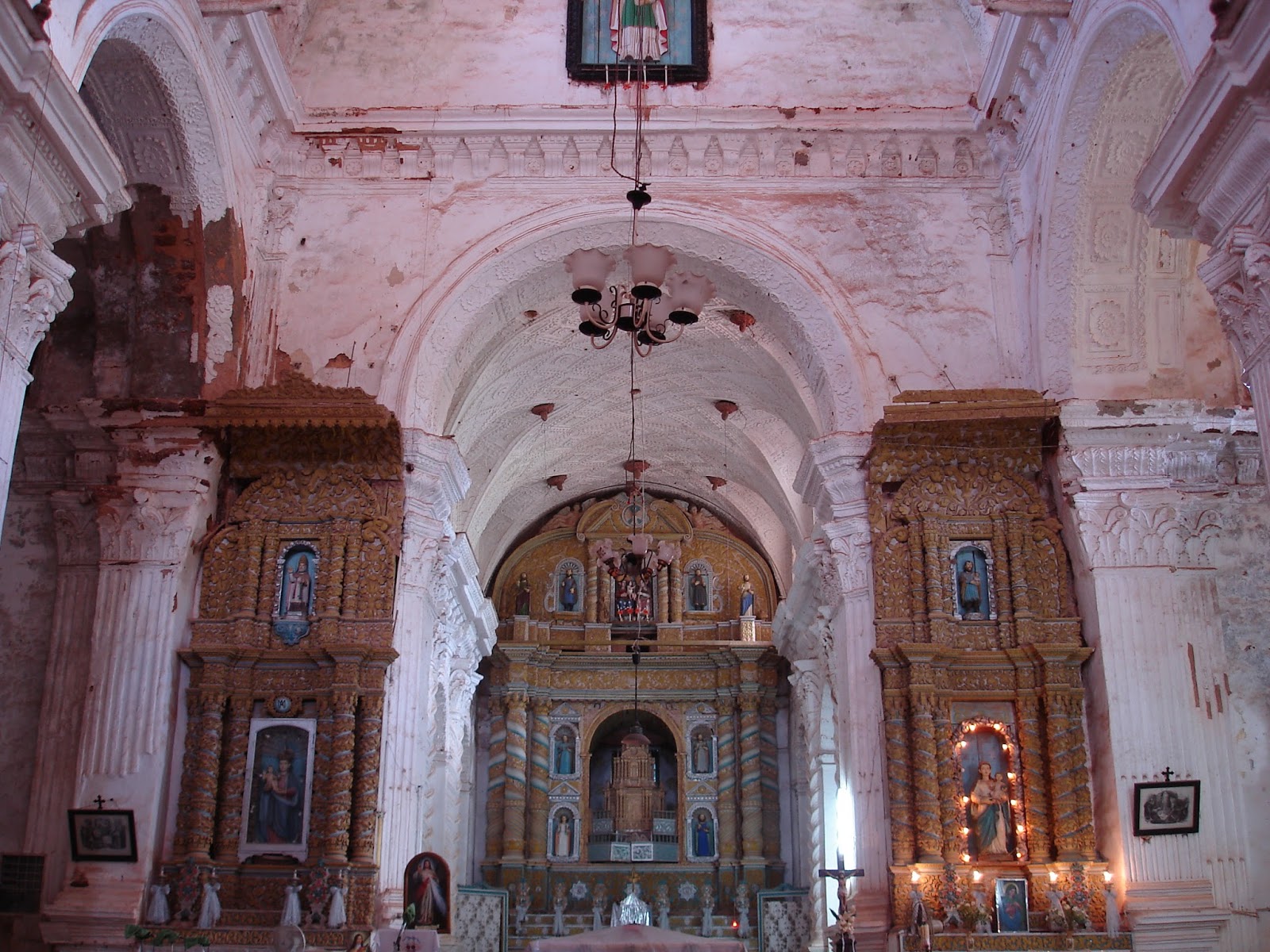
the Basilica of Bom Jesus under their care. This law provides for two parties
to enter into a contractual guardianship – the owner(s) and ASI. The nature of
this guardianship is such that the control of the ASI is not absolute; the
guardianship is formed on such a basis that the original owner is entitled to
all rights and privileges as an owner as if the guardianship was never
constituted with the ASI. Add to this is the fact that churches in Old Goa are
also UNESCO world heritage sites.
In itself this
provision, as it is framed, creates a legal grey area: who has control over
what aspects of the monument? This was clearly visible in 2011 when the ASI and
the Archdiocese sparred
over whether or not to impose dress code for the visiting tourists. Both sides
claimed that they had the right to the monument – the ASI asserted its role as
a care-taker authorized by the central government and the Archdiocese argued
from its position as the owner of the monument. In any case, the abovementioned
Act provides for non-obstruction in religious worship; the dress code is
imposed to maintain the sanctity of the church as it is a place where Catholics
worship. And yet there was friction between the parties, whether born out of
ignorance of the law/rules or plain arrogance is a story for another day.
And now to add a
third party – private corporates/individuals and public sector companies –
without any clarity of how all these three parties will interface with each
other is to create more confusion. Imagine if the corporate company feels that
the Basilica of Bom Jesus should be ticketed, since it will generate good
revenue for its upkeep – perhaps one would have to purchase a ticket to attend
mass! For the problem with involving private companies is that these are driven
by profit and the vision and aims of the private companies more often than not are
detrimental for public good.
Specifically in
relation to the Goan scenario when the legal and contractual basis of the
partnership is not clear, the Goa government, the ASI, and the Archdiocese has to
first clarify what is the legal basis for this move and not make hasty
decisions – whether opting for the scheme or not. That the government is
seeking private partnership for providing such basic facilities as
toilets and safe drinking water reflects badly on the ASI – the institution set
up to do just this and many other important things. More than generating
revenue out of the monumental heritage, it is imperative that these structures
and sites are conserved
and/or preserved for their historical and cultural
value.
(First published in O Heraldo, dt: 23 May. 2018)