Showing posts with label RSS. Show all posts

Wednesday, September 14, 2016

RIGHT OR NOT RIGHT? THE CURIOUS GAMES OF THE POLITICAL CLASS


The apparent fissure between the RSS and its Goa leadership, and the tension between the Goa RSS and the BJP was projected in the media as an important development in the country. The sacking of Subhash Velingkar from his duties as the head of the Goa RSS unit, and his subsequent forming of an RSS unit in Goa, independent of Nagpur, were events of importance for the upcoming elections in 2017 and 2019, according to many political commentators. While Velingkar was sacked by the Nagpur leadership which led to mass resignation of hundreds of RSS members in Goa, one is at a loss to understand how is it that the rebel-organization still claims to maintain administrative and official links with the Nagpur headquarters. Indeed, there was never any talk of disowning the ideology of the RSS. As such one needs to ask if this apparent revolt in the RSS is really significant or not.

The context in which we understand the so-called RSS revolt in Goa will determine the political future of Goa for the next five or ten years. Presently, this so-called revolt has been understood as one erupting due to the upcoming elections. If anything, elections are only a small part of the causes that provoked the so-called revolt. One needs to instead focus on how the interventions of the RSS and other political parties have created, or sustained, conditions in which Hindutva and marginalization persists.

Let us try to see how the apparent fissures can or will impact some of the burning issues of policy- and legislation-making in Goa. If we take the issue of Medium of Instruction (MoI), nothing appears to be so radical vis-à-vis the fissures in the RSS. The ostensible reason for the sacking and revolt of Velingkar is his refusal to accept the decision of government grants to Diocesan-run schools. Velingkar feels that such grants should be completely stopped. While the BJP government, under the then chief ministership of Manohar Parrikar, had cleverly skirted the issue of allowing government funding for all English medium schools, by only allowing grants to “minority institutions”, the hardcore RSS members and the equally Hindutvavadi Bharitya Bhasha Suraksha Manch (BBSM) saw even this as a betrayal of the Hindutva or majoritarian cause. Thus, the issue now got projected as one driven by apparent Christian interests, whereas in reality it was a legitimate demand made by a number of Goan communities. The manner in which the MoI issue has been handled thus far has jeopardized the education and futures of all Goan children. And as I have pointed out in the past on several occasions, the lack of government funding to English will further affect low-income and bahujan families by depriving them of the tools of social mobility.

This politics of casteism embedded in the mobilization of Velingkar and his BBSM was acknowledged by the Forum for Rights of Children’s Education (FORCE) as being “anti-Bahujan Samaj”.  Denying social mobility to the bahujan classes is very much within the RSS’s vision of maintaining the four-fold Indian hierarchy of varnas and thousands of jatis for keeping intact the dominance and superiority of the upper caste Hindu. In the case of Velingkar and the BBSM this is done in the guise of protecting Indian culture and languages, while making sure that no steps are taken to ensure that various bahujan and minoritized communities would get social and economic mobility.

In many ways, Velingkar’s silence over the casinos exposes his hypocrisy. Velingkar claims that his opposition to English is because English is equivalent to ‘Western culture’ which compromises the fundamental ideology of the RSS. However, the numerous volte faces by this government on the issue of casinos did not lead to any protests by Velingkar. The casinos surely check all the boxes of promoting Western culture, apart from being harmful to the riverine environment of the Mandovi and the livelihoods related to this ecology. But only English education leads to the destruction of Indian culture, going by Velingkar’s revolt.

While on the topic of Indian culture and how the RSS polices anything outside this narrowly defined Indian culture, one needs to see how Hindutva operates in marginalizing communities. Immediately after Velingkar’s apparent split became public, right-wing think tanks started analyzing the event as one that was created because the Church and the Church-run institutions were given favorable treatment by the BJP government. In other words, the apparent appeasement of minoritized communities and their institutions are responsible for the failure of the BJP to uphold their own ideology. In fact, days after the apparent revolt when the breakaway faction lead by Velingkar clarified that they would go back to the RSS proper once they successfully oust the BJP in the coming elections, Velingkar also revealed that he would like to oppose moves demanding dual citizenship, and the promotion of Portuguese culture through cultural fests. One need not be a rocket scientist to realize that Velingkar is effectively targeting not Portuguese or Western culture but the Christian communities who are associated with these cultures.

While it is true that elections are around the corner, one needs to be wary of how such political revolts and bickering can divert our attention away from important policies and legislations. Velingkar was always clear that the principles of the RSS cannot be ever sacrificed, even if it means working against the BJP in Goa. Even if it might appear to be a game-changer, the core of what really drives organizations like the RSS and the BBSM has not changed one bit.

(First published in O Heraldo, dt: 14 September, 2016)

Wednesday, February 3, 2016

APOLOGIES AND OUR PAST


Recently, Sudhin Dhavalikar of the Maharashtrawadi Gomantak Party (MGP) demanded an apology from the current Prime Minister of Portugal, Antonio Costa, who is of Goan origin, when the Goa Legislative Assembly moved a motion to felicitate him. Costa should apologize, said Dhavalikar, for colonial injustices. The RSS soon joined Dhavalikar and demanded an apology not only for colonialism, but also for conversions to Christianity. It would not be out of place to revisit past instances of demands for apologies due to the manner in which Portuguese colonialism is used as a stick with which to beat Christians in Goa.

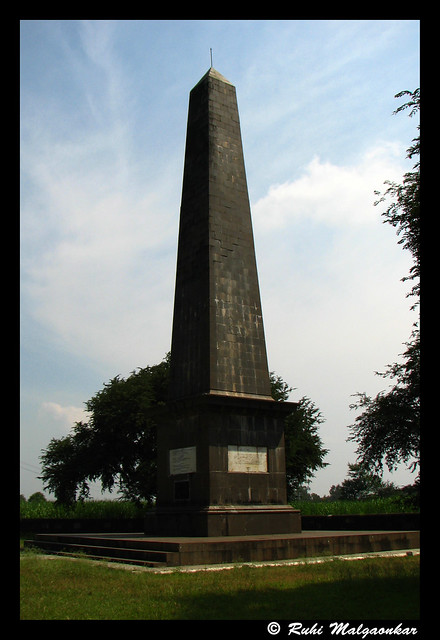
In June 1980, the name of Camões was mired in controversy. This controversy erupted, it seems, for a number of reasons. These included the cultural programs organized to commemorate the Fourth Death Centenary of Camões, the installation of a marble medallion bearing the image of Camões on the Ashoka Pillar in the Municipal Garden in Panjim, and the invitation extended to the last Governor-General of Portuguese India, Manuel Antonio Vassalo e Silva to attend the celebrations. Owing to the fact that diplomatic relations were normalized between Lisbon and New Delhi in 1974, the decision to commemorate the Fourth Death Centenary of Camões and to invite Vassalo e Silva seems to have been approved at the highest governmental levels in Portugal and India.

The Nationalist Citizens Action Committee mobilized the protests against the celebration of a Portuguese literary and national icon. There are no prizes for guessing what these protests were against – Portuguese colonialism and the indignities, injustices, and oppression of four-and-a-half centuries. In the ensuing melee, the one event that actually grabbed headlines was the apology that Vassalo e Silva was made to offer, after a demonstration that stopped him from paying his respects at the Martyr’s Memorial in Panjim. As one of the newspapers at that time reported, “The former Governor General yielded to the demand for [an] apology when the demonstrators told him that they had no objection to his placing the wreath but only if he expressed regret for the indignities committed on Goan people including freedom fighters by the erstwhile Portuguese regime”.§

Vassalo e Silva was forced to apologize despite the fact that he believed that “[t]he liberation of Goa was in the interest of Goans. Though Portugal ruled Goa for 450 years, this territory had always remained a part and parcel of India, irrespective of some people who might feel otherwise. It was also in the interest of Portugal that Goa should go back to the hands of Goans”. Similarly, George Vaz, a member of the Communist Party of India, made an important observation which can help us in understanding why Vassalo e Silva held such an opinion: “General Vassalo e Silva … when he was the Governor General of Goa, was secretly associated with the left movement in Portugal, which finally overthrew the Salazar dictatorship; a movement which ushered in the liberation of most of the African colonies of Portugal … General Vassalo e Silva represented that section in Portugal which had hailed the Liberation of Goa”.§

In fact, during the days surrounding the controversy, the “humanitarian approach” of Vassalo e Silva and his love for Goa were highlighted. Writing to the editor of a newspaper in June 1980, D. W. Desai observed, “If there would have been any other representative [of] an imperialist country to govern Goa, Goans would have suffered horrible bloodshed. In spite of this fact, many Goans are kept [in the] blind to the good deeds of this good man.  [Goans] are prejudiced by his picture as is exhibited by some politicians who wanted only to create ill-feeling towards [the] Portuguese regime” [emphasis added].§
From Navprabha (Marathi daily), dt: 5 June, 1980. Workers of the Panjim Municipality are pictured removing the marble medallion bearing Camoes' image. 


The 1980 demand could appear to be ‘secular’, with the protests against Vassalo e Silva led by the Nationalist Citizens Action Committee; and the Camões-medallion incident being condemned by the Bharatiya Depressed Classes League, Goa Unit, and the Congress-I.  Much like today, it would not be surprising if the protests in 1980 also had a subtext of hurt at the history of Christianization in Goa, as is today clearly expressed by the statements issued by the RSS. Thus, even though we might observe secular political outfits and Bahujan organizations leading the protests in 1980, the movement nevertheless was trapped within a nationalist understanding of Goa’s past, wherein Christianization and Portuguese colonialism are viewed to have caused the destruction of the culture of Goa.

The multi-faceted figure of Vassalo e Silva and the complex history in which he was situated, exposes the hollowness of demands for apologies. For surely, one apology tended by a former functionary of the colonial regime should have been enough, right? But apparently that is not so. The business of apologies has an insidious relationship with nationalism and how Bahujan identities are manipulated for devious gains. Given that Indian nationalism in Goa has always pitched itself against an enemy, first against Portuguese colonialism, and then against Goan Christians as continuing that ‘colonial’ legacy, it is by ignoring and/or distorting certain facts/events in history today that the Hindu Bahujan are perpetually pitched against their Christian counterparts, and as a substitute for Portuguese colonialism. This is perhaps how brahmanical power and communalization thrives in Goa.

 Due to his association with the Portuguese left, Vassalo e Silva may have believed that an apology may have been apt for past colonial rule. However, such apologies end up condemning Christians in Goa, marking them as enemies, and pitching Hindu Bahujans against them for crimes that are more ‘imagined’ than real. It is time to recognize this fact.    

§ Quotations from The Navhind Times, dt: 10 & 11 June, 1980. 

(First published in O Heraldo, dt: 3 February, 2016)

Monday, February 2, 2015

GHORACHO ‘OWNER’ KAI ‘CHAKOR’?


borovpi DALE LUIS MENEZES ani AMITA KANEKAR

Lok Sobhechea venchnukam uprant, BJP-cho sorkar sodrer ailolean olp-sonkhechea lokancher ani tanchea dev-mondirancher hol’le chodda promannan zalole amchea khobra-potrancher ani TV news-acher amkam disun yetat. Fattlea don mhoineanchea kallant ‘ghar wapasi’-che chollvollicho bhorpur bovall amkam aikonk yeta. Tor hem ‘ghar wapasi’-chem prokoronn kitem? Tache fattlo itihas kitem? Ani xevottak Hindutva zome ‘ghar wapasi’- itlea nettan kiteak fuddem vhorunk mukhar sorleat? Hem zanna zaunk kaim itihasik khinnancher ani ghoddnnukancher hea lekhachea survatekuch nodor ghalop gorjechem thorta.
***
1818 vorsa, Janer mhoineant Peshwa rajshahi ani British soinikam modem tisrem ani xevottachem Anglo-Maratha gher’r pettlem. British soinikam borobor, hea gher’rant zaite Mahar soinik-ui zhogoddle. Hem gher’r bhov ‘heroic’ zaun aslem, ani hachem karonn mhollear British foujent fokot 250 ghoddekaranchi poltonn (cavalry) ani 500 pãy-soinik (infantry) asle, ani hantuntle choddxe soinik Mahar vortoule. Dusre vatten Peshwa Bajirao Dusro hache fattlean 20,000 ghoddekaranchi poltonn ani 5000 pãy-soinik asle. Bhima Koregaon hea zagear zalolea zhuzant, Peshwa rajshahi tea dis harli.

Punn hea gher’rak aiz ami titlem mhotv dinant. Hachem karonn mhollear hea gher’rant Mahar soinikamni Britisham borobor ravon Peshwa (vo Bharoti) soinikank haroilole dekhun. Amche ‘textbooks’ Peshwanchi har hi amchea raxttrak ek dukhachi gozal oxem manun choltat. Amkam sodanch sangot aileat ki vosnnukponna (colonialism) udexim British Raj amchea raxttrachea lokank damun dovortale mhunnon. Punn amchea ani dusrea kaim borovpianchea mota pormonnem, Britishanchem zoit asa titlench tem Mahar somudayechem zoit-ui aslem. Ami hem monant dovrunk zai ki Peshwa rajshahi hache khal Mahar lok chidd’ddon aslolo, ani 1818 vorsa zalolea gher’rant tankam suttka mell’loli, oxem amcheamni mhonnom-ieta.

Tor osli suttka ji lokank koxtt korun ani zhogddun mellta tachi ami dobajean ugddas dovrunk zai aslo nhoi? Punn ami oxem korinant. Hatunt amchea raxttrvadi (nationalist) itihas likhnnent unneponn disun yeta. Unch zatinchea mon’xank vosnnunkponnacho kall (colonial period) ho zaun aslo opman ani lojecho kall; jea kallant tanchem boll unnem zalolem ani rajniticher tancho probhav komi zalolo. Punn dusre zatinchea lokank hoch vosnnunkponnacho kall niticho ani suttkechea survatecho kall zaun aslo. Dekhik, jea disa Vasco da Gama, Calicut pavlolo, to dis aiz zaite Dalit lok tanchea suttkecho oromb zaun asa oxem man’tat (polle Aditya Nigam, The Insurrection of Little Selves, 2006, pan 182).
***
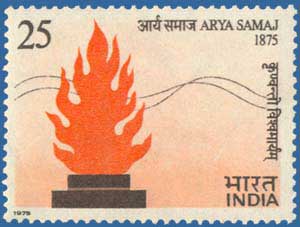
Arya Samaj Ani Tanchem Karya
1880 hea doskant Arya Samaj hi sonstha zolmant aili. Tancho mukhel hetu Hindu dhorm’ ‘reform’ korpant aslo. Hie sonvsthecho promukh mhollear Swami Dayanand Saraswati. Swami Dayanandachea mota pormonnem tea kallacho Hindu dhorm’ matso pirddear zalolo. Hindu dhorm’ adle bhaxen ‘pure’ ani ‘Vedic’ sounskruticho ascho ani dekhun tachem ‘reinterpretation’ korunk Swami Dayanand fuddem sorlo. Atam Hindu dhorm’ ‘reform’ kiteak korchi goroz poddli haka sabar karonnam asat, punn ami tim bariksannin hanga niyallpache nant. Itlench mhollear puro ki ho ‘reform’ ek ‘reaction’ aslem (1) sabar ‘untouchable’ ani sokoilea-zatichio somudayo Kristi dhorm’ apnnaitolea karonnak lagon, (2) Musolman somaz rajkaronnant apleak manyatay magta dekun, (3) Hindu dhormant zativad asa to kabar korunk, ani (4) British-anchem vosnnukponn. Arya Samajacho vaur chodd korun Panjab prantant kherit bhaxen yexosvi zalo.

Swami Dayanand ani Arya Samajachea mon’xank hem sot somzolem ki dhormantoram zait ravlim zalear unch-zatinchea Hindu lokancho Bharatachea rajkaronnant probhav unno zatolo mhonn. Haka lagon Swami Dayanand-an êk yevzonn sodun kaddli ani ti mhollear shuddhi pod’doticho rosto. Shuddhi pod’dote khala Arya Samaj lokank porte Hindu dhormant haddunk vavrunk lagle. Tanchea hie yevzonnek zaitem yes mell’llem karonn atam Arya Samaj Kristi misionaram bhaxen lokank xikxonnachio ani bholaikechio sovlotio divunk lagle, ani vorna-vevosthechea (four-fold hierarchical system) faske bhitorleanuch thoddi bhov ‘social mobility’ ani ‘self respect’ diunk lagle.

Shuddhi pod’dot Swami Dayanand hachea poilim savn pasun asloli. Ti fokot unch zatinchea lokank ‘purify’ korunk uzar kortale. Swami Dayanandan tika novem rup dilem, ani atam shuddhi mhollear dhormantor korpachem sadhon zalem (polle Maria Misra, Vishnu’s Crowded Temple: India Since the Great Rebellion, 2008, panam 70-3).
***
‘Ghar wapasi’-cho sarko orth ‘re-conversion’ nhoi punn ‘conversion to Hinduism’
Aiz zor ami ‘ghar wapasi’-chi khobor kortanv zalear, ami tacho itihas sarke toren zanna zaun ghevpacho proyotn korinant. Mahar soinikanche khobrek ani Arya Samajak  kosloch ‘direct’ som’bondh nam, punn hio don itihasik ghoddnuko amcheamni ‘indirectly’ zoddunk zata ‘ghar wapasi’-chem pulitik zanna zaun ghevpak. Jednam kaim Dalit somudayo Peshwa rajshahi harovpant aplem gorv ani suttka asa oxem somzotat ani Vasco da Gama Calicut pavlolo tednam apleak ani aplea sangatiank suttka mellpacho oromb zalo oxem somzotat, tednam hio somudayo ‘ghar’-antlean bhair sorunk proyotn kortat, oxem disun yeta. Dusre vatten jednam Arya Samaj sarkio sonstha shuddhi sarkea pod’doticho vapor kortat tednam heach lokank te ‘ghar’-ant haddun, tankam damun dovorpacho proyotn-ui amkam disun yeta.

Khoreponnim choddxea lokanchi shuddhi vo ‘ghar wapasi’ zata te Hindu dhormant poile suvater kednanch nasle. Dekun, ‘ghar wapasi’-cho sarko orth ‘re-conversion’ nhoi punn ‘conversion to Hinduism’ oso zata. Why I am not a Hindu (1996) hem Kancha Ilaiah hachem pustok oso vichar manddtta ki zaitio porompora ani rit-roviso jio Dalit-bahujan lok palltat taka unch-zatinchea Hindu lokam koddem kainch sombondh nam. Dekhun, Dalit-bahujan lokank ‘Hindu’ oxem vollkhop sarkem nam, oxem to sangta. Punn Dalit-bahujan lokank ‘Hindu’ mhonn vollkhotat tem rajki, ani nhoi dhormik karonnank lagon.

Toxench Christophe Jaffrelot sangta te bhaxen, British Bharotant yeunche poilim, sabar karagiri korpi somudayo (artisanal castes) Islam dhormant bhitor sorlolio, zativada pasun pois vochonk. Jaffrelot-achea mota pormonnem hi osli rajkornnik halchal korop mhollear Hindu hacho ankddo vo lok-sonkhya vaddovpacho yotn. Dekunuch anti-conversion kaideanchi magnnim fattlea kaim vorsam savn zait asa (polle Jaffrelot, Christophe. “India: The Politics of (Re)Conversion to Hinduism of Christian Aboriginals.” Annual Review of the Sociology of Religion hea pustokant, sompadon korpi Patrick Michel and Enzo Pace, vol. 2: Religion and Politics:197–215. Leiden: Brill, 2011, pan 205). Hea ‘ghar wapasi’-chea prokoronnant ek mat thavem zaun ailam: ‘anti-conversion’ kaide zai hacho orth oso-i zaunk xokta ki hozaramni lokank hem ‘ghar’ soddun diunk zai. Ek xekddo adim zoso Arya Samaj vavurtalo Hindu ‘ghar’ ani tachi lok-sonkhya samballun dovrunk, tosoch aiz Raxttra Seva Sangh (RSS) vavurta oxem mhollear, otitay zaunchi nam. RSS ani her sonstha ‘ghar wapasi’ kortat dekun zaito lok atam Buddhist zaunk lagla, zoxe porim Gaya (Bihar) hea ganvant halinch disun ailam.

‘Ghar wapasi’-cho ‘target population’ mhollear, zoxem Dalit zannkar Kancha Ilaiah Asian Age hea potracher boroun sangta, Dalit, Adivasi, ani OBC hea vorgantle lok je aiz ‘evangelical Christianity’ ani ‘prayer groups’-ant vanttekar zatat. Hea lokam modem RSS akant toyar korunk sodta, oxem to mhonntta. Kancha Ilaiah amkam fuddem sangta ki jea disa savn Dr. B. R. Ambedkar-an Nagpur xarant aplo dhorm’ bodol’lolo tea disa savn Dalit-bahujan lokank dhormantor mhonnche ek otmik ani lokxahik (spiritual and democratic) hok’k zaun urlo. Kancha Ilaiah fuddem mhonntta ki adim Dr. Ambedkar-an Buddhism appnailolem, aiz chodd so Dalit-bahujan lok Kristi dhormak akorxit zalolo asa.

Arya Samaj-an ji shuddhi pod’dot chalu keloli ti aiz RSS-an tika ‘ghar wapasi’-chem nanv dilam. Ek amkam saf disun yeta ki shuddhi ani ‘ghar wapasi’ vorna-vevosta ani zativad  posraita, ani dhormantoram (conversions) eka mon’xak hantuntlean bhair sorunk adar dita. Katolk ani Islam dhormantui zativad asa, amkam to lipoun dovrunk naka. Punn Katolk ani Islam dhormachi ‘theology’ sogleank ekuch nodrentlean polleta. Tor hea dhormanchea ‘theology’-intlean zativadak addavunk zata, dekunuch aiz amkam ‘Dalit theology’-cher sahit’ya vachunk mellta.
***
Sogllinch  dhormantoram zobordosten kelolim oxem nhoi
Hem soglem jem ami voir sanglam tem Gõychea lokank ani Gõyank lagu zata. Karonn ‘ghar wapasi’ amchea kallar kiteak korunk zai haka ek ‘argument’ oso asa ki sogllim dhormantoram jim sollavea xekddeant savn kelolim asat tim ‘forced’ asat mhunnon. Gõyant tor soglleamni aikolanch astolem ki koxem porim Purtugez kallant amkam soglleank Kristanv kelole te. Novo sôd-vavr zo itihaskaramni laila tachê udexim amkam oxem disun yeta ki sogllinch  dhormantoram zobordosten (forced conversions) kelolim oxem nhoi. Hacher itihasant purave asat (polle Ângela Barreto Xavier. “Disquiet on the Island: Conversion, Conflicts and Conformity in Sixteenth-Century Goa.” Indian Economic & Social History Review vol. 44, no. 3 (2007): 269–95). Soglinch dhormantoram tor zobordosten zalolim zalear aiz lakhamni lok (Kristanv toxech dusrea dhormache) Gõychea Saibachea bhoktek yetole asle, vhoi?

Fuddem, Gõyant zobordosten dhormantoram zalolim hache purave diunk zaite lok oslio kannio sangtat: konnui xit (cooked rice) gheun Hindu lokanche bãynt khoim tea kallar uddoitale, ani hea karonnank lagun to monis (ani tacho kuttumb) bhoxttovtalo ani taka kaim upay nam zaun Kristanv zaunk poddtalem. Hie kannientlean ek disun yeta ki hio oslio kannio chodd korun unch zatinchea bod’dol uloitat mhonnon, kiteak ‘private’ bãycho ani bhoxttavpacho ul’lekh kelolo asa dekun. ‘Private’ bãyio khonnpak khorch khub aslo ani thoddeach lokam koddem tem zomtalem. Fuddem, bhoxttovpachi bhirant chodd korun unch zatichea mon’xak astali, karonn ek favtt bhoxttovlo zalear vorna-vevosthent to sokol poddtalo. Punn oxem astonam ami haka ‘forced conversion’ mhonnpachem kai Hindu dhormantlean ‘excommunication’ korop vo bohixkar ghalop? Kristi dhorman oslea bohixkar ghatlolea ani bhoxttovlolea mon’xank zago diun, tankam man dilo, oxem amcheamni mhunnonk zainam?

Zoxe toren ami aiz Gõyant dhormantoram somzun ghetat, ti somzovnni ‘ghar wapasi’ korpant Hindutva rajkaronnak protsahon ditat. Konnakui hie dhormantorachie somzonnent unneponn asa tem soroll disun yeta. Gõyant ami dhormantoram mhonnche kitem, ani tim koxim zatat, ani lok dhormantoram kiteak kortat hacher bariksannin kednanch vichar korunk nam; tacher bhasabhas-ui kednanch zaunk nam.
***
Hea lekhant ami ‘ghar wapasi’ ani dhormantor he mud’de niyallun polleleat. Hea vorvim amkam ek disun yeta tem mhollear prosn jednam dhormantorancho aslo tori khoreponnim zhogddem ani zhuz zata tem zativadak lagon. Hatunt ‘ghar wapasi’-cho ‘secret’ vo ghutt liplolo asa.

(Dale Luis Menezes ‘medieval history’-nt sod-vavr korta Jawaharlal Nehru Universidadint, Novi Dill’li; ani Amita Kanekar-an A Spoke in the Wheel hi Gautam Buddha-chea jivitacher adarloli kadombori boroilea)

(Ho lekh Gulab, Voros 33, Ank 2, Febrer 2015-cher uzvaddak aila)