Showing posts with label Portuguese colonialism. Show all posts

Wednesday, April 12, 2017

COAL AND A BIT OF COLONIALISM


The decision by the state and central governments to expand the coal handling capacity of the Mormugao port is cause for alarm. From very real and obvious dangers of environment and health to the equally real threat to the livelihoods of traditional fishermen, the government seems least bothered about the citizens. On the contrary they are making haste to promote the interests of the big corporations. Indeed, plans to build the National Highway 17-B and the dredging of the Mormugao port are geared to facilitate the transport of large volumes of coal to industries in neighboring Karnataka.

According to news reports, the plans to dredge the port and build a new highway will benefit Indian companies like Adani, JSW, and Vedanta. Nihar Gokhale, a journalist who reports on environmental and policy issues, wrote some time back that clearances for the Mormugao expansion flagrantly violated rules and due procedure. If the plans materialize as per the wishes of the corporations and the government, Mormugao’s coal handling will rise to 26 million tonnes per annum from the current five million tonnes; the port town of Vasco and surrounding areas, therefore, are poised to choke on coal dust.

That the government is riding roughshod over the lives and livelihoods of the people is not surprising. In Goa, we have the instance of the Investment Promotion Board that circumvents all checks and balances to bring in the ‘mega-project development’. Case in point was the sale of a village in Tiracol to construct a golf course for the rich, while the villagers engaged in traditional occupations were manhandled to vacate the land. Through the partnership of corporations and government we see a process of ‘colonization’ wherein local resources are senselessly extracted or destroyed while the local people either get peanuts in return or nothing at all.

Thinking of large-scale processes of development as ‘process of colonialism’ – wherein shifts in political power does not necessarily alter oppressive relations – allows us to see that the nation-state of today operates in similar ways as the colonial-state of the past. As many scholars have pointed out, the neo-liberal development shares a link with past colonialism and imperialism in places likes Asia and Africa in the manner in which it extracts resources and mounts wars against indigenous peoples.There is, however, a difference between the neo-liberal development of today and the colonial development of the past, chiefly in terms of the volume of resources extracted or exploited. Activists and lay citizens need to consider this history in order to mount strong resistance against the destructions of lives and livelihoods.

Mormugao port provides us an excellent opportunity to reflect on such processes and their long history. The port, in fact, can be considered to be at the centre of colonial and neo-liberal development. There is the curious case of British India investing in the construction of the West of India Portuguese Guaranteed Railway (WIP) that had linked Mormugao to the Southern Mahratta Railway (SMR) at Londa, via Castle Rock towards the end of the nineteenth century. Looking for a cheaper and convenient point for exporting the products from the hinterlands of British India, the British Raj entered into a treaty – the Anglo-Portuguese Treaty of 1878 – with Portuguese India. The cost of building the railway line, in true colonial fashion, was borne by the Goan exchequer.

The Portuguese were looking for investments that would revitalize the weakened economic situation, create jobs, and boost the almost non-existent industry in Goa. The Portuguese government hoped that collaboration with the economically and politically powerful British empire would modernize Portuguese India. That it did not work was due to many factors and there is no space here to elaborate why these plans failed. However, what needs to be highlighted is that many in Goa at that time felt that the Portuguese had effectively given the control of the economy into British hands. The British too wanted political and economic control over Portuguese India. They did achieve this goal to a certain extent with the control of the port and railways, and taxes on the production of salt, amongst other things.

In a sense, the developmental politics around Mormugao port in contemporary times follows this old pattern; of massive investments coming with a promise of jobs and growth of the economy. It also necessitates the investment of public money without substantial returns to the same public. Whereas in the past the flow of goods was from the hinterlands of India to other places of the world, in the present times the government-corporate nexus wants to use Mormugao as a importing and exporting node for goods (like coal and iron ore) to feed the industries in various parts of the country and abroad. The case is curious not just because of the reverse flow of goods, but also because Indian companies are extracting natural resources like coal from distant Australia (and also in places like Mozambique in Africa) and transporting it in India. Many in Australia, including indigenous leaders, and cricketers like Ian and Greg Chappell, have supported campaigns against Indian companies like Adani to halt coal extraction. These Australian activists have argued that the  proposed mine in Carmichael, Australia – said to be the largest in the world which can produce 60 million tonnes of coal every year for the next 60 years – would threaten not just  the indigenous communities there but also the eco-sensitive Great Barrier Reef.

From facts available on the ground, this present neo-liberal expansion – following roughly patterns of past colonial interventions in the economy and politics – appears eventually to benefit only giant corporations. Colonial relations thrive amidst us, destroying the environment and the lives of people. And it is not just the white men who are propagating such exploitative business practices.

(First published in O Heraldo, dt: 12 April, 2017)

Wednesday, January 18, 2017

(RE)WRITING GOAN HISTORY


A strain of history-writing that has recently gained some attention is that of “global history”. The writing of global history, especially of the 16th to the 18th centuries, is a simultaneously challenging and exciting task for professional historians and students. Exciting because at a time when it took months or even years to sail from one continent to the other, people, goods, ideas, and cultural practices traveled from one place to another. But these influences did not just travel; they had a deep and transformational impact on the history and culture of the recipient peoples and societies.

All too often the writing of global history that stresses global connections is met with outrage. Were there no historical developments of our own, locals often ask. These questions become crucial and fraught with dangers as global histories appear to be another way of saying that Europe was supreme, and influenced the rest of the world. This is to miss the point of global historiography because when global histories are written outside of Europe one can observe how these global connections had a profound impact on Europe itself. Further, global history need not be written only with reference to Europe. One can be creative and even try to understand the history of Goa, say, from the perspective of Mozambique.

For some time now I have been toying with the idea that Goan history should be, or is essentially, a global one. That is, the international connections through which Goan history emerges are not only crucial but are the chief creators of Goan history. If ‘global’ is too ambitious or too ideologically fraught a term one could label such connections as ‘trans-oceanic’ or ‘trans-continental’ or simply ‘connections’. However, the importance of connections, regardless of their dimensions, remains true. Thus, while writing the history of Goa one seeks connections not only with Portugal but also with the neighboring Deccan regions and its polities, as well as the polities on the western coast of the Arabian Sea and the Indian Ocean.

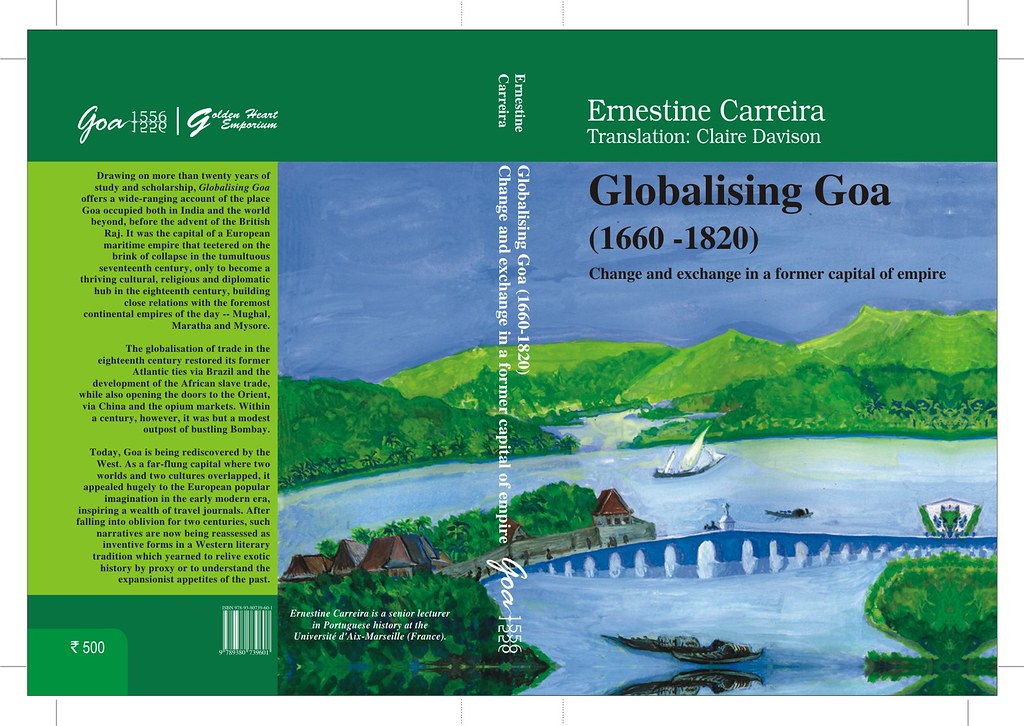
Ernestine Carreira’s Globalising Goa (1660-1820): Change and Exchange in a Former Capital of Empire (2014) is concerned precisely with discussing the connections that the Estado da Índia had with Portugal, Brazil, the Marathas, and other European powers in the Indian Ocean. Carreira, who teaches Portuguese history at the University of Aix-Marseille in France, gives equal importance to the political developments wrought by European and local powers. Further, her book also hints at the simultaneous development of the Goan identity.

For instance, take Carreira’s discussion of how the territories of the Novas Conquistas were conquered and/or integrated into the Goan segment of the Estado, which until then comprised only of what subsequently came to be called the Velhas Conquistas. What we today identify as the territory of Goa was linked to certain definite developments in Brazil. During the reign of Dom João V (1689-1750) new gold mines were discovered in Brazil which provided Portugal with much needed bullion. These resources were used to finance the army which won against local feudatories. With military victories and diplomatic negotiations, new territories and people came under the rule of the Estado. In a similar way, Carreira writes about other events and developments in the India Ocean or in the Deccan region that had a deep impact on Goa.

There is something else that can be said about the Goan identity from the abovementioned anecdote. There is a tendency in Goa to link Goan history to the Indian nation as a default reflex. Many times this proves to be historically inaccurate. As the above anecdote shows, large parts of what is today indubitably considered Goan became Goan due to the unstable polities on the borders of the Estado. How different local feudatories interacted with the Estado changed the identity of many population groups from the 1750s. Therefore, Goa emerged (and is indeed continues to emerge) slowly through concrete historical processes.


Apart from the conceptual concerns, Carreira’s work also tries to intervene in the area of Goan academia in general and Goan historiography in particular. Like Raghuraman Trichur and other scholars have recently asserted, Carreira too suggests that Goan academia is hardly a place of lively debate. In terms of Goan historiography, Carreira rightly notes that after an initial spurt of publications in the ’80s and ’90s by organizations such as the Xavier’s Center of Historical Research, there are few institutions today that are interested in furthering historical research about Goa. While there are many scholars – such as Carreira herself – who would like to devote themselves to research on Goa, they lack precisely the support system and academic infrastructure crucial to develop historical research. The consequences of such apathy towards historical research are indeed grave.

Apart from the fact that historical interpretations can be propagated by politically misguided persons, the actual archives too get neglected. Without an organized and vocal interest-group, there is nothing to stand between the archives and the ravages of time and climate that decimate these holdings. Goa’s state archives, like the numerous historical monuments, are the patrimony of all Goans, regardless of their political or cultural affiliation.These archives are significant because they can not only reveal, but also have the potential to change, our collective memory of the past. Well-kept and well-used archives, and libraries, are also a sign that governmental and cultural institutions are serious about the culture of the place, which fosters a community spirit. Institutions in Goa need to recognize it and seriously invest in such bodies.

But nonetheless, students and researchers of Goan history should be glad that they have a rigorously researched study for reference. Call it global, trans-oceanic, or any other name, Carreira’s work reminds us that the connections that Goa had with other regions and peoples are not only very important to study but critical to an appreciation of the Goan past and present. 

(First published in O Heraldo, dt: 18 January, 2017)

Wednesday, August 3, 2016

GOA AND EUROPE: ON EMOTIONAL AND LEGAL BONDS


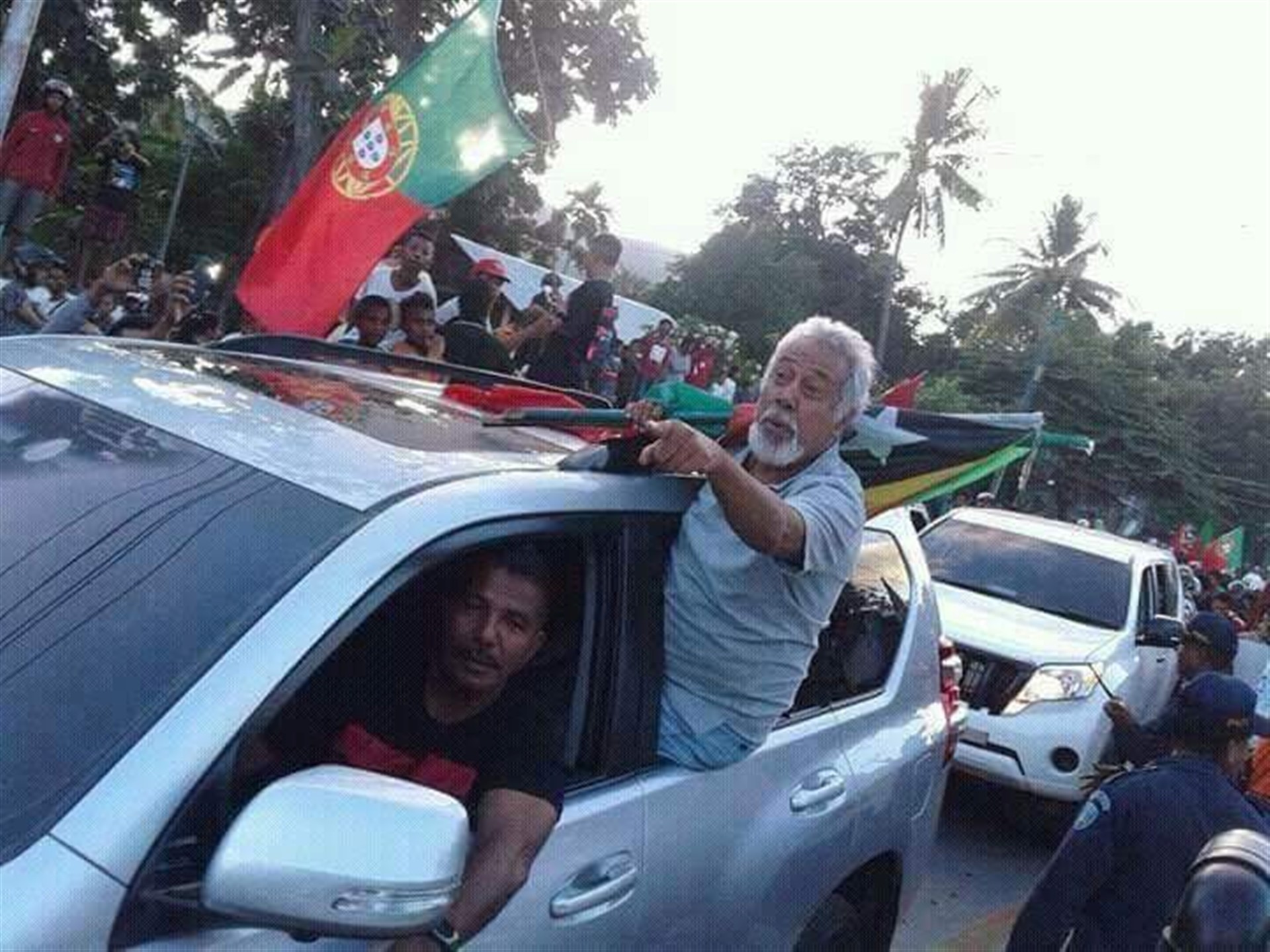
Two headlines in the last month are a good example of the irony at work in Goan politics. Following Portugal’s surprise win at the Euro 2016, one headline read: “Euro win unites Goa & Portugal” (12 July, 2016). The second headline a few days later read: “27,000 Goans with both Portuguese and Indian passports to be struck off poll rolls” (20 July, 2016). The first headline highlighted the emotional bonds between Goa and Portugal, with many of the comments by former Goan footballers emphasizing that the Portuguese football team had such a large support base here due to the “Portuguese rule” over different parts of Goa over a period of 451 years. The second headline drew our attention to the legal and diplomatic issue surrounding the vexed dual citizenship affair, and the current impossibility to hold both Portuguese and Indian citizenship at the same time.

If one were to look at the legal history, Portugal started recognizing certain tax-paying Goans as its citizens at least from 1826 when the Carta Constitutional was brought into force, reinforced further in 1910. The Salazarian Estado Novo despite its curbs on political organization did not restrict the right of citizenship of Goans. This was markedly different from what happened in neighboring British India where Britain refused to recognize even elite Indians as imperial citizens. It is interesting to note how following Portugal’s success on the football pitch, emotional ties are highlighted more by commentators than the legal ties, and when the question of legal issues emerge, the emotional ties are always kept out. It seems that the celebrations over football have nothing to do with this legal history that saw Goans first being recognized as Portuguese citizens, and after the Indian armed action, saw Goans reclaiming this right to work and engage with a larger European world.

To be fair, following or in the build-up to any big football match that Portugal plays, there are always reports that pour from the former ‘colonies’ about the support the football team receives and how it is the colonial history that provides this connect. However, parts of this colonial history which included the extension of citizenship to the colonies is not highlighted or willfully ignored. In Goa, the celebrations over such a victory additionally get hijacked by nationalism wherein rightwing groups declare that it is anti-national to cheer for the Portuguese football team. Thus, the history of colonial oppression is one that liberal as well as rightwing observers remember during such sporting events, as it is certainly odd to cheer a former colonizers’ football team in a post-colonial world. While the moderate or liberal commentators may marvel at the emotional display for the Portuguese team (in Goa as well as in other former colonies), the rightwing commentators would outright condemn it.

If the fascination with the emotional response to the Portuguese football team is marked by a selective memory of colonial history, the issue of dual citizenship is marked by a complete amnesia about the same. The legal history of the Portuguese citizenship of Goans is ignored and the issue is seen entirely through the lens of Indian cultural nationalism that seems to supersede everything. 

The rationale given to strike-off 27,000 Goans from the electoral rolls was that “as per the Representation of People’s Act and the Election Rules, one has to be an Indian citizen to cast one’s vote. Also, the concept of dual citizenship does not exist in the country [India]”. What such a statement does not account for is the fact that Indian laws were unilaterally imposed on Goa from 1961without any regard for the region’s history or without the assent of the inhabitants. With the normalization of diplomatic relations between Lisbon and New Delhi in 1975, Portugal gave the option to reclaim its citizenship to those who were residing in the former Portuguese India, as well as their children. Bearing in mind such a history, Jason Keith Fernandes, a legal anthropologist and Herald columnist argued that “if Goan migration seems to be turning into a one-way exit, it is because of the oppressive legal regime that the Indian state insists on. Goans are not obtaining Portuguese passports; they are merely reclaiming the Portuguese citizenship that they have always enjoyed… A legal regime honest about history would undoubtedly allow for a more dynamic movement of Goans between Goa and other places”.
 
In East Timor
The move to remove 27,000 Goans from the Indian electoral rolls also reeks of a sinister and short-sighted plan, especially since the assembly elections are round the corner. A demographic swing of 27,000 people who will not be able to vote either makes it easy for some or difficult for others in the forthcoming elections. Given that the legal question is not yet debated and settled properly, hasty moves such as deleting names off electoral rolls will further compromise Goan identity. Yet again the destiny of large number of Goans will be determined by some who are unwilling to safeguard those interests and dismissive of Goa’s legal history, making the mobility of Goans in and out of their own homeland difficult. Most probably the issue of allowing Goans to hold dual citizenship will remain unresolved as the issue would lose its political value after the elections, while liberal and rightwing commentators would continue to wonder why in Goa (as well as in other former Portuguese colonies) a football match can evoke such emotional responses.

It would perhaps not be out of place to say that the Goan support to the Portuguese football team emerges not only due to a shared colonial history, but also a legal history of equal citizenship embedded within the shared colonial history. Eder’s brilliant and fantastic 109th-minute strike should essentially remind us of this.

(First published in O Heraldo, dt: 3 August, 2016)