Showing posts with label Europe. Show all posts

Wednesday, August 17, 2016

GOA AND EUROPE: NATIONALISM AND 'BONITOS MACACOS'


In the course of discussing the issue of the existence of legal and emotional bonds between Goa and Portugal, and how these bonds enabled the Goan to engage with a larger European world, I had suggested that such an engagement gets hijacked by nationalism. I would like to return to the theme to suggest that there is a longer history of pitting European culture, which is embodied in the Europeanized Goan, against Indian culture. Today, while an act like supporting the Portuguese football team, or reclaiming Portuguese citizenship, or simply demanding English as a Medium of Instruction in primary schools, may invite charges of being ‘anti-national’, about a hundred years ago it was the apparently mindless and shameless ‘aping’ of Western culture that was held up as an obstruction to true civilizational progress. One needs to locate the present allegation of being ‘anti-national’ and being ‘denationalized’ in this history of Goan intellectuals believing that the Goan was a ‘mimic-man’ due to his use of aspects of European culture.

The present problems emerging out of identity conflicts and communal polarization have their roots in a politics that projected a Sanskritically-constructed ‘Indian’ culture as the ‘other’ of Western or European culture. Suffice it to say that a shift was demanded entirely towards this ‘Indian’ culture rather than carefully thinking about the political future of Goans and Goa; a mixed-bag of rights and privileges that would enable cultural and social mobility for the Goans. In other words, rather than defining a politics based on the ground realities of different Goan communities, the nationalism of the elites was imposed on the masses.

In this context one can refer to Evagrio Jorge’s pamphlet A Reforma do Vestuário (1942). Jorge argued that Catholic intolerance and the propaganda of the Estado Novo had convinced the people of Goa that there was nothing better than European culture, making them loath certain aspects of Indian culture. As such, Jorge suggested that a change was needed and this could be brought about by changing to Indian modes of dressing. This would rescue the Goan from the civilizational degradations that had plagued him. Jorge’s propaganda made its arguments and suggestions not only through practical concerns of hygienic clothing for instance, but also in a manner that would culturally humiliate his readers. Arguing that the “heavy European clothing” was unsuited for a hot, tropical climate like ours, Jorge went on to suggest that Goans had to let go of “false ideas of grandeur” regarding European sartorial choices if they did not want to be referred to as “bonitos macacos (beautiful monkeys)”.

It is not really surprising that writers and political activists who thought that Goans were simply mimicking and aping Western culture would use a term like ‘monkey’ to ridicule them. In fact this was not the only way the Europeanized Goan was ridiculed. Jorge, in the same pamphlet, cites at length a passage from Dr. Antonio de Miranda’s Alguns Aspectos da Nossa Mentalidade (1933). Dr. Miranda too argued that a shift towards Indian culture and traditions was necessary. He attempted to criticize what he considered burlesque behavior amongst Goans, but ended up ridiculing the very persons he sought to reform. He recounts an incident about his mundcar, who, having completed his first viaj on board a P&O liner, wanted to present a crucifix to the chapel of his village. To that end he searched all shops in all the ports that his ship had berthed for a crucifix with Christ dressed in a tailcoat and a top-hat – in other words European clothes.
 
Evagrio Jorge
One cannot help but notice that, in suggesting that the engagement of Goans with European culture was burlesque, Dr. Miranda too invoked the ridiculous image of ‘bonitos macacos’ or the mimic-man. It is also interesting that it is the figure of the mundcar which comes in for ridicule. Thus, not all Goans are equally ridiculed and held responsible for Westernization, even if all of them are considered Westernized. Accounts and anecdotes of Goan intellectuals ridiculing the Europeanized Goan are quite revealing, seen from the class/caste perspective. Claims to European culture, then as today, had the potential of re-figuring the power-relations in Goa; one that elites increasingly shifting towards Indian nationalism wanted to counter. Through European dressing and the Portuguese language, the mundcar could make a claim for equality with the bhatkar. After all, given that the majority of Goan population today belongs to the former mundcarial class, it can easily be pointed out that it is the mundcarial underclass that is largely opting for a Portuguese passport and is being increasingly attacked for not having any loyalty to the Indian nation and culture today.

One needs to recognize that the claims to Europe and European-ness by the Goan are not a recent phenomenon, emerging due to the ability of Goans to reclaim their Portuguese citizenship. Issues of caste and class would undercut assertions that demand power and privilege to be distributed justly. One can also see how a nationalist politics demanding fidelity to Indian culture can neutralize lower class assertion and also obstruct the mobility of persons. Indulging in ridicule and outrage over this issue would only further the problem of Goans becoming strangers in Goa.

(First published in O Heraldo, dt: 17 August, 2016)

Wednesday, August 3, 2016

GOA AND EUROPE: ON EMOTIONAL AND LEGAL BONDS


Two headlines in the last month are a good example of the irony at work in Goan politics. Following Portugal’s surprise win at the Euro 2016, one headline read: “Euro win unites Goa & Portugal” (12 July, 2016). The second headline a few days later read: “27,000 Goans with both Portuguese and Indian passports to be struck off poll rolls” (20 July, 2016). The first headline highlighted the emotional bonds between Goa and Portugal, with many of the comments by former Goan footballers emphasizing that the Portuguese football team had such a large support base here due to the “Portuguese rule” over different parts of Goa over a period of 451 years. The second headline drew our attention to the legal and diplomatic issue surrounding the vexed dual citizenship affair, and the current impossibility to hold both Portuguese and Indian citizenship at the same time.

If one were to look at the legal history, Portugal started recognizing certain tax-paying Goans as its citizens at least from 1826 when the Carta Constitutional was brought into force, reinforced further in 1910. The Salazarian Estado Novo despite its curbs on political organization did not restrict the right of citizenship of Goans. This was markedly different from what happened in neighboring British India where Britain refused to recognize even elite Indians as imperial citizens. It is interesting to note how following Portugal’s success on the football pitch, emotional ties are highlighted more by commentators than the legal ties, and when the question of legal issues emerge, the emotional ties are always kept out. It seems that the celebrations over football have nothing to do with this legal history that saw Goans first being recognized as Portuguese citizens, and after the Indian armed action, saw Goans reclaiming this right to work and engage with a larger European world.

To be fair, following or in the build-up to any big football match that Portugal plays, there are always reports that pour from the former ‘colonies’ about the support the football team receives and how it is the colonial history that provides this connect. However, parts of this colonial history which included the extension of citizenship to the colonies is not highlighted or willfully ignored. In Goa, the celebrations over such a victory additionally get hijacked by nationalism wherein rightwing groups declare that it is anti-national to cheer for the Portuguese football team. Thus, the history of colonial oppression is one that liberal as well as rightwing observers remember during such sporting events, as it is certainly odd to cheer a former colonizers’ football team in a post-colonial world. While the moderate or liberal commentators may marvel at the emotional display for the Portuguese team (in Goa as well as in other former colonies), the rightwing commentators would outright condemn it.

If the fascination with the emotional response to the Portuguese football team is marked by a selective memory of colonial history, the issue of dual citizenship is marked by a complete amnesia about the same. The legal history of the Portuguese citizenship of Goans is ignored and the issue is seen entirely through the lens of Indian cultural nationalism that seems to supersede everything. 

The rationale given to strike-off 27,000 Goans from the electoral rolls was that “as per the Representation of People’s Act and the Election Rules, one has to be an Indian citizen to cast one’s vote. Also, the concept of dual citizenship does not exist in the country [India]”. What such a statement does not account for is the fact that Indian laws were unilaterally imposed on Goa from 1961without any regard for the region’s history or without the assent of the inhabitants. With the normalization of diplomatic relations between Lisbon and New Delhi in 1975, Portugal gave the option to reclaim its citizenship to those who were residing in the former Portuguese India, as well as their children. Bearing in mind such a history, Jason Keith Fernandes, a legal anthropologist and Herald columnist argued that “if Goan migration seems to be turning into a one-way exit, it is because of the oppressive legal regime that the Indian state insists on. Goans are not obtaining Portuguese passports; they are merely reclaiming the Portuguese citizenship that they have always enjoyed… A legal regime honest about history would undoubtedly allow for a more dynamic movement of Goans between Goa and other places”.
 
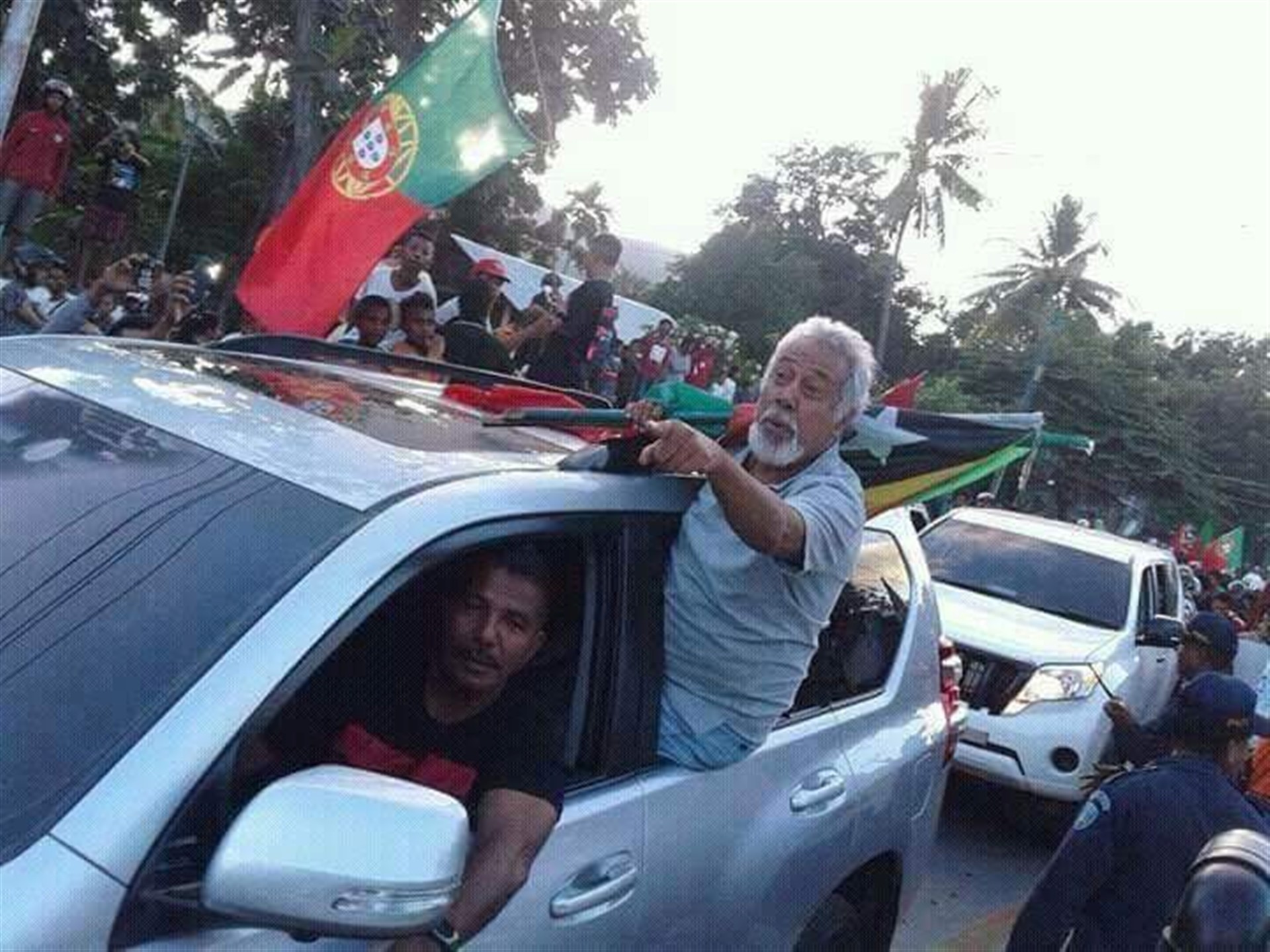
In East Timor
The move to remove 27,000 Goans from the Indian electoral rolls also reeks of a sinister and short-sighted plan, especially since the assembly elections are round the corner. A demographic swing of 27,000 people who will not be able to vote either makes it easy for some or difficult for others in the forthcoming elections. Given that the legal question is not yet debated and settled properly, hasty moves such as deleting names off electoral rolls will further compromise Goan identity. Yet again the destiny of large number of Goans will be determined by some who are unwilling to safeguard those interests and dismissive of Goa’s legal history, making the mobility of Goans in and out of their own homeland difficult. Most probably the issue of allowing Goans to hold dual citizenship will remain unresolved as the issue would lose its political value after the elections, while liberal and rightwing commentators would continue to wonder why in Goa (as well as in other former Portuguese colonies) a football match can evoke such emotional responses.

It would perhaps not be out of place to say that the Goan support to the Portuguese football team emerges not only due to a shared colonial history, but also a legal history of equal citizenship embedded within the shared colonial history. Eder’s brilliant and fantastic 109th-minute strike should essentially remind us of this.

(First published in O Heraldo, dt: 3 August, 2016)