Showing posts with label Goan Citizenship. Show all posts

Thursday, February 5, 2026

DUAL CITIZENSHIP: THE OVERDUE MOTHER OF ALL DEALS

 The recent India-EU deal has been dubbed “the mother of all deals.” Made on the sidelines of India’s Republic Day celebrations, the deal was welcomed across the political divide in India and Europe. But if cheaper olive oil, wine, and BMWs are the headline achievements, then the real deal—the one that actually shapes Indian lives—remains unspoken. That deal is dual citizenship for Indians.

Citizenship, too, entered the conversation along with the India-EU trade deal because António Costa, the Goan-origin head of the European Union and former Prime Minister of Portugal, was seen as the counterweight against the arm-twisting of Donald Trump’s tariffs.

As he had done previously when he visited India as Prime Minister of Portugal, António Costa flashed his Overseas Citizenship of India (OCI) card. This recognition of Costa's Goan and Indian heritage is not surprising in the least. António Costa has been known to flaunt his OCI card to facilitate better relations between India and Portugal, and now, as head of the European Union, between India and Europe.

The fact that António Costa’s origins became a diplomatic resource should give all Indians pause. The OCI card is not citizenship per se, but  simply a long-term, effectively permanent visa given at the express pleasure of the Government of India. Hence, António Costa is allowed to return home as many times as he wants, but he is not exactly a citizen of India. The Government of India retains the sovereign right to revoke the OCI. The Government of India has exercised this power on several occasions, especially against those it views as dissidents.

Goans, particularly, have been very sensitive about the fact that OCI is not citizenship but simply a visa. In fact, they have been demanding dual citizenship as their connection with their ancestral land, property, culture, and family is forcefully taken away by the Indian citizenship regime. In the last two decades or little over it, many Goans have reclaimed Portuguese citizenship and left for better prospects—better jobs in the United Kingdom and now increasingly in other parts of Europe.

In order to take up Portuguese citizenship for better mobility, socially as well as internationally, Goans must surrender their Indian citizenship. This legal requirement is rather unfortunate. In 1975, after relations between India and Portugal normalized, Portugal recognized the right of Goans to retain Portuguese citizenship because, before 1961, before the annexation of Goa by the Indian army, Goans were citizens of Portugal by birth. India, too, agreed with Portugal. The Portuguese state never extinguished that right, even though sovereignty over Goa had transferred to India. António Costa is simply returning the favor.

To get Portuguese citizenship is no easy task. Goans, and other residents of the former Portuguese India (Daman and Diu), must prove that their ancestors, either parents or grandparents, were born in Portuguese India. In other words, they have to prove that their ancestors were, by birth, Portuguese citizens.

Thus, if one goes to the historical archives in Goa, where most of the birth and other records are preserved, you see anxious people waiting to find out if birth certificates or baptism records of their parents or grandparents are available. They are helped by certain ‘agents’ who have a rudimentary knowledge of Portuguese. The other people there are landsharks and real estate agents who want to cash in on the land market (but that is a story for another day).

In 2023, I was a regular visitor to the archives, not because I wanted Portuguese citizenship or buy land but because as an historian, I was looking for traces of rice and cultivation in early modern Goa. It was over these months that I spent in the archives that I befriended several agents who would help these anxious people find birth records.

One of these agents told me something very interesting, something that I had always intuitively known. I asked this man how many Hindus also take up Portuguese citizenship. This man leaned into me—now bear in mind that the COVID contagion still posed a serious threat in early 2023—and so I could sense that he wanted to reveal a shocking secret. For my ears only.

He told me that almost half, if not more than half, of his clients were Hindus. It is a common stereotype that Catholics, branded ‘anti-national’, take up Portuguese passports and desert their motherland. I knew many Goan Muslims had also taken up Portuguese passports, but then again, that was only stereotypically expected of them. But Hindus? That revelation was still shocking, although I intuitively knew that many Goan Hindu were also reclaiming Portuguese citizenship.

A few days after this conversation, I overheard a Hindu man talking to another agent about the abysmal job situation in Goa. He belonged to the Bahujan Samaj, as was clear from the name he told the agent. This man, a mechanic working for the Government of Goa, was complaining about not making enough money and not being able to provide enough for his wife and children. As he spoke, I could see dark clouds of frustration darkening his face, and there was sadness in his eyes. “I should also make a Portuguese passport and earn better,” he said casually. Stereotypes collapse instantly when confronted with the economic realities of jobs and joblessness.

The situation in Goa is hardly unique, though the legal circumstances are. In states like Gujarat, Punjab, and Kerala, the numbers of Indian citizens giving up their citizenship is a lot higher. Goans can legally be Portuguese; Gujaratis and Punjabis cannot—unless they fake their papers. The other option for Indians is to go via the dunki route and risk their lives. Or get deported in shackles with the blessings of Trump.

Yet, in the last five years, more than 900,000 Indian citizens have given up their citizenship, and the number will grow. For many Indians, across class and caste, the quality of life has measurably deteriorated. The numbers of the AQI do not lie and they affect rich and poor. While the rich will legally abandon the country for cleaner air and a better quality of life, the poor will escape, even by treacherous illegal routes from India, because they want better jobs and better futures for their children.

In such a situation, it makes sense for all citizens of India to demand dual citizenship. It makes sense for the Indian Government to open routes for dual citizenship. India needs to follow the path shown by one of Goa’s most well-known sons, António Costa. There are more Antónios waiting to return home—or invest in its economy. Dual citizenship is the mother of all deals that is long overdue.

Published in The Wire.

Wednesday, August 3, 2016

GOA AND EUROPE: ON EMOTIONAL AND LEGAL BONDS


Two headlines in the last month are a good example of the irony at work in Goan politics. Following Portugal’s surprise win at the Euro 2016, one headline read: “Euro win unites Goa & Portugal” (12 July, 2016). The second headline a few days later read: “27,000 Goans with both Portuguese and Indian passports to be struck off poll rolls” (20 July, 2016). The first headline highlighted the emotional bonds between Goa and Portugal, with many of the comments by former Goan footballers emphasizing that the Portuguese football team had such a large support base here due to the “Portuguese rule” over different parts of Goa over a period of 451 years. The second headline drew our attention to the legal and diplomatic issue surrounding the vexed dual citizenship affair, and the current impossibility to hold both Portuguese and Indian citizenship at the same time.

If one were to look at the legal history, Portugal started recognizing certain tax-paying Goans as its citizens at least from 1826 when the Carta Constitutional was brought into force, reinforced further in 1910. The Salazarian Estado Novo despite its curbs on political organization did not restrict the right of citizenship of Goans. This was markedly different from what happened in neighboring British India where Britain refused to recognize even elite Indians as imperial citizens. It is interesting to note how following Portugal’s success on the football pitch, emotional ties are highlighted more by commentators than the legal ties, and when the question of legal issues emerge, the emotional ties are always kept out. It seems that the celebrations over football have nothing to do with this legal history that saw Goans first being recognized as Portuguese citizens, and after the Indian armed action, saw Goans reclaiming this right to work and engage with a larger European world.

To be fair, following or in the build-up to any big football match that Portugal plays, there are always reports that pour from the former ‘colonies’ about the support the football team receives and how it is the colonial history that provides this connect. However, parts of this colonial history which included the extension of citizenship to the colonies is not highlighted or willfully ignored. In Goa, the celebrations over such a victory additionally get hijacked by nationalism wherein rightwing groups declare that it is anti-national to cheer for the Portuguese football team. Thus, the history of colonial oppression is one that liberal as well as rightwing observers remember during such sporting events, as it is certainly odd to cheer a former colonizers’ football team in a post-colonial world. While the moderate or liberal commentators may marvel at the emotional display for the Portuguese team (in Goa as well as in other former colonies), the rightwing commentators would outright condemn it.

If the fascination with the emotional response to the Portuguese football team is marked by a selective memory of colonial history, the issue of dual citizenship is marked by a complete amnesia about the same. The legal history of the Portuguese citizenship of Goans is ignored and the issue is seen entirely through the lens of Indian cultural nationalism that seems to supersede everything. 

The rationale given to strike-off 27,000 Goans from the electoral rolls was that “as per the Representation of People’s Act and the Election Rules, one has to be an Indian citizen to cast one’s vote. Also, the concept of dual citizenship does not exist in the country [India]”. What such a statement does not account for is the fact that Indian laws were unilaterally imposed on Goa from 1961without any regard for the region’s history or without the assent of the inhabitants. With the normalization of diplomatic relations between Lisbon and New Delhi in 1975, Portugal gave the option to reclaim its citizenship to those who were residing in the former Portuguese India, as well as their children. Bearing in mind such a history, Jason Keith Fernandes, a legal anthropologist and Herald columnist argued that “if Goan migration seems to be turning into a one-way exit, it is because of the oppressive legal regime that the Indian state insists on. Goans are not obtaining Portuguese passports; they are merely reclaiming the Portuguese citizenship that they have always enjoyed… A legal regime honest about history would undoubtedly allow for a more dynamic movement of Goans between Goa and other places”.
 
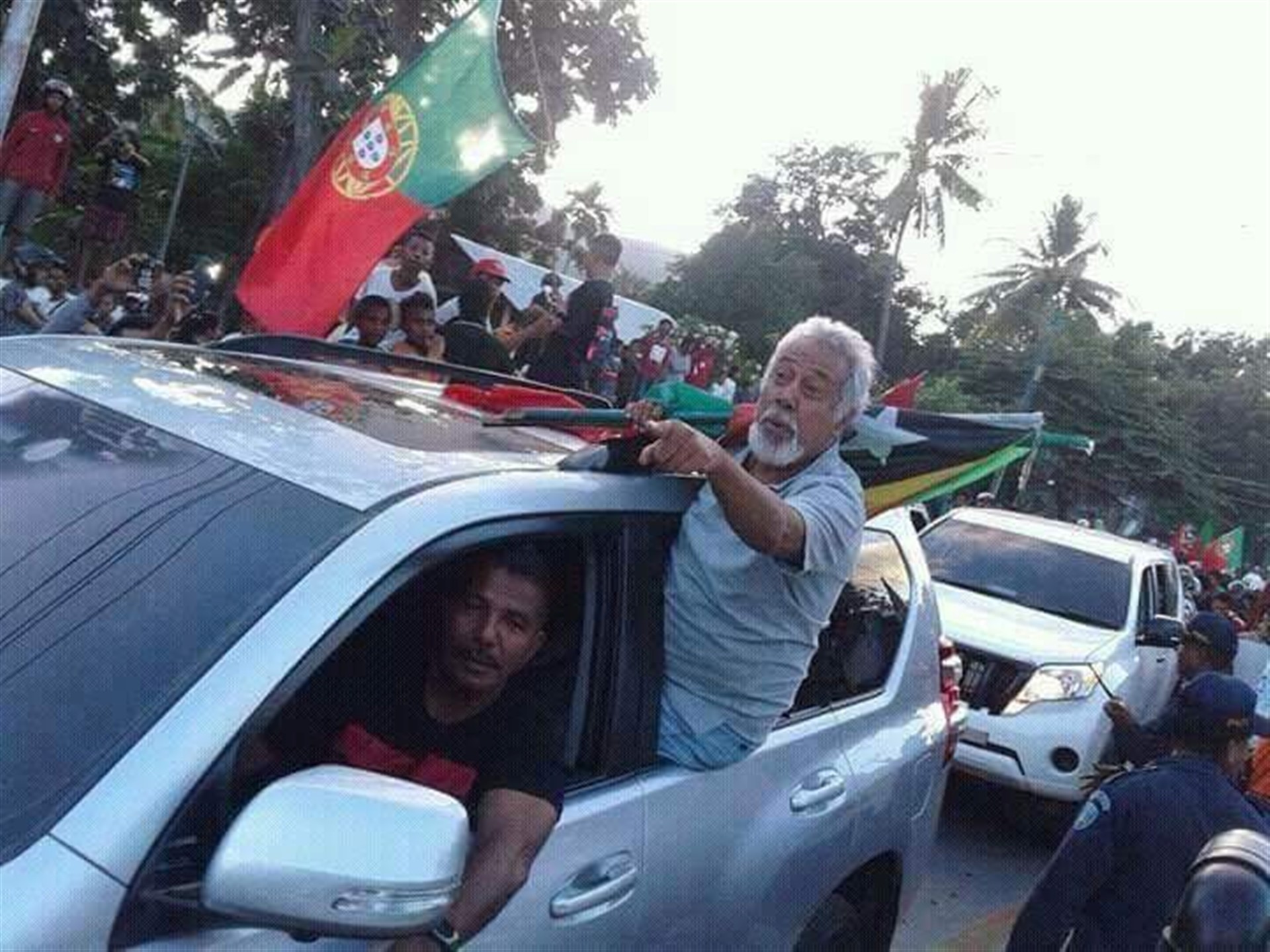
In East Timor
The move to remove 27,000 Goans from the Indian electoral rolls also reeks of a sinister and short-sighted plan, especially since the assembly elections are round the corner. A demographic swing of 27,000 people who will not be able to vote either makes it easy for some or difficult for others in the forthcoming elections. Given that the legal question is not yet debated and settled properly, hasty moves such as deleting names off electoral rolls will further compromise Goan identity. Yet again the destiny of large number of Goans will be determined by some who are unwilling to safeguard those interests and dismissive of Goa’s legal history, making the mobility of Goans in and out of their own homeland difficult. Most probably the issue of allowing Goans to hold dual citizenship will remain unresolved as the issue would lose its political value after the elections, while liberal and rightwing commentators would continue to wonder why in Goa (as well as in other former Portuguese colonies) a football match can evoke such emotional responses.

It would perhaps not be out of place to say that the Goan support to the Portuguese football team emerges not only due to a shared colonial history, but also a legal history of equal citizenship embedded within the shared colonial history. Eder’s brilliant and fantastic 109th-minute strike should essentially remind us of this.

(First published in O Heraldo, dt: 3 August, 2016)

Saturday, February 1, 2014

DORZO NA?: DILIP BORKAR KHOIM ANI KITEAK CHUKTA


Borovpi
Dale Luis Menezes, Albertina Almeida, Jason Keith Fernandes, Amita Kanekar, ani R. Benedito Ferrão

Survat
Kaim mhoine fattim Kala Academy-n Romi pustokank porot puroskar divpacho nirnnoy ghetlolean, ani Romi Konknni Rajbhas Andolon ani Moratthi Rajbhasa Andolan eke machier ekttaim zalolea karonnank lagun, Gõychea Nagri lipieyechea pattlavdarank borech tras zaunk lagleat, oxem amkam disun yeta. Nagrichea muttintlean Konknni bhaxechem rajkaronn ani kobzo atam sutton vochunk lagla, hem-i ami polleun ghetlam. Ho lekh ami kherit bhaxen Dilip Borkarachea “Aplech Bhaxecho Fondd Khonnnttat!” (Gulab, Janer 2013) hacher bhasabhas korunk boroitat.
            Dilip Borkar Nagri lipient aplem choddant-chodd borovp korpi veokti. Kala Academy-chea 2013 vorsachea Tiatr spordhent tiatrachea borpavollink vo scripts-ank inama diupachea vavrant, Dilip Borkarak porikxok mhonn vichun kaddlolo. Dilip Borkaran hi sond gheun, Romi lipientlea borpavollicher aple kaim vichar manddunk tharailem. Thoddkeant sangchem mhollear Dilip Borkar hi tiatranchi borpavoll vachun niraxi zata ani apnnem kiteak mhunnon “hi vikti pidda angar oddun ghetli kai,” oso prosn korta.

            Jem Dilip Borkar aplea lekhant amkam sangunk sodta tantunt kaim novem na. Je mud’de to hattallta, te tis-challis vorsam fattim Nagrivadi porgott kortale hem ami somzun gheunk zai. Tedna zo tancho hetu aslo to aiz meren puray zalolo na. Fuddarak kednanch zavcho-i na. Dekun Dilip Borkar jem kitem boroita tem kiteak boroita ani tache fattlean tacho hetu kitem, hem ami bariksannen zanna zaunk zai.

Romi Munis ani Loz
Dilip Borkaracho poilo mud’do mhollear Romi borpavollicho dorzo vo ‘standard’. Nagri fuddareanchea mota pormonnem, Romi borpavollik dorzo na. Ho argument Nagrivadi fattlim tis-challis vorsam savn korit aileat. Romi lipi Purtugez vosnnukponnantlean (zaka Dilip Borkar ‘itihasik karonnam’ mhonnon ul’lekh korta) Gõyant bhitor sorli mhunn ti Gõychi ani Bharotachi nizachi lipi nhoi, oxem Nagrivadi fuddari aiz pasun mandtat. Punn Romi lipi Gõychea xirontoramnim khellta ani dekun hi lipi porkhi mhonn dakhoun divpak Nagrivadi fuddareank Romi lipik ani ti uzar kortolea lokank ‘dorzo na’ oxem sangchem poddta. Tantuntlean Romi monis lojek poddta, tankam aplech bhaxechi loz dista. Dekun Dilip Borkar jednam “...mhoje lagim jim hatborpam asat tim vachpa sarkim nant,” mhonn sobhemazar sangta, tednam to Romi mon’xeak ani kheritponnim tachea Gulab-achea vachpeak lojek ghalta.
            Romi-Nagricho vad bhaxecho ani dhormacho nhoi, ho vad kheritponnim zaticho zaun asa. Hem sot ami kednanch visrunk favo na. Oxem aslolea karonnak lagun, jedna Romi mon’xeak sangtat ki tachea borovpak ‘dorzo na’ mhonn ani to apli man lojen khala  ghalta, tedna ti loz zativadak lagun zata (caste-based humiliation). Nagri fuddari bamonnvadachim adorxam gheun fuddem choltat ani zori tor konnui hea adorxank ani totvank man’ diunk fattim sorta zalear taka Gõychem hok’kachem nagrikponn (citizenship rights) mellona. Dekunuch, Nagrivadi fuddareanchea mota pormonnem, Romi lipi Konknnichi ani Gõychi nizachi lipi nhoi oxem zata. Romi lipik aplem hok’kachem sthan mellonk addkholl yeta. Hakach lagun eka Romi mon’xean aple nizache hok’k magunk zainant. Dekunuch Dilip Borkar oxem mhonnta: “Ani prosn poddlo, he Romivale Romi lipi magtat te hiech Romi lipik kai? He Puroskar ani Inamam magtat te heach Romi sahityak kai? Toxem tor asot zalear he vhodd chuk kortat.”
            Dilip Borkaracho lekh vachlea uprant ami somzun gheunk zai, ki Nagrichim voklam lavun to Romi lipientle sonvskrutik pikavollicher aple vichar manddta mhunnon. Zoxem Bardezant vochun Kankonncho ganv sodop chukichem, toxench Nagrichea mapant ami Romichi udorgot mezop, hem-ui titlench chukichem. Romi ani Nagri veglli vortouta. Dilip Borkarachem oxir mon hatunt disun yeta.

Romi ani Moratthicho Ekchar
Kaim mhoine fattim jednam Pri. Pratap Naik-an Moratthivadeancho tenko gheunk pavl marlem tednam her Romivadi ani Nagrivadi thottakle. Ho ekvott chodd korun Nagri lipik ani fuddareank tras korpi zaun asa. Dilip Borkar jedna Romi ani Moratthichem sthan Rajbhas kaideant kitlem ani koxem aschem hacher bhasabhas korta, tedna to Nagrivadi fuddareanchi ek vhodd bhirant veokt korta. Tor bhaxechea rajkaronnachi poristhiti oxi asa: Nagri lipicho xek fattlea 25 vorsam savn cholot aila dekun Hindu bahujan ani Kristanv lok eka-mekacho adar gheunk xokonasle. Kristanv lokank Moratthichi bhirant dakhoun tankam Nagri lipiechea tabeant dovortale. Dekun Nagrivada add virud’dh korunk borench kottin zatalem.
            Hindu bahujan somaz zor tor Moratthi vatten asa, tachem karonn mhollear te adinch savn zanna asle ki Nagri Konknni mhollear tancher bamonnvadachem vojem zavn asa mhonn. Hatunt Hindu bahujan chidd’ddun vetole mhonn tankam bhes borem khobor aslem. Dilip Borkarak Kristanv ani Hindu bahujan somaz Nagrichea muttint urlolo zai, ani hakach lagun to mhonnta, “Hea lokam fattlean aiz Moratthi, Moratthi korpi lok nant. Tankam sot kollun ailam dekun Moratthi rajbhas korun Gõycho faido nam ani ti zali nam zalear Moratthichem luksann nam mhonnpachem uktem zalam. Ten’nam hem mel’lem moddem ustun kaddunk konnak xanneponn disonam. Tech pasot he konn je Moratthi rajbhas zai mhonnot xempddi boddoitat tankam aplem hem pixeponn mukhar vhorunk dusrea pixeancho adhar zai.”

            Dilip Borkar Moratthik ani Romi Konknnik ‘maim-bhas’ vo ‘avoy-bhas’ hea nodrentlean polleta. Oxem kelear Dilip Borkara vangddach ami-i chuktanv karonn, amchea jivitant amkam don vo tin bhasancho upeog korcho poddta. ‘Avoy/Maim-bhas’ mhollear amkam fokot ekuch bhaxechi puja korunk poddta. Atanchea sonvsarant hem xokeo na. Tor, Gõycho Hindu bahujan somaz Moratthichi magnni zori Konknni bhaxent korta zalear hatunt hanspa sarkhem kainch na. Hindu bahujan somaz zorui ghorant ani ganvant Konknni uloita, tor dhormik ani sonvskrutik karyavollimni Moratthicho upeog korta. Serkari nokreo melloun ghevpant tankam Moratthi bhas upkarta. Hindu bahujan somaz zor tor Moratthi uzar korta zalear taka veglloch orth asa, ani ho orth ‘Avoy/Maim-bhas’ gheun somzunk proyotn kelo zalear ami nirfoll zatoleanv.
            Toxench, Dilip Borkar mhonnta Hindu lok Moratthichea nanvan “dhondo” kortat, zalear Romivaleancho “[d]hondo cholta Inglezichea naddear.” Romi ani Moratthichi hok’kachi magnni durust korunk Dilip Borkar porot ‘loz’ hea hatiaracho vapor korta. Kristanv lok Inglez disallim chodd vachta hache voilean Dilip Borkarak “Romi Konknnink kitlo tenko asa ani tichi lokak kitli goroz asa tem gomun yeta.” Atam hanga loz koxe toren Dilip Borkar rigoita? To mhonnta, “Romichea nanvan arodd marpi sogle aplea bhurgeank Inglez xikoitat, tanche lagim Inglez katortat ani aplea ghorant sokall fuddem Inglez disallim haddtat. Vachunk konnak yeta ho prosn mhotvacho nhoi. Inglez bhas mon’xak status dita.”
Nagri lipichem ekuch disallem Sunaparant, khoinchea-i Romi vo Moratthi masik-disallea pasun komi khopta. Sunaparant fokot muttbhor lok vachta, zalear Nagrik Gõykarancho kitlo tenko asa oxem ami somzun gheupachem? Aplea bhurgeank kosli bhas vo bhaso xikouncheo ani tanche lagim kosle bhaxent ulounchem tem lok apleak zai te bhaxen korta. Ani ho lokancho odhikar zaun asa. Aiz Konknni zalear faleam Inglez ani porvam Purtugez, hatunt vaitt kainch na. Karonn, khoinchi bhas kednam ulouchi/borounchi ho soimik nhoi punn somajik poryai (choice) zaun asa. Konnak tor vachunk yena zalear to munis koslem-i khobram-potr viktem gheuncho na, vachunk yeta mhunnonuch to tem potr viktem gheta. Romi lipiechi magnni kelear her lipio ani bhaso ulounk, borounk, ani xikunk koslich addkholl nasta ani ami oslea ‘multi-lingual practices’-ank protsahon diunk chintpachi goroz asa. Nagrichea nanvan “arodd” marpi zaite fuddari tanchea natrank ani burgeank Inglezintlean xikoitat ani uloitat. Zaitea Gõychea lokank Inglez pottachi bhas zaun asa. Bhas hi pottak lagun upkarta hem Dilip Borkar kaim zageamni manun gheta, punn hea sotachem mhotv to somzun ghena. Anink ek gorjechi khobor mhollear, jedna lok aple bhaxek serkari manyotai magtat tednam tem fokot sonvskrutik nodrentlean vo avoy/maim-bhas tigoun dovrunk itleach karonnak lagon nhoi. Serkari sirvis, zomin hea oslea moladik vostuncho faido gheunk ap-apli bhas serkaran manun ghetli zalear khub sovlotio mellunk xoktat. Hantuntlean, rajki mollar boll ani zutt’tti (power) ek somuday zoddunk xokta, hem-ui ami visrunk favo na. Heo osleo gozali Dilip Borkar amkam sangona.
            Romi pattlavdaranchem mukhel magnnem asa tem mhollear, Romi lipiek Rajbhas Kaideant manachem sthan melloun divpachem. Tor hakach lagun Romi lipiek jedna Gõycho lok hok’k magta tedna Dilip Borkarachea mota pormonnem tem “pixeponn” ani osle lok pixe thartat. Romi lipiek Rajbhas Kaideant sthan divchem nhoi karonn “Gõyant Romi Konknni mhonn kherit bhas” na, oxem Dilip Borkarak dista. Hea dhoronnacher Dilip Borkar bariksannen vichar ani obheas korina. Romi Konknni fokot bhas-xastrachea (linguistics) nodrentleanuch nhoi, punn somajik, sonvskrutik, ani rajki nodrentlean veglli zaun asa. Khoreponnim ‘Konknni’ hi bhas Romi lipientleanuch upzolea, jivi urlea, ani aiz meren ful’lea. Mud’deachi dusri bazu mhollear, Nagri lipientli Konknni hi addechi rochna (artificial invention), Bomaim xarant 19vea xekddeant rochloli ani ji atam somest Gõykaranchea gollent ghalunk proyotn kortat.
            Rajki jivitant don vo tin veg-veglle gott (groups), eke machier ekttaim yevop, hi atanchea kallachi novidade nhoi. Medium of Instruction vadachea vellar Nagri borovpeamni Moratthivadeancho sohokar ghetlolo. Moratthivadi ani Nagrivadi ekech machier dislole. Tor aiz zori ami Romivadeank ani Moratthivadeank ekech machier polletanv zalear amkam koslench ojeap disonk favo na. Voilean ami choturponnan ani huxearkayen hea ekvottacho upeog korunk zai. Amkam Romi Konknni Rajbhas Andolon ani Moratthi Rajbhasa Andolan hea ekvottant soglem sarkem asa, oxem mhonnonk naka.  Moratthi zomeamni zaito zativad asa. Hindu bahujan ani unch-zaticho Hindu hea fuddem ek machier ekttaim yeunk xokta. Torui astanam hea  alliance’-acho faido Romi lokanim koso gheunk zata, Nagricho xek ani hukumxay koxe toren foddun uddounk zata, tem chintunk vachpeank ami suchoitanv.

Ek Lipi, Ek Bhas, Ek Somaz?
Romi borovpeank ani Romi mon’xeank tanchea borpavollichea dorjeachea nanvan lojek ghalunk Dilip Borkaracho sogleant mukhel hetu asa to Rajbhas Kaideant kosloch bodol na zavpant. Dekun to aplea lekhant oxem-i manun gheta: “Tori legit Romi lipintlean zannim Konknni tigoun dovorli tea lokancho ankddo khub vhoddlo asa. Tancheach naddear ami Konknnichim khub xim zoitam hatall’lim.” Punn Dilip Borkar itlench mhunnon ogi ravona ani fuddem mhonnta, “Punn tancho tenko Konknni bhaxek aslo. Nagri vo Romi lipik naslo.”
            Hea Rajbhas Kaideant tor bodol zalo na zalear Nagrivadachem ‘Ek Lipi, Ek Bhas, Ek Somaz’ hea chintpak boll mellta. Hem chintop Konknnicho ani Gõycho ekvott haddunk sodta. Zalear oslea chintpant vaitt kitem asa? Ami hea oslea chintpa pasun pois ravunk zai karonn hea chintpant fokot ekech toreche bhaxek, bolik, ani lipiek suvat asa. Hea chintpant vividhtayek kosloch zago na. Fuddem, jedna ‘ek bhas...ek somaz’ oxem konnui udgarta, zalear tacho orth, zanna zaun vo nennarponnan, sogleanim Hindu dhormachea ani sonvskrutichea khala yeunchem oso zata. Amkam hanga Dilip Borkar sogle Kristanv Hindu zanvche oxem mhonnta mhonn ami sangunk sodinant. Punn jedna to “...ek bhas mukhar vhortolo zalear soglleant adim bhaxecher kherit bhor divpachi goroz asa, lipicher nhoi. Punn amchem chol’lam tem rajkaronn bhaxechea nanvan ani lipichea nanvan. Haka lagun amchi Konknni bhas marun uddoitole ani amche modem Gõykar mhunn zo ekchar aslo taka ver vochun dhormik futt poddpachi bhirant upraslia,” oxem mhonnta tedna to Hindu sonvskrutichea khal ekttaim yevop, hea totvak, eke bhaxen, bollixtt korta.

            Ek Lipi, Ek Bhas...ani Ek Dhorm, hea totvak zori ami dhorun vetanv zalear, Romichea boreponna vixim amchem kitlem-i mon borem asum, tem kednanch lipivad kobar korunk pavchena. Dilip Borkarak dista ki Romi borovpeank tanchea odhikaram pasun pois konnech dovorche nhoi mhunn. Torui astanam matxe fuddem to him utram boroita: “Punn zô meren Gõyant Moratthi [ani] Romi asat tankam...favo tio gozali diunk zai, soddun rajbhaxecho patt.” Romi borovpeank ani lokank tanche odhikar diupant zori Dilip Borkarak kainch oddchonn na zalear Rajbhas Kaido bodolchoch poddtolo, karann Romi pattlavdarank poilem mukhelponnan zai tem mhollear Romi lipiek Rajbhas Kaideant manachi suvat. Romi lipiek man zai, dan naka. Rajbhas Kaideant Romi lipiecho aspav ani borpavollik inamam him Romi borovpeanche ani lokanche hok’k, je Nagrivadi aplea tabeant korun asat. Dekun Dilip Borkar oxem mhunnonk xokta: “Tech pasot mhaka fokot Romintlean borovpiank kherit puroskar divop man’ya nam. Zaka jie lipint boroin dista tannem tie lipint boroum di. Ti lipi Nagri asum, Romi asum, Molyallom vo Kon’nodd asum. Punn puroskaracho vichear Konknni mhunn zauncho. Tantuntlea puroskarak man astolo.” Oxem asa zalear, fattlea 25 odik vorsam Nagri borovpeanim, Romi kuxik dovrun, apleach bhitor puroskar vo awards vanttun khale taka ami kitem mhonnpachem? Taka koslo man asa? Dilip Borkaran hacher vichar korcho.

Xevott
Dilip Borkarachea hea lekhant khupuch guspagonddoll asa. Ho lekh tannem Konknnichea hitak lagon boroilolo na, punn bamonnvadachim totvam Romi ani Konknni mogianchea golleant ghalunk boroila. Romi lipient ani bhov korun tiatrank ani tiatristank lagon Konknni jivi urlea. Konknni bhaxecho pormoll kantarantlean sonvsarantlea chearui vattamnim posorla. Haka lagon Dilip Borkar jedna tiatr boroitoleanchim fokannam korta, tanchea borpavollik unnak lekta tedna to fokot tea borovpeanchinch fokannam korina punn somest Romi vapuddtolea lokank to hansta. Romi mon’xean ek ghott motint dhorchem: tankam Nagri lipientlea addechea sahityachi goroz na, nam mhunn tankam Nagri fuddareanchi koslich goroz asa. Romi lipiek ani Romi uzar kortolea mon’xean Gõychea sonvskrutik mollar aplem kherit sthan toyar korunk zai. Romi bhaxecho zago ani chaltea jivitant koslo upeog ascho hacher gombhirtayen niyall korunk zai. Nagri lipiechea khal ekvott zoddunk gele zalear Romi lipiechem ani Romi mon’xeachem khaxeleponn noxtt zatolem. Hem sot ami visrunk favo na.

(Ho lekh uzvaddak aila, Gulab, Febrer 2014, panam 3, 4, ani 53)

Wednesday, August 7, 2013

BRAZINHO SOARES: A ‘KONKANI MUNIS’


Taking the contentious romi-nagri issue as a case-study in his recently submitted doctoral thesis on the “Citizenship Experiences of Goan Catholics”, Jason Keith Fernandes argues that as caste plays a central role “in moulding the figure of the ideal citizen-subject” anybody who “fail[s] to embody the figure of the Konkani munis, a figure that is modelled on the Saraswat Brahmin” (p. 22) is considered to lie outside the boundary of legitimate Goan citizenship. This claim is made by borrowing the context of nation-states wherein there is only one ideal citizen-subject. Thus, in the case of the cultural productions of the Roman lipi as well as the persons who embody the culture of the Roman script are seen as lacking in standard. It is with this insight in mind I would like to place before the reader an alternate ideal-type, a Konkani munis who has as much a legitimate right to represent and take the culture of Goa forward on the road of progress.

            Brazinho Soares, from Santa Cruz just ahead of Bambolim is one such person who represents and embodies this alternate Konkani munis. Soares, nearing his seventy-fifth birthday this October, is a man who is crazy for the cultural productions of romi: romanxes, tiatrs and its handbills, cantaram and virtually anything and everything that bears the impression and inflection of the Roman script. A brief visit to his house (last month) revealed the wealth that he has collected – spending his own money! – for well over six decades. Soares has also published a book on Konkani proverbs Motiam and a tiatr, Konn To Khuni. He is also the recipient of the Goa State Award 2004-5 for literature among others.

            Why is Soares so addicted to romi? He explains, “When I was working at the lab of Dr. Tamba [later he joined the Goa Medical College till his retirement], I would get some free time and due to which I would read all the newsmagazines published from Bombay. Soon, what happened was one of my friends who would study music with me in the parish school, brought a copy of the Salesian published Aitarachem Vachop. This friend who worked in the printing press suggested to me to write a poem. I did write one and sent it to Aitarachem Vachop. Fr. Caitan Lobo, who was then the editor, published my poem…this proved to be an encouragement for me. I would read and bring the newsmagazines back and keep them safely in my home. I would buy all the publications issued from Bombay: Sot, Sot Uloi, Cine Times etc. I would even keep the handbills in Concani that I would find on the road. I started collecting from 1953. Since I would very meticulously keep all the newsmagazines, in no time a huge collection swelled in my house, much to the discomfort of my family! Later, when we had to renovate the house, I shifted my collection to another place and a few months later when I brought it back, I found that most of it was eaten by termites. I had to burn what was destroyed. That day I cried a lot. This was in 1986.”

            Given the fact that the self of the Goan Catholic is made through markers such as the Roman script, and that these markers if denied or destroyed results also in a loss of self for the Goan Catholic, is perhaps, the reason why Soares cried while watching his beloved collection of romi works being consumed by the flames. So passionate was Soares about reading in romi that he once even spent a fortune on romi books! “My sister took me out to do some sight-seeing of Bombay [this was his first trip to that city]. I purchased whatever romi books I could find from all the shops that we passed by. Books worth 150 rupees. I had exhausted my money.” He would even go to as far as Margão by taking a day off from his work just to buy romi books!

            Soares started reading and collecting romi books and newsmagazines at a time when many would read such literature. Many still do even now. It was from Soares that I learnt of the writings of Reginald Fernandes, hailed as the patxai (king) of Konkani novels, who in Soares’ estimation may have written more than 200 books of which Soares possess around 97. Being an avid reader of Reginald Fernandes, Soares would often communicate with Reginald Fernandes. Here is what he had to say, “I have many letters from Reginald Fernandes. I would write to him after reading his book. The publishers would pay Reginald about 500 rupees for a book, there was very little money involved in writing. Reginald would wrap up a book in as little as eight days! He would wake up at 5 in the morning and write till 12 noon while having his breakfast right at his work station!”
            By briefly acquainting ourselves with the life-history of Soares, an alternate Konkani munis is made available to us. This is not to suggest that the concept of ‘Konkani munis’ is the only framework to construct an alternate model of legitimate citizenship in Goa. Also what needs to be stressed, as Jason Keith Fernandes briefly identifies in his thesis (in the context of tiatrs), is the role of dignidad in the schema. This concept which needs to be developed further, stresses in its most elementary form, on the universal value of human dignity and which does not exclude anybody. Reginald Fernandes in his earlier novels did talk about dignidad (albeit briefly). Sadly, such a type of Konkani person has been cast aside by the dominant groups in the linguistic politics of Goa. While wishing Soares a long and prosperous life ahead, we also look forward to his continued inspiration to the field of romi cultural productions.

See Jason Keith Fernandes. “Citizenship Experiences of the Goan Catholics.” Unpublished Ph. D. Thesis, ISCTE-University Institute of Lisbon, 2013.

(A version of this article appeared on Gomantak Times, dt: August 7, 2013).