Showing posts with label tiatr. Show all posts

Wednesday, July 8, 2015

CANTARAM AS COMMENTARY ON GOAN POLITICS


Francis de Tuem has a peculiar voice – a mix of guttural and nasal tones that are not always associated with famous singers. Personally, I thought it was a bit strange that he could be a singer when I first heard some of his songs. But when one listens to his sharp political and social critique one instantly realizes why he is such a runaway hit. Known for his irreverently bold songs, Tuem also displays an acute sense of logical reasoning while singing about Goan politics. Hence, one simply had to find out why his latest tiatr Reporter, is a huge hit.

More than the plot, this tiatr derives most of its strength as a bold performance on stage from the songs sung by Tuem. While the main plot revolves around a journalist Anita, who acts as an ombudsman in a political setup that is riddled with corruption and dishonesty, most of the songs tackle the recent political controversies in Goa and the rest of India head-on such as the ‘ghar wapasi’ issue, or the attacks on Christian institutions, the ban on beef, and so on and so forth. The political cantaram in tiatrs are not simply forms of protests, but are also sincere pleas for a change in the way things function in society. In this context, Tuem’s tiatr and the songs he sings in it are no exception.

Though Tuem’s critique of Goan politics is significantly different, there are areas where this critique displays problems. I would like to discuss this with reference to some of his songs. First and foremost, there is a precise and logical manner in which Tuem crafts his songs. The first song that Tuem sang had a bit about the beef ban controversy. That Tuem is no ordinary composer and singer of political songs was proven by his bold reference to a seminal paper that Dr. B. R. Ambedkar wrote on the beef-eating food habits of brahmins in the Vedic times. Such a reference is reassuring as the intellectual stream from which Tuem relies on for mounting a critique of Goan politics is based on a solid premise – one that is firmly lodged within anti-caste struggles of South Asia.

Another important issue that was highlighted through the songs was the controversy of ‘ghar wapasi’. Through the ritual of ‘ghar wapasi’ Hindu-groups have sought to convert Christian, Muslim, and Dalit groups to Hinduism. In his songs, Tuem makes two crucial statements. The first is related to the manner in which the caste hierarchy operates within Hindu temples, which has continued to exclude the so-called ‘lower-caste’ from equal access to temples. Hence, Tuem counter argues, that assuming Christians (or other groups) convert back into Hinduism, what is the guarantee that such ‘re-converts’ will be allowed equal access to Hindu temples?

The second important point that he makes in relation to the ‘ghar wapasi’ episode is regarding the so-called ‘forced conversions’. For those who have been reading and listening about the ‘ghar wapasi’ controversy over the last few months, one of the reasons cited in favor of ‘ghar wapasi’ was that all conversions to Christianity and Islam were ‘forced’, thus justifying this so-called ‘homecoming’. But Tuem’s sensitive and critical understanding of Goan history allows him to make a crucial distinction between those who converted in the sixteenth- and seventeenth-centuries and the Christians in Goa today. Tuem makes the argument that while one of his ancestors had converted, all the generations down the line cannot be termed as ‘converts’. This is true for a lot of Goan Christians today. Though this seems to be a simple and common-sensical point, it escapes so many of us in Goa and India – that today’s Catholics are born into the religion and therefore cannot be termed as converts.

But the cherry on the cake came in the form of Tuem’s bold assertion wherein he forcefully asserted that if he is a Christian today it is solely due to his own wish and devotion. This, we can suggest is a logical culmination for all those who recognize that all conversions were not ‘forced’ and that there is an element of caste that always plays a part in conversion movements whether in Goa or elsewhere. While the many Hindu groups were busy in trying to convince the nation that converts had no agency and mind of their own, Tuem’s assertion allows us to see that this is not the case. In fact, through this song Tuem can be said to create a language through which minoritized groups can respond to attempts at appropriating their histories.

The sense that one gets from the songs and the plot of Reporter is that individual honesty and sincerity is projected as the panacea for all ills. Emphasis is also placed on institutions like the media who act as whistleblowers and guardians of the truth in a similar context. However, one needs to be a bit circumspect about arguments and visions that place the onus and responsibility of smooth and efficient functioning of politics and governance on a few individuals and institutions. What this ultimately means is that power to decide the fates of others have to be concentrated in the hands of a few, and this indeed can be detrimental to democracy. But this is not how it is supposed to be. Power needs to be shared as equitably as possible with all constituent elements in a polity.

The faith and trust reposed in a few individuals and institutions is a problem in Reporter, and calls for careful re-thinking. That aside, while Tuem should rightly revel in the success of his tiatr and his cantaram, it is also time to recognize that the very structure and form of the Goan tiatr allows a certain empowerment of the Goan people. The structure and form of the tiatr not only allows space for political dissent, but in its core is highly politicized. Hence, if articulated properly, tiatr and its cantaram are effective forms of sharp political and social commentary.

(First published in  O Heraldo, dt: 8 July, 2015)

Monday, March 9, 2015

NACHOM-IA KUMPASAR: GÕYCHEA SONGITKARANCHER ANI TIATRISTANCHER LOKX GHALTA


Borovpi: Jason Keith Fernandes
Konknnint onn’kar: Dale Luis Menezes

Gõycher and Gõykarancher uzvadd ghalpi jednam khoincheim sinema bhair sorta, tednam tantunt kelolea Gõykaranchea vornonnank lagon mhaka tem pollovpak  sodanch thoddi-bhov bhirant dista. Hea sinemanim Gõy soimik suropayen bhorlolo sobit-sundor sorg oxem  dakhoitat. Hea oslea sinemanim Gõycheo poryavoronnik, sonvskrutik, ani rajki somosya khoim tori  dakhoinastanam lipun urtat. Dekhik The Coffin Maker (2011) ani Finding Fanny (2014) hea filmanim Gõykarank mouza marpi (pleasure-loving), kam’-dhondo nasun soro piyevpi ani sadheponnan jiyevpi  dakhoileat. Hea oslea dakhovnneam vorvim – Katolk toxem her somazantle Gõykar – fokot susegad mhunn dakhoileat. Gõykaranchi lingik vagnnuk (sexual behaviour) zori okhond noitik xisticher adharloli asa tori hea gozalicher oslea filamni kallokh poddta.
  
Punn jedna hanvem Bardroy Baretto hannem dirgdorxit kelolem  Nachom-ia Kumpasar pollelem tedna hanv huskea mekllom zalom.  Hea ‘musical’ sinemant opman ani somosya nirmann korpi  dekhave nasle, je sabar Bharoti sinemani  Gõy dakhoitanam dixti poddtat. Hea filman Gõy ani Konknni bhaxek toxench sonvskrutek tola-molachem yogdan dilam dekhun hem film polloupachem konnench chukhounk favonam.

Hem film ek mogachi kanni mhonn zorui nanvloukik zalam tori mhojea mota pormonnem, ti ‘love story’ fokt ek nimit zaun asa ek bhov molachi rajki tokrar (political complaint) dolleam mukhar haddunk. Hea sinemacho khoro hetu mhollear Gõykaram modem – ani kheritponnim Gõychea Kristanvam modem – ani Bharota modem aslolea ghuspagondollachea natea bod’dolchi bhasabhas.

Hea filmache survatek Gõychea songitkaramnim Hindi sinemak dilolea yogdanachi pavti tankam tednai ani aiz pasun sarki mellunk na hem dakhovn dilam. Hea songitkaramni – dadle toxem kaim bailamnim – kallza-monant rigun urpa sarkem Hindi songit rochlolem ason legun tacho man Hindi sinemantlea fankivont nanv zoddlolea songitkaraninch ghetlo. Itlench nhoi,   Nachom-ia Kumpasar hem film somptanam dakhoilam  ki 1930 doskantlean toyar zalolem modhur Gõychem songit okosmat bond zalem, karonn, Bomboicho tednacho Mukhel Montri,  Morarji Desai hannem 1950 vorsa  ‘prohibition’ kaido lagu kelo ani Bomboichim soglim ‘night clubs’ bond korun uddoilim ani Gõychea songitkaranim Mumboi xarachem sonvskrutik jivit jivall-rosall kelolem tem kabar kelem. Hea  sonvsrutik kallachi Naresh Fernandes  hannem bhov vistaran aplea Taj Mahal Foxtrot: The story of Bombay’s Jazz Age (2011) hea pustokant govaiki dilea.

Hi tokrar lokam mukhar dovrun hem film anink ek  mud’do nokollttam amchea mukhar manddta, zo ghoddie Bardroy Barettochea monant pasun naslo zait. Gõykar Kristanvamnim  Bharotak dilolea  yogdanacher khubxe pavtti addnodor zalea ani tanchea sonvskrutik jivitakui man’ nam zala, oslo mud’do amkam disti poddta. Hem film dakhoun dita ki osli addnodor chukun zaunk nam punn chintun-yevzun mud’dom kelea mhunnon. Hacho bhorpur faido Ut’tor Bharotantlea unchlea zatinchea vorgamnim ghetlolo asa ho mud’do hea filmantlean amcheanim somzun gheunk zata.
  
Hea adim filmanim dakhoilolea Gõykaram vixim Nachom-ia Kumpasar ekebhaxen portun zap diunk fuddem sorta. Zoxem prim, Nachom-ia Kumpasar hem film kazari jivita bhair zoddlole sombond (extra-marital sexual relations). He mud’deacher bhasabhas gorjechi karonn Hindi sinemani zoxem Gõychea Kristanv bailank dakhoileat dekun. Zoxem 1973 vorsantlea Bobby filmant koxe toren Gõychea ani Kristanv bailank porddear dakhovn lokamchea monant tem ‘normal’ korun soddlem, zalear Nachom-ia Kumpasar-ant tacher veglloch uzvadd ghatla. Eka somazachem hanxem korche bodla tea somzant upraslole prosn ani tontte dakhounk hem film fuddem sorta.
     
Dusro mud’do hea filmant disti poddta to mhollear Gõykar ani Bharoti Kristanvancho sorea sovem aslolo sombond. Zoxo choddxea Gõykar Kristanvanchea jivitant soro ek bhag zaun asa,  tech baxen hea filmantui to dakhoila, zaum to magir ghorant piyetanam, festa porbek vo taverna sarkea bhovxik suvatancher astanam. Somajik jinnent soro piyevop sobhavik ani soro piyetanam tacher tabo dovorop hantunt xanneponn asa hem bhes borem filamnt ekttoch bebdo dakhoun  dakhoilam.  Soro ho Gõykarache jinnecho bhag aslo tori sogllech piyetat te bebde nhoi, hem filanntlo ekttoch bebdo amkam spoxtt korun dakhoita.  Zo updes to bebdo dita  to Gõykar ani tacho sorea vixim sombond anikui spoxtt korta.

Tiatrist Prince Jacob zo bebdeachi bhumika korta tacho updes ho: soro ek vo don karonnak lagon ami piyetat, khoxalkayen nam tor dukhi astanam, aplem soglem dukh visrunk. Ho bebdo monis koso dakhoila hem pollevop gorjechem. Bebdo dakhounk zai mhonn to dakhounk nam.  Soreache ghunvllintui astanam to updes dita mhonnge tannem koslea tori karonnak lagun soreak vengoila hem kollon yeta. Hindi filmamnim karann nastanam  Gõykar piyeunk zai mhonn piyetat he dakhovnnek hi bebdeachi bhumika virodh korta.

Zankam Konknni bhaxentlea nattkanchi ani tiatranchi porompora khobor asa tankam hem film koxe bhaxen tiatrache faske bhitor bosoilam tem somzotolem. Tiatrist ani comedian John D’Silva Lawry-cho manager, ‘Logic’ hacho ‘role’ korta, zalear dusre vatten Prince Jacob bebdeache bhumikent porzolltta. Dogui eka mekak adhar diun puray filmachi zababdari bhes bori sambhalltat tem disti poddta. D’Silva fokot eka ‘comedian’-achoch role hea filmant korinam, punn jednam jednam filmache kannient bodol zai asta tedna tosli bhumika-i to fixalkayen korun tiatrachem boll dakhoita. Film toyar korpeam lagim lagxil’lean uloitanam mhaka kollun ailem ki John D’Silvacho ‘screen play’ borovpantui vhodd hat asa mhunnon. Hea vorvim fokot zannar lokam merenuch nhoi punn sadea lokam meren hem film pavounk tannem adhar kela.


Hea filmant Kristanv Gõykar jeo Konknni bhaxecheo veg-veglleo boli uloitat tachem dorxon hea Tiatristam vorvim ghoddta. Durdoivan halinchea kallar Konknni bhaxechea veg-vegllea boliyancher  bohixkar poddlolo amkam dison yeta. Hea tiatristank lagon Konknni bhaxechim zaitim rupam amkam melltat. Hea filmant ji Konknni vapurtat tantunt zaitim Purtugez utram asat ani him veg-vegllim Konknni bhaxechim utram lokam mukhar haddlim dekhun hea filmak xabaski favo. Nagri lipiek ‘Official Language Act’-ant manyotai mell’lolea karonnank lagon sonvskrutikoronn zaloli ani Saraswat bamnnachi Konknni voir sorloli amkam disti poddta. Haka lagon tiatrantli ani kantaranchi Konknni – zantunt zaitim Portugez utram mellttat ani ji Romi lipiyentlean boroitat – tika  hinnsailoli amkam dison yeta.   Halinchea kallar hea on’nyayacher avaz kaddlolo asa.  Hea filmant he Konknni boliyek zago mellun Romi lipiyek nyai magtoleank ek hatiyar koxem mell’llam oxem mhollear fott zaumchinam.

Hem filmachi kotha Gõyant ani Bomboint ghoddta, ani tantuntlean amkam Gõychea kamgar vo vavraddi (labouring class) Kristanvancho tiatr ani her sonvskrutik prokar koxe zullttat tem dison yeta. Khub kall poriant tiatristank Gõychea sorkarachi manyotai mellonk nasli karonn choddxe tiatrist Bombay xarant rabito korun asle. Punn zoxem amkam Nachom-ia Kumpasar-a vorvim disun yeta, unch kulliyechea bhattkaranchea hukuma sokol aslolea vavraddi Kristanvank Bomboichea xarant apli kola dakhounk vhodd suvat mell’lli. Ho varaddi Kristanv atam  bhatkarache ani komunidadiche nodre bhair aslo. Hea komunidad mandavolli pormonnem  fokot ganvkarankuch ganvant hok’k aslo ani dusreank fokot thuim ravpacho hok’k. Oslea bhattkarponnachea dobavak lagon zaite Gõykar Kristanv Gõy soddun Bomboi ravunk gele.

Anink ek nond ghevpachi gozal mhollear jea vellar he vavraddi Kristanv Bomboi xarant apli kola songitantlean, filmantlean, tiatrantlean, ani sahityantlean dakhounk lagle, teach vellar TristĂŁo de Bragança Cunha (1891-1958) ani Luis de Menezes Bragança (1878-1938) sarkile Gõyche suttke zhuzariamni hea lokank unneponnan lekhunk suru kelem. TristĂŁo de Bragança Cunha-k aiz ami ‘Father of Goan Nationalism’ oxem pachartat. Tachea The Denationalisation of Goa (1944) hea pustokant hoch ul’lekh amkam mell’ta. Hea pustokacho adar gheun aiz tiatr ani tiatristank hinnsavpacho vavr fuddem vhortat to amkam disti poddta.


TristĂŁo de Bragança Cunha pormonnem Gõykar ani chodd korun Kristanv Gõykar, aiz ‘denationalised’ zala kiteak tannim ‘Western’ sonvskruti apnnailea. Hacho orth don bhaxen amcheamni somzun gheunk zata: poilo, hea donuim Gõychea suttke zhuzarianim – her  bhattkaram bhaxen – vavraddi Kristanvamnim sonvskrutik mollar dilolea  yogdanachi nond gheunk nam.  Dusrem, jem sahit’ya hea suttke zhuzareamni rochlolem tem fokot unch-zatichea Katolkankuch pavlolem. Hantuntlean amkam oxem dison yeta ki bahujan Kristanvache sonvskrutik  jinnent  hea ‘nationalist’ fuddareanchea vicharancho forok poddonk nam mhunnon.
  
Durdoiv mhollear ‘prohibition’ kaideak lagon (zoxem hem film sangta),  hi vavraddi Kristanvanchi sonvskruti kabar zali.  Gõy sorkarachi manyotai tankam mellunk nam hem dusrem karonn tharlem. Hi manyotai na mellpant ‘denationalisation’ vicharacho hat asa karonn Bragança Cunha ani tachea sangateanchea mota pormonnem jem European aslem tem Bharotiponnache faske bhair aslem.

Nachom-ia Kumpasar hem ek bhes borem film ani Hindi filmanim Gõykar Kristanvancho opman zoxo zatalo toslo  opman zalolo amkam hea filmant mellonam. Hem film borem zalam tem Gõykaramni kelam mhonn nhoi, punn hea filmant Gõychea itihasacher ani somazacher bhor dila mhunnon. Khup kall meren damun urlole xinn ani tokrareo hea filmantlean loka meren pavleat.  Hea filma vorvim tiatristamnim Gõychea sonvskrutik mollar dilolem vhodd yogdan amkam dison yeta. Tannim dilolem hem vhodd yogdan ollkhun gheun tiatrak favo to man diunk atam vell ailolo asa.

(Mull Inglez lekh santtoun (abridged) Konknnint onn’karla)

(Ho lekh Gulab, Mars 2015 hea ankant uzvaddak aila)

Tuesday, January 6, 2015

THE MIGRATION MYTH AND THE KONKANI ACTIVIST


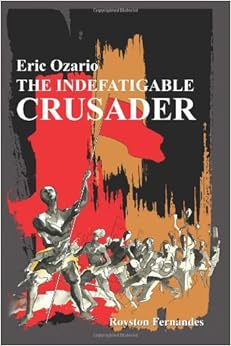
Eric Ozario, the noted Konkani language activist from Mangalore, is perhaps one of the few and fortunate activists to have his biography written while still alive. Titled Eric Ozario: The Indefatigable Crusader, Ozario’s biography is written by the Mangalore-based engineer Royston Fernandes. The biography is a no-holds-barred account of his life as a child growing up in the Jeppu compound, a ghetto for the depressed caste groups of Mangalore who had converted to Catholicism, his days as a trade union leader, and lastly his life as an activist of the Konkani language.

Ozario’s biography reproduces a popular and status quo narrative of the history of the Konkani language: of widespread religious suppression and oppression, with a concomitant loss of the Konkani language and culture, in the wake of the arrival of the Portuguese. Most of Konkani language activism, especially one that is driven by upper-caste interests, situates itself within this narrative. Ozario’s biography allows us to see how this narrative operates in Konkani activism, even if this activism emerges from a location outside that of the upper-caste. Though it reads like a hagiography rather than an objective narrative, the value of Ozario’s biography lies not only in its no-holds-barred revelations, but also in what it can tell us about Konkani activists and activism.

Life for those in the Jeppu compound was as hard as it was pathetic. There was poverty and caste discrimination and Ozario’s childhood was spent in such harsh conditions. His parents originally were Tulu-speakers, but they made their children speak in Konkani. This was because despite Latin being the liturgical language of the Catholic church until the mid 1960s, Konkani reigned as the non-liturgical language. We are also told that Ozario’s parents were devout Catholics and raised their children as such. Yet, for Ozario, the story of the adoption of Konkani by the inhabitants of the Jeppu compound is a story of absolute suppression and loss of cultural identity. He states that the inhabitants of the Jeppu compound “were not only religiously converted, but were forcibly culturally uprooted. A new language (Konkani) was thrust on them in place of their mother tongue Tulu. No efforts were made to teach them the new language”. Ozario does not tell us what this culture that was lost on conversion was. The assumption here is that whatever was lost was good, thus glossing over the fact of the entrenchment of these cultural practices in caste.

Ozario’s appraisal of the conditions of the Jeppu compound as a total suppression of culture of its inhabitants occupies an uneasy position with his tacit acknowledgement of conversion to Christianity as a way out of poverty and caste. Though Christianity provided a way out of caste, the discrimination based on caste never stopped. Thus, the root of the problem which is located in the structure of caste is seen solely as a problem of conversion (forced or otherwise). It becomes clear that what Ozario understands today as an absolute loss of culture was not similarly understood by his parents who had converted to Christianity and had, as a result, adopted the Konkani language.

Yet, one cannot downplay the shame and humiliation that the young Ozario had to undergo for being “forced to speak a horribly grammarless and accented ‘Konkani’ during his entire childhood” and the various conflicts that he has with the church authorities. Thus, he stayed as far away from Konkani language and culture in his youth as possible.  Though not comparable in an equal measure with the humiliation that Roman script-users and tiatrists face for not knowing ‘proper’ Konkani, Ozario’s childhood experiences are not isolated from many other Konkani-speaking groups.

Rather than recognize this fact and use the childhood experiences to tell the story of his Konkani activism, Ozario plugs his life and engagement with the Konkani language into the popular and dominant narrative of forced conversions, migrations, suppression, and a loss of culture. For instance, while discussing his project of reviving the tradition of playing gumott among the Mangalorean Catholics, Ozario falls back on the story of how the Portuguese state and the Inquisition had suppressed the playing of the gumott. But the migration of “[o]ur forefathers” from Goa during this time allowed the gumott to be played without restrictions in areas of Mangalore.

The problem with this kind of understanding is the fact that Ozario’s parents did not migrate from Portuguese-controlled Goa. Further, such a narrative of migration wherein there are only pure victims and pure oppressors is one that is largely peddled by upper-caste groups across the Konkan and Malabar. While this history of oppression may be true for these upper-caste Hindu groups, the same cannot be said for the Christian groups in Kanara or for later converts to Catholicism. One can ask as to how Ozario – and his life and activism – fits into this migration narrative given that Ozario’s family was not converted during the first few centuries of Portuguese rule. Ozario is not the first to uncritically repeat the persecution and migration myth. More recently, Gopalkrishna Pai, the Cochin-based author of the Kannada novel Swapna Saraswat, asserted at the Goa Arts and Literature Fest, 2014 that nearly 22,000 Hindu families fled Goa after conversions began.

The question here is why does Ozario’s story shift from a personal experience of shame and humiliation due to Konkani in the Jeppu compound to an impersonal experience of persecution of Konkani-speaking migrants from Goa? Why does the blame shift entirely on Portuguese colonialism (something ‘external’) rather than also seriously thinking about how the violence of casteism operated within the Konkani society? The answer to this lies not so much in the history of Portuguese religious policies but in the manner in which individuals exert themselves to escape shame and humiliation. One can either distance oneself from the object of shame and humiliation (like Ozario did in his youth by distancing himself from Konkani) or try to be recognized within the structures that cause this shame and humiliation as Ozario’s subsequent Konkani activism indicates.

Ozario’s biography indicates to us not just the problems in uncritically using the persecution and migration narrative, but it also tells us how the very narrative is not challenged adequately by activists of the Konkani language. Challenging this narrative would allow us to see that within the Konkani language there are multiple ways of being and living. That the experiences of the Jeppu compound, the Roman script, and the tiatrists, to name a few, are legitimately part of the history of Konkani, despite the fact of not fitting into the ‘persecution-migration’ narrative. Confining to the popular and dominant narrative would mean to define the politics and vision for the Konkani language in narrow terms.

(First published in  O Heraldo, dt: 7 January, 2015)