Showing posts with label Migration. Show all posts

Wednesday, August 1, 2018

THE REAL (ETHICAL) CHALLENGE


The high-levels of Formalin, a carcinogen, found in imported fish have caused anger, deep anguish, and frustration amongst Goans. This is because the authorities and the elected representatives have failed to convey the truth to the masses, besides checking the irregularities. Goa’s reliability on external sources for fish (in other contexts also for vegetables and grains) has spawned talk about self-sufficiency. Goa needs to produce its own food, this discourse urges. But it doesn’t say who will produce this food, and there is no talk about improving the existing labor conditions.

Take for instance the viral #agrichallenge. It all started when images of an environmental activist group cultivating paddy circulated on social media. Soon many politicians cashed in, including a sarpanch, MLA, and ministers, and started challenging each other to cultivate paddy. While challenging each other to cultivate fields may seem like a new phenomenon, it is not necessarily so. The Rachol Seminary pioneered such exercises. For eight consecutive years, the priests and seminarians have been joined by locals from surrounding villages in cultivating a patch of land.

Members of the Rachol Seminary engage in the cultivation of not only grain and vegetables for the year, but – according to them – to also live as a community. The vision of Rachol Seminary is something that resonates with many Goans who believe that authentic Goan life is found through agrarian cycles. Thus, going back to the rice fields not only preserves a Goan way of life – Goemkarponn – that is cherished, but also buffers us from the onslaught of modern, capitalistic development. It is a way to renew, what many believe, the lost bonds of old community life of mutual affection and peaceful existence. Tied to the issue of community living and Goemkarponn is also the issue of employment. Many would argue that high unemployment rate is caused because land is not cultivated and the young generation migrates elsewhere. It follows logically that such ‘going back to the fields’ exercise will urge the youth to take up farming, mostly by claiming that it is very profitable to do so. 

However, the solution does not seem to be so straightforward and there is no clear indication that harmonious community living is achievable through agrarian reforms. If one takes a long historical perspective regarding Goa’s problem of inadequate agrarian production, migration, and unemployment, it would seem that old events are being replayed for contemporary Goans. These combined issues had vexed Goan intellectuals who wrote in Portuguese, Marathi, and Concanim newspapers from the 1900s; many tiatrs were written during this time depicting the plight of the poor due to price hikes and adulteration of basic items like rice and other necessities. The reality is that, as in the past, there is an acute labor shortage in addition to the unregulated selling/distribution practices and poor quality of the products.

The crux of the problem is the treatment of those persons who provide this vital labor that produces and supplies the basic necessities. The person who does the hard labor, along with the labor or work itself, is disrespected. Generally, in Indian society, this person is forced to do hard labor, with very poor wages. Jobs such as cultivating and fishing/selling fish are viewed as the basest occupations, performed by the socially inferior; often the names of these jobs double up as insults in almost all South Asian languages. (I am not going to reproduce these insults here, but you know what I am talking about!)

So when politicians and well-meaning activists urge the youth today to take up farming and other such occupations, the big issue that they ignore is that these jobs are not considered as dignified labor. This is one reason why many would like to find employment in non-traditional occupations. Very often these are ill-paid jobs as well, and, even worse, they place one at the mercy and patronage of a contractor or a politician (sometimes one and the same) to find the space to work and sell the produce for a good price. For instance, the recent investigation in the manner in which certain individuals control the prices and distribution of fish in Goa, in tacit cahoots, or otherwise, with governmental and political authority, exposed how the laboring Goan was pushed out of getting a fair price for his hard labor. And it is not as if the ‘outsiders’ are the problem, because the lion’s share of the labor of the ‘outsider’ is also cornered by a few kingpins. In Goa, they too are the laboring others who need better work conditions.

So where does this leave us in terms of our great desire for self-sufficiency? The problem of unemployment and self-sufficiency will persist so long as the mass of people provide labor for a pittance from which a handful will get rich. It will persist so long as there are laws that do not protect those who work, but on the contrary sell off everything to the highest bidder. In other words, an unequal and hierarchical distribution of wealth will forever ensure that the laboring classes remain poor and the produce that the rest of us consume is of utterly inferior quality – sometimes even life-threatening. In such circumstances, one can understand why some seek greener and cleaner pastures. So if any demagogue tells you that he/she has a solution for these problems, it is safe to assume that it is empty propaganda. It is actually a slow killing propaganda, much like the formalin-laced fish.

(First published in O Heraldo, dt:  1 August, 2018)

Wednesday, March 1, 2017

MIGRATION, IDENTITY, AND LABOR JUSTICE


Like me, many would have read the report about shanties being erected close to the Goa airport with much concern. There is no doubt that the safety of travelers cannot be compromised in any way. The shanties and the people living in them (largely migrant labor who have no proper housing), being directly in the landing and take-off zone, posed a threat to the security of flights, the report highlighted. The birds attracted by garbage left behind could pose grave danger for those traveling to and from the Goa airport, the report further argued. Recognizing this, the governmental machinery swung into action: the shanties were cleared, the people were removed, and a local panchayat was directed to clear the garbage. While the shanties and the people in them were cleared away immediately, the news report indicated that due to some logistical difficulties the concerned panchayat body would clear the garbage only a day later.

It struck me that the incoming and outgoing flights were not exactly out of danger considering that bird-hits were one of the major causes of concern. The garbage left behind would still attract birds, with or without the people. After all, the overriding concern was held out to be not so much with the squatters, but the security and safety of the flights.

Does this incident, therefore, tell us something about the way Goan society operates? How it treats people who don’t own much else than their labor which they sell for a few hundred rupees? There is no doubt that Goa is facing unchecked and rampant migration from the neighboring states. The rich who acquire retirement villas and huge tracts of land here, the hordes of tourists landing every day, and the middle classes from the rest of India who are employed in white collar jobs in Goa also affect the local demography adversely. All these pressures create an anxiety within the minds of local Goans. However, it seems that the poor and marginalized migrants whose services we actually use and exploit are the ones who get targeted.

We can juxtapose the abovementioned incident with that of the Vanarmare tribals in Ponda last October, as one of the issue in the Vanarmare case was access to proper housing. If many had argued for a humanitarian approach in dealing with the plight of the Vanarmares, what stopped the same kind of treatment being meted out to others who don’t even have a proper roof over their heads? The problem lies, I argue, in the manner in which we identify marginalized sections. Whereas the Vanarmares were tribal people and few in numbers, the recent case of people who were driven out from their squatting area were identified as ‘migrant labor’, thus forming a part of a larger group of people whose growing numbers (in comparison) could pose a danger to the local Goan.

But this doesn’t change the fact that neither the government nor the civil society in Goa have not been able to develop a proper policy to deal with the mushrooming slum areas and their possible solutions. There is a larger issue of Goan society being unable to respond to the problem of basic amenities being equally available to all. We observe how large scale resorts which guzzle up Goa’s water and gobble up Goa’s land are given a red-carpet welcome; even by bulldozing and beating up the local people as in Tiracol some years back. But nobody seems be interested in thinking of such measures as welfare schemes for affordable housing that could have checked the problem of growing slums, and tighter labor laws that would make it difficult to exploit laborers.

If there is a large population of migrant labor then the direct cause of it is a certain developmental politics that requires a large amount of labor. This largely goes unchecked as the market for such labor is unregulated. There are very little rights that the laborers possess by way of proper housing, health benefits, and minimum wage. Not to talk about these issues while discussing the mushrooming slums or unchecked migration is to deepen the problem further. For instance, in the recent Dabolim case we simply don’t know where the migrant laborer families shifted to. Following the demolitions in Baina in 2004, the residents simply spread to different parts of Vasco and other parts of Goa. Even in the case of the Varnamares, they were given voting rights but nothing was said about proper housing facilities thereby indicating the absence of proper governmental policies.

From the perspective of social justice, one can observe that most of the ‘migrant labors’ have prior experience of marginalization due to various circumstances that necessitates migration in the first place. Many activists who have tried to help out such communities affected by ‘demolition drives’ highlight how poor people who are forced to live in slums are in fact victims of caste and gender violence and are considered dispensable in the event a development project is envisaged. 

The issue ultimately needs to be understood as one of justice and human dignity. Such issues cannot be thought solely from the perspective of identity (or the threat to Goan identity), or the fact that growth in slums stick out as an eyesore on the Goan landscape. There is an urgent need for a system of checks and balances which while recognizing the rights of laborers also arrests the exploitation of the same people, and addresses concerns of local people about basic amenities and threats to livelihood. 

(First published in O Heraldo, dt: 1 March, 2017)

Tuesday, January 31, 2017

HOMECOMING AND BELONGING: ANTÓNIO COSTA IN INDIA


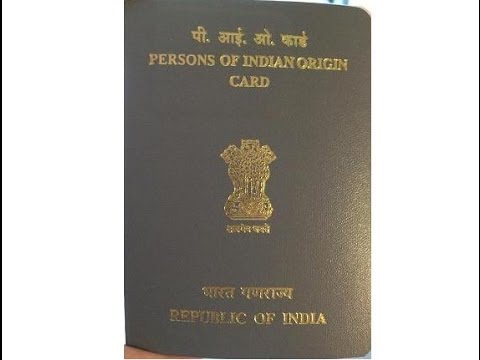
Until January 7, 2017, Cristiano Ronaldo was arguably the most famous Portuguese personality in India. This changed when Portugal’s current Prime Minister António “Babush” Costa came on a state visit. The reason for this shift in emphasis was Costa’s supposed‘Indian roots’. On a visit to boost bilateral ties, inter-governmental cooperation, and Portuguese business opportunities, Costa’s ‘Indian roots’ received a lot of attention. Costa himself did not shy away from proclaiming his pride for ‘Indian origins’. Both Costa and his Indian hosts seemed pleased that he was the first person of “Indian-origin” to lead a country in Europe. As a symbolic gesture that would unfailingly win him admirers amongst Indians, Costa displayed his PIO or Person of Indian Origin card to the audience, during the course of his joint press statement in New Delhi and his address in Bangalore.

But to insist and hark repeatedly to Costa’s “Indian-origins” is to commit a gargantuan historical error. In fact, Costa’s visit to India and his use of symbolic acts like affirming his Indian roots and displaying his PIO card offers us the opportunity to deepen our understanding of issues of homecoming and belonging, especially since the issue of dual citizenship is heating up. The legal anthropologist and Herald columnist Jason Keith Fernandes spoke to a Portuguese news portal and claimed that the notion of “Indian-origin” as applied to a person like Costa is in fact “quite racist”. It is so as “those acclaimed as Indians, such as Costa, often do not have Indian origins, that is, they have no origins as citizens of the Indian state. The term Indian is being extended to people who have ethnic origins in territories today claimed by the Indian state”. Fernandes makes a critical distinction between ethnicity, which is the staple of racial politics, and legal identities. Thus, in Costa’s case, his father, the writer Orlando Costa, was born a Portuguese citizen in Mozambique and raised in Margao before 1961. His mother Maria Antónia Palla is Portuguese. Thus one could argue that Costa is ethnically half Goan and half Portuguese.

To think of the issue more deeply, it appears that Costa has origins and roots in multiple locations: in Goa, in Mozambique, and Portugal. He can justifiably claim to belong to each of these places. Perhaps Costa could do the same things, that is, similar public celebrations of his ‘local’ identity, in Mozambique as he did in India/Goa.

When one thinks of ‘ethnic origin’ and ‘nationality’, the celebration of Costa’s “Indian-origin” appears to be problematic. With the current laws of citizenship in place both in India and Portugal ethnicity does not necessarily translate to nationality, and therefore citizenship. A person born in Goa today automatically gets Indian citizenship by birth, but if they opt to reclaim their Portuguese nationality the same person is only entitled to be a PIO. If one chooses (Indian) ‘ethnic’ origins then one cannot claim (Portuguese) ‘nationality’. Therefore, for a large number of Goans homecoming and belonging are not necessarily a matter of pride or celebration; it is more of a legal mess that one has to negotiate.

While the Indian government is using Costa’s roots to promote economic interests, it is ignoring other crucial problems that beset people who are Indian nationals. When Goans demand their right to dual citizenship, given the particular history of Goa, and in order to have greater (and easier) mobility to access jobs while at the same time stay connected to Goa where they have roots and ties, the Indian government acts as if this is unimaginable. While one arm of the Indian government is busy promoting economic interests and closer ties with Portugal via an ‘Indian’ PM, another arm, i.e. the election commission, is poised to delete thousands of Goan names from its rosters, thereby forcibly breaking links that Goans have with Goa. This doesn’t make sense because, like Costa, the many Goans who have opted to reclaim Portuguese nationality are socially, economically and emotionally invested in Goa. Like Costa they still have family here, and they visit Goa as often as possible. And like Costa they too should be allowed to belong to two or three places. Indeed, as Fernandes put it, they are not going from Goa, and India, but only coming back. Their departure is the result of their being forced out by the Indian state.

While Costa’s visit may have indeed been a moment of great celebration of Goan identity – the easy-going Costa surrounded by throngs of adoring admirers in the streets of Panjim and Margao was a sight to behold – it also exposes the fragility of this Goan identity, sandwiched between an Indian order that erases its history, and a global order that seeks to curtail human migration as much as possible. In both instances the rights of Goans (either as dual citizens or not) get severely underrepresented and unrecognized. 

Goan identity loses when it comes to the promotion of large-scale business interests. What this means is that the average hard-working Goan loses out. In a racist and indifferent world, the contribution of the Goan migrant is deemed to offer states and global orders nothing in particular. This is surprising as the remittances of the Goan migrant, one of the highest in the country, keeps (and kept) the Goan economy afloat and contributed foreign exchange to the coffers of India. To not accept Goans and their history, while celebrating Costa and his history, is to treat them as disposable commodities. Costa’s visit needs to be remembered for precisely this reason.

(First published in O Heraldo, dt: 1 February, 2017)

Wednesday, July 22, 2015

READING REGINALD: THE IMPORTANCE OF AFRICA


African gold, ivory, and other riches figure significantly in Reginald Fernandes’ literary imagination. Though Africa was a place of unending wealth, it was also simultaneously a place of danger and adventure within the Konkani romans. The recurrent and frequent references to Africa were not accidental. There was a particular reason why Africa figured so prominently in the Konkani romans. Taking Reginald’s novel Fidelis (1965) as a base, we can address the issue of the importance of Africa to writers of romans and dwell on the impact it had on the gender roles process.

The primary reason why Africa featured so prominently in the imagination of writers during the late nineteenth and early twentieth centuries was due to the large-scale migration of Goans, particularly to East Africa. As a result, stories about and from that continent had freely circulated in Goa. The fact of large-scale migration to East Africa is well attested by Silvia M. de Mendonça-Noronha in her essay, “The Economic Scene in Goa, 1926-1961” (1990). Mendonça-Noronha states that emigration “crucially affected the Goan economy throughout the last two centuries of the Portuguese rule and its impact was very distinctly felt in the period under discussion (1926-61). Most of the emigrants were Christians, especially the ones to East Africa. The basic cause of emigration was excessive pressure of the population on agriculture and the lack of other avenues of employment, thus giving few job opportunities to the local people. They left to find jobs for better prospects elsewhere” (p. 282).

Fidelis fits neatly into the abovementioned pattern of migration to East Africa. The plot opens in Bombay where the hero of the novel Joel D’Souza is nearly done packing his bags for his journey from Bombay to Goa the next day. Having completed his studies, Joel is eagerly looking forward to come back to Goa and to his grandmother. When Joel is about to go to sleep in the night, he hears someone knocking on his door. On opening the door, Joel finds a man trying to escape his attackers. It so turns out that this man is one named Gabriel Pontis, who landed in Bombay from Africa. Fearing for his life Gabriel hands over a small box to Joel, begging him to deliver it to his daughter who lives in Goa. Gabriel’s life is in danger as someone else covets his ancestral wealth that is buried in Gabriel’s ancestral house. The small box that Gabriel hands over to Joel is the key to this buried treasure, and the whole novel is a delightful cat-and-mouse chase to possess the contents of the little box. Thus, as in in real life, migration to East Africa, and the locations of Goa, Bombay, and Africa are knit together in the novel.

Being from Bardez himself, Reginald would have witnessed the migration and also would have heard the many stories about Africa from those who returned to Goa. In a place like Siolim, Reginald’s hometown, such stories about African wealth were aplenty. Shortly after the much publicized 101st birth anniversary celebrations, Reginald’s sister-in-law, Mathilda D’Souza, informed me that he was particularly curious about these stories emanating from Africa, and would indeed rework them in his novels. Thus, the stories of Africa circulating in and around Siolim were grist to the novelist’s writing-mill!

Another important way Africa and migration is connected with Reginald’s oeuvre is through the absence of father-figures in the life of the male protagonists in many of his novels. The male protagonist either has a widowed mother or an ageing grandmother. But on the other hand, the female protagonist always has a father. It can be suggested that migration was a cause for the absence of father-figures in Reginald’s novels. In a similar vein, the portrayal of the male protagonist in Fidelis is no exception. In this novel, Joel’s father is dead, too!

In the course of a discussion, after the 101st birth anniversary celebrations in Siolim, Joel D’Souza, the Assagao-based journalist who was one of the main persons in the organization of the celebrations, suggested that almost every house in Bardez had a person who had migrated to Africa. In particular, the head of the household would generally migrate to Africa. Though the absence of the father or father-figure is portrayed through the death of the patriarch in the novelist’s writing, one can see how the reality of Goa affected by economic constraints and migration had such a huge impact on the portrayal of gender roles in Romi Konkani literature that was not confined to the oeuvre of Reginald.

In the end, one can suggest that the economic reality and lack of job opportunities which led to migration to East Africa created a certain template of portrayal of male and female protagonists in Reginald’s novels. On the one hand, the male protagonist having no father or father-figure to protect him could be the real hero – a self made man – by dint of his own strength, sincerity, and a little bit of luck. While on the other hand, the female protagonist is always in constant need of male protection, though she exercises her own agency in the choice of her life partner. 

While the migration to Africa can be seen as shaping gender roles in Reginald’s novels, what we can also profitably do is to look at this corpus of literature to talk about the actual gender roles in Goa, impacted by this very migration.

My thanks to (the real life) Joel D’Souza and Mathilda D’Souza.

For more Reading Reginald, click here.

(First published in  O Heraldo, dt: 22 July, 2015)