Showing posts with label romans. Show all posts

Wednesday, June 8, 2016

READING REGINALD: PULP FICTION OR NOT?


Anniversaries are good occasions to contemplate and reflect on personalities. As the 102nd birth anniversary of the Konkani writer Reginald Fernandes approaches (14 June, 1914 – 13 November, 1994) reflecting on how his books and writings have been perceived and understood thus far would seem fitting for the occasion.

Reginald’s writing, due to a lack of attention by literary scholars and writers in Goa, is assumed to be in the genre of ‘pulp fiction’. This is largely due to the want of a better term to describe cheaply-produced, pocket-sized fiction for mass consumption, and the fact that ‘pulp fiction’ is understood to be literature of low caliber. Within the Romi Konkani readership, the term romans is used to refer to such fiction – to the extent that ‘novel’ is synonymous with romans. With the formation of Goa’s statehood and the official recognition of nagri-scripted Konkani, one could observe not only a shift of modes of literary production from the organic (romans) to an artificial (kadombori, a term believed to be more Indian in its register), but also a rejection of the very form of the romans for a more modern and literary form of writing based on sanskritic culture.

Apart from linguistic politics, scholars of literature point out, the fuzzy boundaries between ‘pulp fiction’ and ‘literary fiction’ are due to practical causes as well. The immediate criterion used to classify a book as ‘pulp’ or not is its appearance and pricing. Reginald’s books fit this criterion as his books were published on cheaply available paper and these were modestly priced around 50 years ago at 2 rupees and a few paisas. But even by such a criterion, some books by famous novelists such as R. K. Narayan were published in cheap and affordable editions that had the appearance of ‘pulp’. Thus, the idea that books printed on cheap and coarse paper can be termed as ‘pulp’ can at times be misleading. Moreover, in the case of Reginald, the cheap and coarse print quality – almost lurid – can be explained by the fact that the author and publishers experienced financial difficulties with the rising prices, and hence these books had to be affordably priced.

‘Pulp fiction’ is mass-produced. The cheap pricing is meant to attract a reading demographic across economic divisions. It is largely aimed at making fiction accessible to lower income groups, such as the working class Goan population in Bombay. In this sense, Reginald’s books can be qualified as ‘pulp’, especially since 5000 copies would sell like hot cakes in no time. This mass production of ‘pulp fiction’ is not just confined to the print-run but also extends to the number of books an author churns out in his/her lifetime or career. If one looks at the authors who wrote ‘pulp fiction’ in Hindi and Tamil for instance, then the sheer number of books written would strike one as mind-boggling. Reginald’s oeuvre consisting well over one hundred books can easily qualify as ‘pulp’ in this respect.

Qualitatively speaking, ‘pulp fiction’ is supposed to be ‘bad literature’. Pulp follows a formula, the story-line is simple and straightforward, and is written in an effortless and accessible language. Scholars point out that many ‘good’ literary works (such as George Orwell’s Animal Farm) are also written in a simple and accessible manner. On the surface of it, Reginald’s writings, although simple and formulaic, make use of the Konkani language in novel and creative ways. Reginald’s descriptions of the scenes invoking the natural beauty of Goa have a poetic quality to them, and his descriptions of the fantastic and the marvelous leads him to use known words in many different ways.


One reason why writers such as Reginald were and are viewed in contemporary Goa as not literary enough is due to the cultural and political marginalization of the Romi script. Any literary production in the Romi script was viewed as lacking in literary standard by the dominant nagri establishment. One cannot deny that in order to make nagri Konkani the official language of Goa, the vibrancy of the Romi script productions were denied state recognition, apparently for a greater good. In such circumstances, referring to the oeuvre of writers like Reginald as ‘pulp’ may end up justifying such an attitude of ignoring the cultural vibrancy of the Romi script.

Considering the fuzzy boundaries between ‘literary’ and ‘pulp’ fiction, Tabish Khair, a writer, poet, and critic, attempts to define ‘pulp fiction’ in the Indian context: “[P]ulp fiction is fiction that used largely fixed generic features to satisfy the largely fixed reading expectations of as large a market as possible”. Even if in certain respects Reginald’s corpus of writings can be seen as ‘pulp’, one has to be careful given the fraught nature of language politics in Goa. So is there any alternative category that can be used to denote and understand the writings of those like Reginald? The alternative, I think, has been staring us in the face: romans.

Apart from the fact that romans is an organic term used in the context of Romi writings and has a legitimate tradition and history, it also helps us to do away with the artificial distinction between what constitutes literature and what doesn’t. In many languages the novel developed from a tradition of romance literature, so much so that a novel is synonymous with ‘romance’. Moreover, through the route of romans the pulp-esque features of writers like Reginald need not be entirely rejected. This will also allow us to escape the confusion that results from re-labeling romans as kadombori. In the end we can provide a provisional answer to the question in the title: not ‘pulp’ because we have a better alternative in romans.

For more Reading Reginald, click here.

(First published in O Heraldo, dt: 8 June, 2016) 

Wednesday, July 22, 2015

READING REGINALD: THE IMPORTANCE OF AFRICA


African gold, ivory, and other riches figure significantly in Reginald Fernandes’ literary imagination. Though Africa was a place of unending wealth, it was also simultaneously a place of danger and adventure within the Konkani romans. The recurrent and frequent references to Africa were not accidental. There was a particular reason why Africa figured so prominently in the Konkani romans. Taking Reginald’s novel Fidelis (1965) as a base, we can address the issue of the importance of Africa to writers of romans and dwell on the impact it had on the gender roles process.

The primary reason why Africa featured so prominently in the imagination of writers during the late nineteenth and early twentieth centuries was due to the large-scale migration of Goans, particularly to East Africa. As a result, stories about and from that continent had freely circulated in Goa. The fact of large-scale migration to East Africa is well attested by Silvia M. de Mendonça-Noronha in her essay, “The Economic Scene in Goa, 1926-1961” (1990). Mendonça-Noronha states that emigration “crucially affected the Goan economy throughout the last two centuries of the Portuguese rule and its impact was very distinctly felt in the period under discussion (1926-61). Most of the emigrants were Christians, especially the ones to East Africa. The basic cause of emigration was excessive pressure of the population on agriculture and the lack of other avenues of employment, thus giving few job opportunities to the local people. They left to find jobs for better prospects elsewhere” (p. 282).

Fidelis fits neatly into the abovementioned pattern of migration to East Africa. The plot opens in Bombay where the hero of the novel Joel D’Souza is nearly done packing his bags for his journey from Bombay to Goa the next day. Having completed his studies, Joel is eagerly looking forward to come back to Goa and to his grandmother. When Joel is about to go to sleep in the night, he hears someone knocking on his door. On opening the door, Joel finds a man trying to escape his attackers. It so turns out that this man is one named Gabriel Pontis, who landed in Bombay from Africa. Fearing for his life Gabriel hands over a small box to Joel, begging him to deliver it to his daughter who lives in Goa. Gabriel’s life is in danger as someone else covets his ancestral wealth that is buried in Gabriel’s ancestral house. The small box that Gabriel hands over to Joel is the key to this buried treasure, and the whole novel is a delightful cat-and-mouse chase to possess the contents of the little box. Thus, as in in real life, migration to East Africa, and the locations of Goa, Bombay, and Africa are knit together in the novel.

Being from Bardez himself, Reginald would have witnessed the migration and also would have heard the many stories about Africa from those who returned to Goa. In a place like Siolim, Reginald’s hometown, such stories about African wealth were aplenty. Shortly after the much publicized 101st birth anniversary celebrations, Reginald’s sister-in-law, Mathilda D’Souza, informed me that he was particularly curious about these stories emanating from Africa, and would indeed rework them in his novels. Thus, the stories of Africa circulating in and around Siolim were grist to the novelist’s writing-mill!

Another important way Africa and migration is connected with Reginald’s oeuvre is through the absence of father-figures in the life of the male protagonists in many of his novels. The male protagonist either has a widowed mother or an ageing grandmother. But on the other hand, the female protagonist always has a father. It can be suggested that migration was a cause for the absence of father-figures in Reginald’s novels. In a similar vein, the portrayal of the male protagonist in Fidelis is no exception. In this novel, Joel’s father is dead, too!

In the course of a discussion, after the 101st birth anniversary celebrations in Siolim, Joel D’Souza, the Assagao-based journalist who was one of the main persons in the organization of the celebrations, suggested that almost every house in Bardez had a person who had migrated to Africa. In particular, the head of the household would generally migrate to Africa. Though the absence of the father or father-figure is portrayed through the death of the patriarch in the novelist’s writing, one can see how the reality of Goa affected by economic constraints and migration had such a huge impact on the portrayal of gender roles in Romi Konkani literature that was not confined to the oeuvre of Reginald.

In the end, one can suggest that the economic reality and lack of job opportunities which led to migration to East Africa created a certain template of portrayal of male and female protagonists in Reginald’s novels. On the one hand, the male protagonist having no father or father-figure to protect him could be the real hero – a self made man – by dint of his own strength, sincerity, and a little bit of luck. While on the other hand, the female protagonist is always in constant need of male protection, though she exercises her own agency in the choice of her life partner. 

While the migration to Africa can be seen as shaping gender roles in Reginald’s novels, what we can also profitably do is to look at this corpus of literature to talk about the actual gender roles in Goa, impacted by this very migration.

My thanks to (the real life) Joel D’Souza and Mathilda D’Souza.

For more Reading Reginald, click here.

(First published in  O Heraldo, dt: 22 July, 2015)

Wednesday, April 29, 2015

READING REGINALD: THE FORM OF ‘WELL-MADE PLAY’


Previous explorations on the novels of Reginald Fernandes tried to understand the constituent elements that made a Reginald romans. Very briefly, the romans essentially had love between couples who were not equal socially and economically, this love underwent trials and tribulations, and culminated with a happy ending. Another important aspect of Reginald Fernandes’ writings was the role that magic played in bringing about this happy ending or union. While we had largely noted the content of the romans, there was very little said about the form or structure of the same. In other words, what was the logical manner in which the romans was written? This article would like to offer some comments about the same.


The novel that we will look at in order to better understand the form of Reginald’s romans is Tosca (1964). Very briefly, Tosca is a story of two women who look exactly the same. One is from a rich family and the other from a poor one. Tosca – the real one – from the rich family has virtues par excellence. Rita who looks like Tosca has a bad conscience, and is dishonest to the bone. It so happens that these girls shift places through the evil designs of Rita – or impostor Tosca. The whole novel is about how the real Tosca is restored to her rightful place, and justice done to her in the end.

In order to understand the logical manner in which Reginald wrote, one can profitably look at a form of theater called the ‘well-made play’. It is well-known how deeply connected Reginald was with theater through tiatr, and I have also made the argument that the Konkani romans gave and received from the tiatr as well. The Encyclopaedia Britannica has this to say about the ‘well-made plays’, “The technical formula of the well-made play, developed around 1825 by the French playwright Eugène Scribe, called for complex and highly artificial plotting, a build-up of suspense, a climactic scene in which all problems are resolved, and a happy ending. Conventional romantic conflicts were a staple subject of such plays (for example, the problem of a pretty girl who must choose between a wealthy, unscrupulous suitor and a poor but honest young man). Suspense was created by misunderstandings between characters, mistaken identities, secret information (the poor young man is really of noble birth), lost or stolen documents, and similar contrivances”. Such a genre of theater was popular in Europe and America during the nineteenth- and twentieth-century.

The first element of a ‘well-made play’ is logical exposition. This basically sets the scene for the story to unfold. In Reginald’s writings, this would be done in the first few chapters by laying the background of the main characters, like the girl coming from a rich family, who is also virtuous and the boy who is from a poor family as well as one who is honest. Also, Reginald would depict their deep love for each other. But in Tosca, however, it is the introduction of the lookalike characters from two different social and economic locations constitutes the logical exposition.

The next element comes in the form of an inciting incident. In this, an incident or a character is introduced that gets things moving. In most of Reginald’s writing, this role is played by an evil cousin, who generally wants to marry the heroine of the novel, so that he can usurp the wealth of her family. This inciting incident is generally a secret. The characters in the novel do not know about it, but the author reveals this to the audience or readers, making them interested in the plot of the novel. Very often one would find asides that Reginald as the narrator would offer in order to evoke sympathy, pity, or contempt for the characters in the minds of the reader.

In Tosca this secret is cleverly and deftly handled. You have the impostor Tosca – or Rita, who does not want her fraud to be revealed, on the one hand. On the other, you have the evil and scheming cousin Jacob, who tries to hide the fact that he is after the riches of Tosca’s family and also the fact that he had made Tosca’s parents consume a substance that would render them senile for some months. Both these characters have no idea of the ulterior motives of the other, though the readers come to know about it. The use of magic by Reginald comes within the ambit of the inciting incident, as this brings about a sudden twist in the plot, and also generates interest in the final outcome of the novel.

After the scene where the secret is introduced and/or as the plot progresses, the secrets are unfolded, the characters go through many ups-and-downs, such as getting kidnapped, being falsely implicated in a crime, going to jail, escaping prison, etc. The plot or the novel culminates in what is known as the obligatory scene. In this scene all the secrets are revealed and the happy ending is crafted. This is done in a manner that provides emotional satisfaction and closure to the reader or audience. In Tosca, this happens in a courtroom, wherein the impostor Tosca – or Rita is exposed for her fraud. Basically what is being done is that all the loose ends are tied together. This is also the part where marriage of the lovers is made known to the reader. There is a marriage in Tosca, too.

It can be suggested that Reginald operated within the ‘well-made play’ paradigm for once the loose ends are tied, he wastes not much time in describing how the marriage happens. Often one comes across his brief comments at the end of any novel saying that this is a good point at which to end the story as there was nothing much significant to narrate and it becomes obvious to the reader that the main characters have to be joined in holy matrimony.

Now within this form, Reginald always endeavored to give his own unique spin. He did this in the manner in which magic and a Goan cultural milieu was woven into his novels. This is where his genius lies.

For more Reading Reginald, click here.

(First published in  O Heraldo, dt: 29 April, 2015)

Wednesday, February 4, 2015

READING REGINALD: FLIGHT FROM AFRICA


In my previous engagements with Reginald Fernandes’ works of fiction, I had mentioned that Africa occupied a very important place in the imagination of writers like Reginald. This was largely because of the nineteenth-century migration of many Goans to places in Africa like Kenya and Tanzania. Thus, to understand the importance of Africa for writers like Reginald, one would essentially need to think of the circulation of influences as a network where stories about Africa circulated through different means and modes and were then used by writers like Reginald to write their romans. How this circulation worked is something that needs to be charted in greater detail in the future through meticulous research.

Like many of the orientalist novels from the nineteenth-century, for writers like Reginald, Africa was simultaneously a place that was utterly unknown and a place of many mysteries, riches, and adventures. While it is true that writers like Reginald were drawing on such orientalist and colonial fantasies, it is still interesting to see how romi writers engaged with these stories, and indeed re-worked them for a Goan cultural milieu. Today, we rightly acknowledge people like Peter Nazareth (of the General is Up fame) as writers who wrote about Goanness in an African location, but we seldom think of romi Konkani writers as engaging with Goanness and Africa. In the same breath allow me to also note that the depiction of Africa within the romi Konkani writings may share a problematic relationship with colonial engagements with Africa.

Like Khoddop Ranni (1955), Africa occupies an important place in Bhirancull Barrabas (1962) though one cannot say that in this novel Africa is central to the plot. The novel depicts the love story of Raul and Clotilda. While Raul does not seem to hail from a lower social position, his family falling on bad days becomes the pretext for Clotilda’s father to refuse to bless their union. To make matters worse, the government office that Raul works in is headed by Clotilda’s father, and as such the question of whether Raul can match the ‘dignidad’ of Clotilda’s family arises. Thus, economic reasons rather than one’s location within a social hierarchy become the cause of much heartburn.

Unable to bear the insult to his high position, Clotilda’s father hatches a plan to falsely accuse Raul of theft. The plan being successful, Raul is first sent to the Aguada prison and when an attempt to escape from there fails, Raul is deported to a high-security prison in Mozambique. Sailing on the high seas, Raul finally manages to escape and ends up drifting on an island: The Nameless Island. Though this island is not endowed with any magical qualities, Raul comes across a large palatial building. Though The Nameless Island is deserted, Raul soon learns that only two persons live there: a woman named Rebecca and Dr. Barrabas.

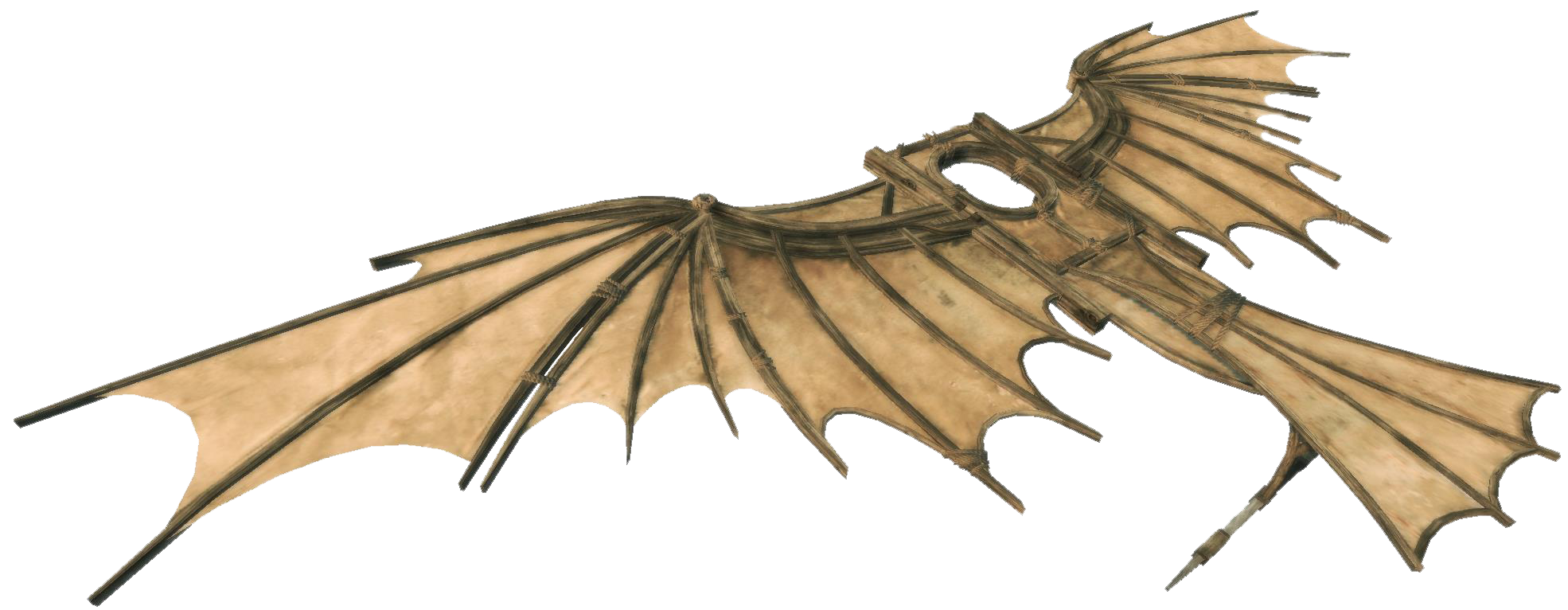
Magic is introduced into the novel to bring about bad and good deeds. Like many of Reginald’s novels, Bhirancull Barrabas too has a love triangle. Since the other man who seeks the love of Clotilda cannot convince her, he resorts to magic to confound her. On The Nameless Island, Raul learns about the three secrets of Dr. Barrabas: that he has a potion that can bring the dead back to life, that he has a magic mirror that can project images about the person whom one wishes to see, and that Dr. Barrabas possesses a mechanical contraption that is shaped like a giant bat. The machine eventually helps Raul to escape from The Nameless Island.

While trying to survive the evil Dr. Barrabas, Raul also learns of a treasure of gold bars and three very valuable diamonds. Raul manages to bring back with him many bars of gold and the three precious diamonds. The problematic relationship that such a genre of Konkani writings may have with Africa, as alluded to earlier, comes to the fore when the story takes this turn. Though the treasure of gold and diamonds was acquired by Dr. Barrabas through not-so-honest means, yet Raul seems to spare no thought when taking some of it with him. Here the relationship seems to be a peculiar one, wherein one person from a colonized context (in a way) loots riches from another colonized context. But as far as Reginald is concerned it might be more to do in keeping with the idea that love and wealth is deserved after an arduous struggle, an idea that animates many of his novels. Though we do not come across any Africans, and the identity of either Dr. Barrabas or Rebecca is left vague at best, yet one cannot help but think of Africa as a place of simultaneous danger and riches. Raul finally manages to exonerate himself from the crime he did not commit and also succeeds in marrying Clotilda, whose beauty and character is matchless.


Reginald and other writers like him frequently mentioning Africa also allows us to link trajectories of Konkani literature to a larger African world. While making this point I am falling back on the argument of Isabel Hofmeyr who in the context of South African literature argues that Hindi should be seen as a language of South African literature as many texts in Hindi are available from the twentieth-century that speak of South Africa. Can we make a similar claim that the productions of romi Konkani can also be seen as part of the African literary landscape? Though, I cannot help but emphasize the critical distance that one would need to understand the problematic relationship.

Though many of the writers – including Reginald – did not have the benefit of post-colonial critiques of racism and orientalism in Africa, nonetheless their engagement does point to a certain complex network of the flow of stories from Goa to Africa and back. Perhaps, it points to the skewed understanding that Goans had (and still do) of Africa in general, and issues of race and racism in particular. By trying to understand this genre of literary imagination within romi Konkani literature we might arrive at a better understanding of Goa and Goanness.

For more Reading Reginald, click here.

(First published in  O Heraldo, dt: 4 February, 2015)