The recent India-EU deal has been dubbed “the mother of all deals.” Made on the sidelines of India’s Republic Day celebrations, the deal was welcomed across the political divide in India and Europe. But if cheaper olive oil, wine, and BMWs are the headline achievements, then the real deal—the one that actually shapes Indian lives—remains unspoken. That deal is dual citizenship for Indians.
Citizenship, too, entered the conversation along with
the India-EU trade deal because António Costa, the Goan-origin head of the
European Union and former Prime Minister of Portugal, was seen as the counterweight
against the arm-twisting of Donald Trump’s tariffs.
As he had done previously when he visited India as Prime
Minister of Portugal, António Costa flashed his Overseas
Citizenship of India (OCI) card. This recognition of Costa's Goan and Indian
heritage is not surprising in the least. António Costa has been known to flaunt
his OCI card to facilitate better relations between India and Portugal, and
now, as head of the European Union, between India and Europe.
The fact that António Costa’s origins became a
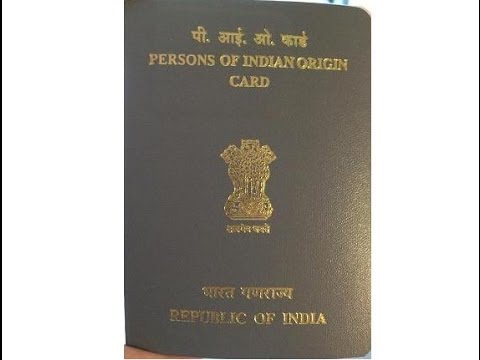
diplomatic resource should give all Indians pause. The OCI card is not
citizenship per se, but simply a
long-term, effectively permanent visa given at the express pleasure of the
Government of India. Hence, António Costa is allowed to return home as many
times as he wants, but he is not exactly a citizen of India. The Government of
India retains the sovereign right to revoke the OCI. The Government of India
has exercised this power on several occasions, especially against those it
views as dissidents.
Goans, particularly, have been very sensitive
about the fact that OCI is not citizenship but simply a visa. In fact, they
have been demanding dual citizenship as their connection with their ancestral
land, property, culture, and family is forcefully taken away by the Indian citizenship
regime. In the last two decades or little over it, many Goans have reclaimed
Portuguese citizenship and left for better prospects—better jobs in the United
Kingdom and now increasingly in other parts of Europe.
In order to take up Portuguese citizenship for better
mobility, socially as well as internationally, Goans must surrender their
Indian citizenship. This legal requirement is rather unfortunate. In 1975,
after relations between India and Portugal normalized, Portugal recognized the
right of Goans to retain Portuguese citizenship because, before 1961, before
the annexation of Goa by the Indian army, Goans were citizens of Portugal by
birth. India, too, agreed with Portugal. The Portuguese state never
extinguished that right, even though sovereignty over Goa had transferred to
India. António Costa is simply returning the favor.
To get Portuguese citizenship is no easy task. Goans,
and other residents of the former Portuguese India (Daman and Diu), must prove
that their ancestors, either parents or grandparents, were born in Portuguese
India. In other words, they have to prove that their ancestors were, by birth,
Portuguese citizens.
Thus, if one goes to the historical archives in Goa,
where most of the birth and other records are preserved, you see anxious people
waiting to find out if birth certificates or baptism records of their parents
or grandparents are available. They are helped by certain ‘agents’ who have a
rudimentary knowledge of Portuguese. The other people there are landsharks and
real estate agents who want to cash in on the land market (but that is a story
for another day).
In 2023, I was a regular visitor to the archives, not
because I wanted Portuguese citizenship or buy land but because as an
historian, I was looking for traces of rice and cultivation in early modern
Goa. It was over these months that I spent in the archives that I befriended
several agents who would help these anxious people find birth records.
One of these agents told me something very
interesting, something that I had always intuitively known. I asked this man
how many Hindus also take up Portuguese citizenship. This man leaned into
me—now bear in mind that the COVID contagion still posed a serious threat in
early 2023—and so I could sense that he wanted to reveal a shocking secret. For
my ears only.
He told me that almost half, if not more than half, of
his clients were Hindus. It is a common stereotype that Catholics, branded
‘anti-national’, take up Portuguese passports and desert their motherland. I
knew many Goan Muslims had also taken up Portuguese passports, but then again,
that was only stereotypically expected of them. But Hindus? That revelation was
still shocking, although I intuitively knew that many Goan Hindu were also reclaiming
Portuguese citizenship.
A few days after this conversation, I overheard a
Hindu man talking to another agent about the abysmal job situation in Goa. He
belonged to the Bahujan Samaj, as was clear from the name he told the agent.
This man, a mechanic working for the Government of Goa, was complaining about
not making enough money and not being able to provide enough for his wife and
children. As he spoke, I could see dark clouds of frustration darkening his
face, and there was sadness in his eyes. “I should also make a Portuguese passport
and earn better,” he said casually. Stereotypes collapse instantly when
confronted with the economic realities of jobs and joblessness.
The situation in Goa is hardly unique, though the
legal circumstances are. In states like Gujarat, Punjab, and Kerala, the
numbers of Indian citizens giving up their citizenship is a lot higher. Goans
can legally be Portuguese; Gujaratis and Punjabis cannot—unless they fake their
papers. The other option for Indians is to go via the dunki route
and risk their lives. Or get deported in shackles with the blessings of Trump.
Yet, in the last five years,
more than 900,000 Indian citizens have given up their citizenship, and the
number will grow. For many Indians, across class and caste, the quality of life
has measurably deteriorated. The numbers of the AQI do not lie and they affect
rich and poor. While the rich will legally abandon the country for cleaner air
and a better quality of life, the poor will escape, even by treacherous illegal
routes from India, because they want better jobs and better futures for their
children.
In such a situation, it makes sense for all citizens
of India to demand dual citizenship. It makes sense for the Indian Government
to open routes for dual citizenship. India needs to follow the path shown by one
of Goa’s most well-known sons, António Costa. There are more Antónios waiting
to return home—or invest in its economy. Dual citizenship is the mother of all
deals that is long overdue.
Published in The Wire.