Showing posts with label Dalits. Show all posts

Wednesday, April 26, 2017

COW POLITICS AND SLAVERY


The recent comments by members of the Sangh Parivar on the complete ban on the consumption of beef in Goa have ignited a controversy. The comments, casteist as they are, have shifted the attention of the Goan people away from pressing issues like the future of casinos, the Mopa airport, the crises in the mining sector, environmental pollution, and everyday governance. That such comments divert our attention elsewhere is unfortunate; but every time such comments are made we should remind ourselves what exactly lies at the heart of such hate politics.

The online Ambedkarite portal, Round Table India, has been publishing articles critically analyzing the economics and politics of ‘beef ban’, especially since the ban enforced by Maharashtra from 2015. It is with the help of these and some other news reports that I wish to make the case that, through ‘beef bans’ and cow politics, the poor and minoritized population is being pushed further into the depths of poverty and caste, eventually making them live in conditions akin to slavery.

Following the ban in Maharashtra by the Devendra Fadnavis-led government, Arvind Kumar argued that the move had all the makings of a “social conspiracy” against the dalit-bahujans in India, especially in Maharashtra. “I see the beginnings,” he says, “of a reversal of ‘social change’”. Kumar argues that if non-productive cattle – whether used for dairy products or as draught animals – are not slaughtered then they will have to be disposed by someone after they die. Who will do this dirty work? He says that it is those who come from the ‘untouchable’ castes who will either be forced or lured into occupations such as disposing and skinning dead cattle and further “get trapped in the evil practice of untouchability”.

Kumar seems to have rightly perceived the diabolic game plan behind the ban on cow slaughter in Maharastra as the NGO that worked to make the ban a reality has similar plans. In an interview to Scroll.in, Rajendra Joshi, a trustee of the Viniyog Parivar Trust, said, “Cattle will now die their natural deaths scattered across the state, and it will help revive the traditional vocations of chamars and mochis [tanners and cobblers] across the state”. In making such a statement, Joshi admits that people are moving away from occupations such as tanning and hence such occupations need to be “revive[d]”. Obviously, people would not volunteer to perform such demeaning traditional occupations, hence the coercion of the state is seen as so necessary.

This emphasis on bringing back the ‘traditional’ precisely confirms what Kumar had suspected all along: undo social mobility and reorder labor relations. The idea ultimately is to return to a casteist way of life and production relations that perpetuates practices of untouchability. Talking in terms of untouchability does not mean that the issue is solely about religion, rituals, or belief; it is also fundamentally an economic issue as those who provide labor in a caste society – including those who work in agriculture and clear/skin dead cattle – come from the lower strata of society.

Studies have shown that if non-productive cattle are not culled – that is livestock rearing is not done in a scientific and economically rational manner – then the population of cattle begins to shrink. In other words, slaughter is essential if the agricultural and dairy production is to be maintained at an economically viable level. Farmers, being unable to dispose of such cattle, have to bear the burden of sustaining non-productive animals. Selling non-productive cattle (whether cows or bulls) for slaughter (with the resultant production of food, leather, and other important goods) sustains an agrarian economy dependent on bovine animals. The butcher is an integral part of this economy. In fact we can observe that a ban on cow slaughter economically burdens farmers, dairy farmers, butchers, and meat traders. However, the only ones who are laughing all the way to the bank are the beef exporters – many of them upper caste Hindus – who seem to be increasing the quantum of exports despite this hate politics.

Seen from the perspective of the ill-effects that a ‘beef ban’ and anti-cow slaughter laws have on the society and the economy, it is imperative that secular forces and those keen to maintain Goan traditions call for nothing less than a complete revocation of these ‘cow protection’ laws, including the one that the MGP government brought into force in Goa in the 1970s. It is also a litmus test to the votaries of secularism and Goemkarponn if they will push for the revocation or change of laws antithetical to the lives and livelihoods of Goans.

In Goa too, one can observe that it has become increasingly difficult for people to maintain cattle. It is simply not economically viable, and over a period of time so many people have stopped rearing cattle. Add to this, one sees a large number of cows scavenging from dustbins and other areas. The oppressive ‘cow protection’ laws – circumscribed by a upper caste Hindu morality – has made it difficult for people to maintain cows and the bovine population to sustain itself.

Thus, the issue is not simply about people being unable to eat beef (that is, without being lynched or killed for it). While it is true that ‘beef bans’ pose a threat to a loosely defined ethos of ‘secularism’, the issue is much deeper in which the laboring poor are trapped within the oppressive structures of caste, poverty, and tradition. It is a form of slavery that is perpetuated by the law and a casteist morality which is undoing the social mobility achieved through the struggles of various groups. While forcing labor relations based on caste hierarchies, such ‘beef bans’ also deny ‘minorities’ like Christians and Muslims (of all castes and classes) the choice of food and cultural practices ostensibly because it offends upper caste Hindu sensibilities.

(First published in O Heraldo, dt: 26 April, 2017)

Monday, February 2, 2015

GHORACHO ‘OWNER’ KAI ‘CHAKOR’?


borovpi DALE LUIS MENEZES ani AMITA KANEKAR

Lok Sobhechea venchnukam uprant, BJP-cho sorkar sodrer ailolean olp-sonkhechea lokancher ani tanchea dev-mondirancher hol’le chodda promannan zalole amchea khobra-potrancher ani TV news-acher amkam disun yetat. Fattlea don mhoineanchea kallant ‘ghar wapasi’-che chollvollicho bhorpur bovall amkam aikonk yeta. Tor hem ‘ghar wapasi’-chem prokoronn kitem? Tache fattlo itihas kitem? Ani xevottak Hindutva zome ‘ghar wapasi’- itlea nettan kiteak fuddem vhorunk mukhar sorleat? Hem zanna zaunk kaim itihasik khinnancher ani ghoddnnukancher hea lekhachea survatekuch nodor ghalop gorjechem thorta.
***
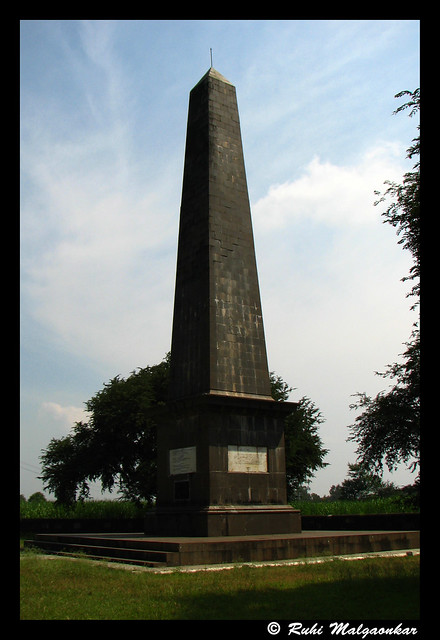
1818 vorsa, Janer mhoineant Peshwa rajshahi ani British soinikam modem tisrem ani xevottachem Anglo-Maratha gher’r pettlem. British soinikam borobor, hea gher’rant zaite Mahar soinik-ui zhogoddle. Hem gher’r bhov ‘heroic’ zaun aslem, ani hachem karonn mhollear British foujent fokot 250 ghoddekaranchi poltonn (cavalry) ani 500 pãy-soinik (infantry) asle, ani hantuntle choddxe soinik Mahar vortoule. Dusre vatten Peshwa Bajirao Dusro hache fattlean 20,000 ghoddekaranchi poltonn ani 5000 pãy-soinik asle. Bhima Koregaon hea zagear zalolea zhuzant, Peshwa rajshahi tea dis harli.

Punn hea gher’rak aiz ami titlem mhotv dinant. Hachem karonn mhollear hea gher’rant Mahar soinikamni Britisham borobor ravon Peshwa (vo Bharoti) soinikank haroilole dekhun. Amche ‘textbooks’ Peshwanchi har hi amchea raxttrak ek dukhachi gozal oxem manun choltat. Amkam sodanch sangot aileat ki vosnnukponna (colonialism) udexim British Raj amchea raxttrachea lokank damun dovortale mhunnon. Punn amchea ani dusrea kaim borovpianchea mota pormonnem, Britishanchem zoit asa titlench tem Mahar somudayechem zoit-ui aslem. Ami hem monant dovrunk zai ki Peshwa rajshahi hache khal Mahar lok chidd’ddon aslolo, ani 1818 vorsa zalolea gher’rant tankam suttka mell’loli, oxem amcheamni mhonnom-ieta.

Tor osli suttka ji lokank koxtt korun ani zhogddun mellta tachi ami dobajean ugddas dovrunk zai aslo nhoi? Punn ami oxem korinant. Hatunt amchea raxttrvadi (nationalist) itihas likhnnent unneponn disun yeta. Unch zatinchea mon’xank vosnnunkponnacho kall (colonial period) ho zaun aslo opman ani lojecho kall; jea kallant tanchem boll unnem zalolem ani rajniticher tancho probhav komi zalolo. Punn dusre zatinchea lokank hoch vosnnunkponnacho kall niticho ani suttkechea survatecho kall zaun aslo. Dekhik, jea disa Vasco da Gama, Calicut pavlolo, to dis aiz zaite Dalit lok tanchea suttkecho oromb zaun asa oxem man’tat (polle Aditya Nigam, The Insurrection of Little Selves, 2006, pan 182).
***
Arya Samaj Ani Tanchem Karya
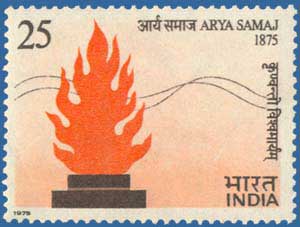
1880 hea doskant Arya Samaj hi sonstha zolmant aili. Tancho mukhel hetu Hindu dhorm’ ‘reform’ korpant aslo. Hie sonvsthecho promukh mhollear Swami Dayanand Saraswati. Swami Dayanandachea mota pormonnem tea kallacho Hindu dhorm’ matso pirddear zalolo. Hindu dhorm’ adle bhaxen ‘pure’ ani ‘Vedic’ sounskruticho ascho ani dekhun tachem ‘reinterpretation’ korunk Swami Dayanand fuddem sorlo. Atam Hindu dhorm’ ‘reform’ kiteak korchi goroz poddli haka sabar karonnam asat, punn ami tim bariksannin hanga niyallpache nant. Itlench mhollear puro ki ho ‘reform’ ek ‘reaction’ aslem (1) sabar ‘untouchable’ ani sokoilea-zatichio somudayo Kristi dhorm’ apnnaitolea karonnak lagon, (2) Musolman somaz rajkaronnant apleak manyatay magta dekun, (3) Hindu dhormant zativad asa to kabar korunk, ani (4) British-anchem vosnnukponn. Arya Samajacho vaur chodd korun Panjab prantant kherit bhaxen yexosvi zalo.

Swami Dayanand ani Arya Samajachea mon’xank hem sot somzolem ki dhormantoram zait ravlim zalear unch-zatinchea Hindu lokancho Bharatachea rajkaronnant probhav unno zatolo mhonn. Haka lagon Swami Dayanand-an êk yevzonn sodun kaddli ani ti mhollear shuddhi pod’doticho rosto. Shuddhi pod’dote khala Arya Samaj lokank porte Hindu dhormant haddunk vavrunk lagle. Tanchea hie yevzonnek zaitem yes mell’llem karonn atam Arya Samaj Kristi misionaram bhaxen lokank xikxonnachio ani bholaikechio sovlotio divunk lagle, ani vorna-vevosthechea (four-fold hierarchical system) faske bhitorleanuch thoddi bhov ‘social mobility’ ani ‘self respect’ diunk lagle.

Shuddhi pod’dot Swami Dayanand hachea poilim savn pasun asloli. Ti fokot unch zatinchea lokank ‘purify’ korunk uzar kortale. Swami Dayanandan tika novem rup dilem, ani atam shuddhi mhollear dhormantor korpachem sadhon zalem (polle Maria Misra, Vishnu’s Crowded Temple: India Since the Great Rebellion, 2008, panam 70-3).
***
‘Ghar wapasi’-cho sarko orth ‘re-conversion’ nhoi punn ‘conversion to Hinduism’
Aiz zor ami ‘ghar wapasi’-chi khobor kortanv zalear, ami tacho itihas sarke toren zanna zaun ghevpacho proyotn korinant. Mahar soinikanche khobrek ani Arya Samajak  kosloch ‘direct’ som’bondh nam, punn hio don itihasik ghoddnuko amcheamni ‘indirectly’ zoddunk zata ‘ghar wapasi’-chem pulitik zanna zaun ghevpak. Jednam kaim Dalit somudayo Peshwa rajshahi harovpant aplem gorv ani suttka asa oxem somzotat ani Vasco da Gama Calicut pavlolo tednam apleak ani aplea sangatiank suttka mellpacho oromb zalo oxem somzotat, tednam hio somudayo ‘ghar’-antlean bhair sorunk proyotn kortat, oxem disun yeta. Dusre vatten jednam Arya Samaj sarkio sonstha shuddhi sarkea pod’doticho vapor kortat tednam heach lokank te ‘ghar’-ant haddun, tankam damun dovorpacho proyotn-ui amkam disun yeta.

Khoreponnim choddxea lokanchi shuddhi vo ‘ghar wapasi’ zata te Hindu dhormant poile suvater kednanch nasle. Dekun, ‘ghar wapasi’-cho sarko orth ‘re-conversion’ nhoi punn ‘conversion to Hinduism’ oso zata. Why I am not a Hindu (1996) hem Kancha Ilaiah hachem pustok oso vichar manddtta ki zaitio porompora ani rit-roviso jio Dalit-bahujan lok palltat taka unch-zatinchea Hindu lokam koddem kainch sombondh nam. Dekhun, Dalit-bahujan lokank ‘Hindu’ oxem vollkhop sarkem nam, oxem to sangta. Punn Dalit-bahujan lokank ‘Hindu’ mhonn vollkhotat tem rajki, ani nhoi dhormik karonnank lagon.

Toxench Christophe Jaffrelot sangta te bhaxen, British Bharotant yeunche poilim, sabar karagiri korpi somudayo (artisanal castes) Islam dhormant bhitor sorlolio, zativada pasun pois vochonk. Jaffrelot-achea mota pormonnem hi osli rajkornnik halchal korop mhollear Hindu hacho ankddo vo lok-sonkhya vaddovpacho yotn. Dekunuch anti-conversion kaideanchi magnnim fattlea kaim vorsam savn zait asa (polle Jaffrelot, Christophe. “India: The Politics of (Re)Conversion to Hinduism of Christian Aboriginals.” Annual Review of the Sociology of Religion hea pustokant, sompadon korpi Patrick Michel and Enzo Pace, vol. 2: Religion and Politics:197–215. Leiden: Brill, 2011, pan 205). Hea ‘ghar wapasi’-chea prokoronnant ek mat thavem zaun ailam: ‘anti-conversion’ kaide zai hacho orth oso-i zaunk xokta ki hozaramni lokank hem ‘ghar’ soddun diunk zai. Ek xekddo adim zoso Arya Samaj vavurtalo Hindu ‘ghar’ ani tachi lok-sonkhya samballun dovrunk, tosoch aiz Raxttra Seva Sangh (RSS) vavurta oxem mhollear, otitay zaunchi nam. RSS ani her sonstha ‘ghar wapasi’ kortat dekun zaito lok atam Buddhist zaunk lagla, zoxe porim Gaya (Bihar) hea ganvant halinch disun ailam.

‘Ghar wapasi’-cho ‘target population’ mhollear, zoxem Dalit zannkar Kancha Ilaiah Asian Age hea potracher boroun sangta, Dalit, Adivasi, ani OBC hea vorgantle lok je aiz ‘evangelical Christianity’ ani ‘prayer groups’-ant vanttekar zatat. Hea lokam modem RSS akant toyar korunk sodta, oxem to mhonntta. Kancha Ilaiah amkam fuddem sangta ki jea disa savn Dr. B. R. Ambedkar-an Nagpur xarant aplo dhorm’ bodol’lolo tea disa savn Dalit-bahujan lokank dhormantor mhonnche ek otmik ani lokxahik (spiritual and democratic) hok’k zaun urlo. Kancha Ilaiah fuddem mhonntta ki adim Dr. Ambedkar-an Buddhism appnailolem, aiz chodd so Dalit-bahujan lok Kristi dhormak akorxit zalolo asa.

Arya Samaj-an ji shuddhi pod’dot chalu keloli ti aiz RSS-an tika ‘ghar wapasi’-chem nanv dilam. Ek amkam saf disun yeta ki shuddhi ani ‘ghar wapasi’ vorna-vevosta ani zativad  posraita, ani dhormantoram (conversions) eka mon’xak hantuntlean bhair sorunk adar dita. Katolk ani Islam dhormantui zativad asa, amkam to lipoun dovrunk naka. Punn Katolk ani Islam dhormachi ‘theology’ sogleank ekuch nodrentlean polleta. Tor hea dhormanchea ‘theology’-intlean zativadak addavunk zata, dekunuch aiz amkam ‘Dalit theology’-cher sahit’ya vachunk mellta.
***
Sogllinch  dhormantoram zobordosten kelolim oxem nhoi
Hem soglem jem ami voir sanglam tem Gõychea lokank ani Gõyank lagu zata. Karonn ‘ghar wapasi’ amchea kallar kiteak korunk zai haka ek ‘argument’ oso asa ki sogllim dhormantoram jim sollavea xekddeant savn kelolim asat tim ‘forced’ asat mhunnon. Gõyant tor soglleamni aikolanch astolem ki koxem porim Purtugez kallant amkam soglleank Kristanv kelole te. Novo sôd-vavr zo itihaskaramni laila tachê udexim amkam oxem disun yeta ki sogllinch  dhormantoram zobordosten (forced conversions) kelolim oxem nhoi. Hacher itihasant purave asat (polle Ângela Barreto Xavier. “Disquiet on the Island: Conversion, Conflicts and Conformity in Sixteenth-Century Goa.” Indian Economic & Social History Review vol. 44, no. 3 (2007): 269–95). Soglinch dhormantoram tor zobordosten zalolim zalear aiz lakhamni lok (Kristanv toxech dusrea dhormache) Gõychea Saibachea bhoktek yetole asle, vhoi?

Fuddem, Gõyant zobordosten dhormantoram zalolim hache purave diunk zaite lok oslio kannio sangtat: konnui xit (cooked rice) gheun Hindu lokanche bãynt khoim tea kallar uddoitale, ani hea karonnank lagun to monis (ani tacho kuttumb) bhoxttovtalo ani taka kaim upay nam zaun Kristanv zaunk poddtalem. Hie kannientlean ek disun yeta ki hio oslio kannio chodd korun unch zatinchea bod’dol uloitat mhonnon, kiteak ‘private’ bãycho ani bhoxttavpacho ul’lekh kelolo asa dekun. ‘Private’ bãyio khonnpak khorch khub aslo ani thoddeach lokam koddem tem zomtalem. Fuddem, bhoxttovpachi bhirant chodd korun unch zatichea mon’xak astali, karonn ek favtt bhoxttovlo zalear vorna-vevosthent to sokol poddtalo. Punn oxem astonam ami haka ‘forced conversion’ mhonnpachem kai Hindu dhormantlean ‘excommunication’ korop vo bohixkar ghalop? Kristi dhorman oslea bohixkar ghatlolea ani bhoxttovlolea mon’xank zago diun, tankam man dilo, oxem amcheamni mhunnonk zainam?

Zoxe toren ami aiz Gõyant dhormantoram somzun ghetat, ti somzovnni ‘ghar wapasi’ korpant Hindutva rajkaronnak protsahon ditat. Konnakui hie dhormantorachie somzonnent unneponn asa tem soroll disun yeta. Gõyant ami dhormantoram mhonnche kitem, ani tim koxim zatat, ani lok dhormantoram kiteak kortat hacher bariksannin kednanch vichar korunk nam; tacher bhasabhas-ui kednanch zaunk nam.
***
Hea lekhant ami ‘ghar wapasi’ ani dhormantor he mud’de niyallun polleleat. Hea vorvim amkam ek disun yeta tem mhollear prosn jednam dhormantorancho aslo tori khoreponnim zhogddem ani zhuz zata tem zativadak lagon. Hatunt ‘ghar wapasi’-cho ‘secret’ vo ghutt liplolo asa.

(Dale Luis Menezes ‘medieval history’-nt sod-vavr korta Jawaharlal Nehru Universidadint, Novi Dill’li; ani Amita Kanekar-an A Spoke in the Wheel hi Gautam Buddha-chea jivitacher adarloli kadombori boroilea)

(Ho lekh Gulab, Voros 33, Ank 2, Febrer 2015-cher uzvaddak aila)

Tuesday, December 23, 2014

A TALE OF TWO (AND MORE) ‘CHURCHES’


Many would have heard of the horrific incidents of vandalism involving two churches in Delhi in the last few weeks. While the first church was clearly a victim of full-fledged arson, the second had some of its window panes stoned. Being in Delhi at the time of these two incidents, I was very upset. What was also appalling and egregious to note was that the ‘national’ media and public intellectuals were slow in reporting and condemning the incidents. I naïvely expected ‘national’ outrage. But, as we know, nothing of that sort happened.

Fortunately, the Archbishop of the Delhi Diocese, Fr. Anil Couto, minced no words. To quote from a news report, “Archbishop Couto said that the arson in St. Sebastian’s church was condemnable not just because it was an act of sacrilege and hate against the community and its faith, but [because] it could happen in the national Capital which is recovering from a series of communal incidents. Also distressing is the sense of police impunity [that is, impunity seen in police inaction]. Long hours were lost, and possible evidence destroyed, before the police finally came”.

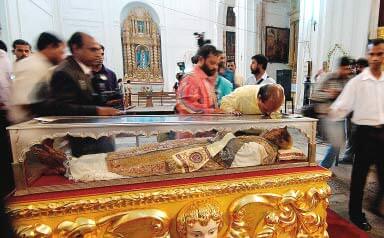
Once I reached Goa after the winter break had commenced at my University, I declared to my friends on Facebook that while I was glad to be back in Goa, I was also relieved to be away from a city that burns and stones its churches. Kaustubh Naik, one of my friends, pointed out quite astutely that although I was away from a city where churches were being burnt and stoned, I had come back to a place where people were happily signing petitions against the church. He was referring to an online petition asking the Prime Minister of India to send the mortal remains of St. Francis Xavier back to Portugal (as if Xavier had been a native of Portugal) and the exposition stopped permanently, for it constituted a grave insult to the Indian nation. The petition rather uncritically linked Xavier with “inhuman crimes” of the Inquisition, and further argued that India had always preached and practiced ahimsa. I realized that the relief I had felt in being back in Goa was rather misguided.

To be very honest, it did not occur to me even then that these two episodes, in Delhi and Goa, were linked. To me the people who drafted the petition and those few who signed it were at best angry at the loss of Hindu cultural purity. Thinking about these events now, I am convinced that they are intimately linked. In fact, we need to view the arson in Delhi and the petition in Goa as a continuum that includes other events of the last three or four weeks involving Christians and Muslims in various parts of India.

Hindutva has of late stepped up its attacks on Adivasi, Christian, Dalit, and Muslim communities. Starting from November, the online news portal scroll.in reported how VHP and Bajrang Dal workers under the garb of ‘ghar wapasi’ were working hard to forcibly convert the Adivasis of Bastar in Chhasttisgarh. These Adivasi communities would frequent evangelical churches in the hope of spiritual healing. These evangelical churches or ‘prayer groups’ provide other amenities such as health care and education that successive governments there had failed to provide. What is important here is to note that originally these communities were never Hindu, but followed various different Adivasi faiths.

In December, the RSS presided over the ‘ghar wapasi’ of some 57 Muslim families and also threatened that come Christmas day, they would also (forcibly) convert 5000more Muslims and Christians. As if this was not enough, there was more salt waiting to be rubbed on the wounds of communities like the Muslims and Christians. The central government just a week or so before Christmas issued a circular to CBSE (and all its affiliated schools) to observe Christmas day as ‘good governance day’ in order to celebrate the birthdays of former Prime Minister Atal Bihari Vajpayee and Hindu Mahasabha leader Madan Mohan Malaviya. Students were required to attend school on Christmas, the circular demanded. Although the circular was retracted soon, following some outrage in the press, the message conveyed was very clear: non-Hindu and ‘western’ practices are not welcome here. To put it very simply, they wanted to take away Christmas from all people of India, irrespective of religion.

The link in this whole tale of two and more ‘churches’ in various parts of India is the problem that Indian nationhood has with conversion. I would like to go a step further and suggest that if there is a rapid increase in vandalizing churches and oppressing shudra and untouchable Christian and Muslim communities in India, it is due to the failure of the secular-liberals in understanding the history and potential of conversion. Throughout the history of modern India and particularly the national freedom movement, conversion to Christianity and Islam was viewed as violating the very soul of the Indian nation. One does not need to go far, but look at the rhetoric that animated the Konkani language agitation and the MoI controversies. Always lurking beneath the surface was the accusation that Christianity was illegitimately westernizing people. It is this understanding that today legitimizes violent acts like the ‘ghar wapasi’. After all, the RSS and its affiliates claim that ‘ghar wapasi’ is necessary to wean people away from non-Indian cultural practices.

Throughout the last few decades the secular-liberals failed to see that Christianity and Islam had an innate promise of allowing one an escape from caste, whereas rituals like the ‘ghar wapasi’ tries to extend the stranglehold of caste. While I acknowledge that caste persists in both Islam and Christianity in India, what needs to be recognized is that the theological systems of these faiths uphold the equality of believers in principle. Thus, even though caste prejudice may exist, these prejudices can be attacked from within the theological framework of these faiths, unlike Hinduism. At the risk of stretching my argument ad absurdum, I think part of the problem of why the Delhi churches were vandalized, and why the response of the ‘national’ media and public intellectuals to this was slow, might lie in the faulty understanding of conversion to Christianity and Islam. Secular-liberals in India have never given any serious thought to how churches and mosques (and even dargahs) could pose an effective challenge to the power of Hindutva.

So, on Christmas eve, let us sincerely hope and pray that in the years to come fewer and fewer Adivasis, Christians, Dalits, and Muslims are oppressed in India and the emancipatory potential, both from caste and Hindutva, that these structures represent be recognized.

Have a joyous and blessed Christmas!

(First published in  O Heraldo, dt: 24 December, 2014)