Showing posts with label Muslims. Show all posts

Wednesday, April 26, 2017

COW POLITICS AND SLAVERY


The recent comments by members of the Sangh Parivar on the complete ban on the consumption of beef in Goa have ignited a controversy. The comments, casteist as they are, have shifted the attention of the Goan people away from pressing issues like the future of casinos, the Mopa airport, the crises in the mining sector, environmental pollution, and everyday governance. That such comments divert our attention elsewhere is unfortunate; but every time such comments are made we should remind ourselves what exactly lies at the heart of such hate politics.

The online Ambedkarite portal, Round Table India, has been publishing articles critically analyzing the economics and politics of ‘beef ban’, especially since the ban enforced by Maharashtra from 2015. It is with the help of these and some other news reports that I wish to make the case that, through ‘beef bans’ and cow politics, the poor and minoritized population is being pushed further into the depths of poverty and caste, eventually making them live in conditions akin to slavery.

Following the ban in Maharashtra by the Devendra Fadnavis-led government, Arvind Kumar argued that the move had all the makings of a “social conspiracy” against the dalit-bahujans in India, especially in Maharashtra. “I see the beginnings,” he says, “of a reversal of ‘social change’”. Kumar argues that if non-productive cattle – whether used for dairy products or as draught animals – are not slaughtered then they will have to be disposed by someone after they die. Who will do this dirty work? He says that it is those who come from the ‘untouchable’ castes who will either be forced or lured into occupations such as disposing and skinning dead cattle and further “get trapped in the evil practice of untouchability”.

Kumar seems to have rightly perceived the diabolic game plan behind the ban on cow slaughter in Maharastra as the NGO that worked to make the ban a reality has similar plans. In an interview to Scroll.in, Rajendra Joshi, a trustee of the Viniyog Parivar Trust, said, “Cattle will now die their natural deaths scattered across the state, and it will help revive the traditional vocations of chamars and mochis [tanners and cobblers] across the state”. In making such a statement, Joshi admits that people are moving away from occupations such as tanning and hence such occupations need to be “revive[d]”. Obviously, people would not volunteer to perform such demeaning traditional occupations, hence the coercion of the state is seen as so necessary.

This emphasis on bringing back the ‘traditional’ precisely confirms what Kumar had suspected all along: undo social mobility and reorder labor relations. The idea ultimately is to return to a casteist way of life and production relations that perpetuates practices of untouchability. Talking in terms of untouchability does not mean that the issue is solely about religion, rituals, or belief; it is also fundamentally an economic issue as those who provide labor in a caste society – including those who work in agriculture and clear/skin dead cattle – come from the lower strata of society.

Studies have shown that if non-productive cattle are not culled – that is livestock rearing is not done in a scientific and economically rational manner – then the population of cattle begins to shrink. In other words, slaughter is essential if the agricultural and dairy production is to be maintained at an economically viable level. Farmers, being unable to dispose of such cattle, have to bear the burden of sustaining non-productive animals. Selling non-productive cattle (whether cows or bulls) for slaughter (with the resultant production of food, leather, and other important goods) sustains an agrarian economy dependent on bovine animals. The butcher is an integral part of this economy. In fact we can observe that a ban on cow slaughter economically burdens farmers, dairy farmers, butchers, and meat traders. However, the only ones who are laughing all the way to the bank are the beef exporters – many of them upper caste Hindus – who seem to be increasing the quantum of exports despite this hate politics.

Seen from the perspective of the ill-effects that a ‘beef ban’ and anti-cow slaughter laws have on the society and the economy, it is imperative that secular forces and those keen to maintain Goan traditions call for nothing less than a complete revocation of these ‘cow protection’ laws, including the one that the MGP government brought into force in Goa in the 1970s. It is also a litmus test to the votaries of secularism and Goemkarponn if they will push for the revocation or change of laws antithetical to the lives and livelihoods of Goans.

In Goa too, one can observe that it has become increasingly difficult for people to maintain cattle. It is simply not economically viable, and over a period of time so many people have stopped rearing cattle. Add to this, one sees a large number of cows scavenging from dustbins and other areas. The oppressive ‘cow protection’ laws – circumscribed by a upper caste Hindu morality – has made it difficult for people to maintain cows and the bovine population to sustain itself.

Thus, the issue is not simply about people being unable to eat beef (that is, without being lynched or killed for it). While it is true that ‘beef bans’ pose a threat to a loosely defined ethos of ‘secularism’, the issue is much deeper in which the laboring poor are trapped within the oppressive structures of caste, poverty, and tradition. It is a form of slavery that is perpetuated by the law and a casteist morality which is undoing the social mobility achieved through the struggles of various groups. While forcing labor relations based on caste hierarchies, such ‘beef bans’ also deny ‘minorities’ like Christians and Muslims (of all castes and classes) the choice of food and cultural practices ostensibly because it offends upper caste Hindu sensibilities.

(First published in O Heraldo, dt: 26 April, 2017)

Wednesday, November 11, 2015

INTOLERANCE AND THE MINORITIZED GROUPS


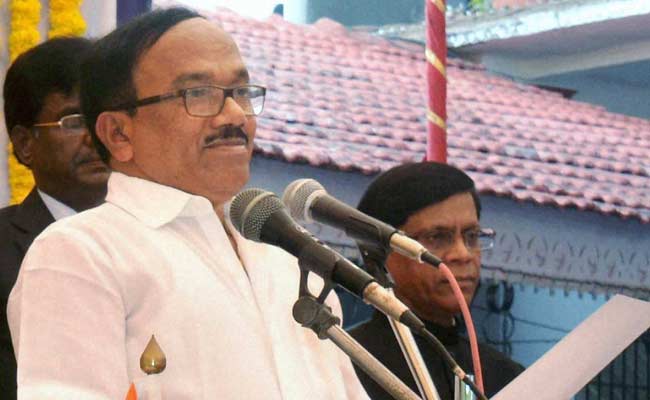
Goa’s Chief Minister, Laxmikant Parsekar, has been receiving flak ever since he took charge from November 2014. Not simply due to the faulty policies that his government seems eager to force down the throats of the Goan people, but also due to controversial and sometimes silly comments in the media.

However, over the last several months we have been witness to a modicum of clarity and good sense displayed by the same Parsekar on the issue of consumption of beef in Goa. In March this year, Parsekar issued a statement saying that there cannot be a beef-ban in Goa, as beef is part of the diet of a lot of people in the state. Since the issue of whether Muslims, Dalits, Christians, and Adivasis living in India should or should not consume beef is being raked up with alarming frequency, Parsekar did not shy away from issuing another statement earlier this month. Modifying his views a bit due to the existing political climate in North India and the debates surrounding the ‘rise of intolerance’ in India, Parsekar said, “I don’t feel the people of a community eat or use beef to hurt sentiments of others. It is part of their cuisine or preparation and we also accept the fact…” What one can also add to Parsekar’s statement is that rather than offending anybody, many Catholics (for example) feel quite awkward and embarrassed to serve pork and beef dishes at their own functions, thanks to a desire to accommodate the sentiments of their Muslim and Hindu friends. One can see that Parsekar is quite consistent in his views on beef-eating vis-à-vis the minoritized communities and to state something as plainly as he did is frankly quite remarkable.

But Parsekar did not stop at asserting that there was no intent for hurting sentiments by the consumption of beef. The problems in Parsekar’s comments arise when he tried to link the current situation of intolerance in rest of India to the tolerant ethos of Goa, which many believe existed for centuries. He said, “This maybe a tiny state, but our speciality is that Hindus, Catholics and Muslims can live together in harmony and peace. We know the importance of respecting each others’ feelings. Therefore, such issues are never blown out of proportion as in other state”. Reading such a view one should be ideally left with a few wrinkles on one’s forehead.

The question is how valid is the idea that Goa was always tolerant? While raising this question, allow me to also stress that Goa seems to witness a relatively ‘peaceful’ atmosphere as the ‘othering’ of minoritized groups like Christians and Muslims operate through means that appear as not overtly violent.

If we consider the politics of the Konkani language organized around the legitimization of the Nagri script as the official and de facto script of the culture and language of Goa, this vision of Goa having a long tradition of tolerance immediately fractures. By now it is common knowledge that a sizable population of the Catholic community has been excluded from the Goan public sphere. What’s more is that the people who asserted the right of Roman-scripted Konkani as legitimate in the Goan cultural and political sphere were (and are) frequently at the receiving end of vicious hate speech. Though I have said that this is common knowledge, yet it does not seem to have seeped into the common-sensical understanding of many prominent intellectuals and politicians in Goa. For why else would many in Goa celebrate the fact that many Nagri writers threatened to return their Sahitya Akademi awards, despite the fact that these very same people have presided over a regime that continues to marginalize and impose savarna hegemony over bahujan Hindus and various Catholic groups?

To further focus on the harmonious existence of various religious communities in Goa, one can ask about the extent to which Muslims are represented in Goan politics. Although there are many Goan Muslims, there is hardly any representation of that community in Goan politics from 1961. In a sense, one can observe the invisibilization of the Muslim population in Goa, as, right from 1961, the leadership of the community is solely in the hands of others. I think this is very serious as there is hardly anyone who will represent the needs and interests of the community, as for example in the fields of education, employment, and food habits. And since we are on the topic of political representation, I am reminded of the Pratap Singh Rane cabinet of 1980, wherein a sizable number of key posts were given to Christian MLAs, and apparently the mood prevailing then in Goa was that the government had turned into a Christian-controlled one (Kristanvancho sorkar). That a significant number of Goans at that time (which is not that long ago) felt uncomfortable with so many Christian MLAs in the Legislative Assembly, should ideally make us realize that the narrative about Goa’s harmony is a wee bit farcical. One would find many more such incidents.

So while Parsekar is absolutely right in asserting that consumption of beef is not linked to any desire to offend, the rising tide of ‘intolerance’ should not be viewed as an aberration to the normally tolerant and harmonious ethos, whether in Goa or India. In fact, if we think hard enough one will be confronted with a longer history of small and big incidents by which minoritized communities have been consistently and systematically subjected to discrimination. To not recognize this history is to miss a chance at furthering a truly egalitarian society. 


(First published in O Heraldo, dt: 11 November, 2015) 

Please also see a reaction to this article by Vikas Kamat and my rebuttal to it here.

Tuesday, December 23, 2014

A TALE OF TWO (AND MORE) ‘CHURCHES’


Many would have heard of the horrific incidents of vandalism involving two churches in Delhi in the last few weeks. While the first church was clearly a victim of full-fledged arson, the second had some of its window panes stoned. Being in Delhi at the time of these two incidents, I was very upset. What was also appalling and egregious to note was that the ‘national’ media and public intellectuals were slow in reporting and condemning the incidents. I naïvely expected ‘national’ outrage. But, as we know, nothing of that sort happened.

Fortunately, the Archbishop of the Delhi Diocese, Fr. Anil Couto, minced no words. To quote from a news report, “Archbishop Couto said that the arson in St. Sebastian’s church was condemnable not just because it was an act of sacrilege and hate against the community and its faith, but [because] it could happen in the national Capital which is recovering from a series of communal incidents. Also distressing is the sense of police impunity [that is, impunity seen in police inaction]. Long hours were lost, and possible evidence destroyed, before the police finally came”.

Once I reached Goa after the winter break had commenced at my University, I declared to my friends on Facebook that while I was glad to be back in Goa, I was also relieved to be away from a city that burns and stones its churches. Kaustubh Naik, one of my friends, pointed out quite astutely that although I was away from a city where churches were being burnt and stoned, I had come back to a place where people were happily signing petitions against the church. He was referring to an online petition asking the Prime Minister of India to send the mortal remains of St. Francis Xavier back to Portugal (as if Xavier had been a native of Portugal) and the exposition stopped permanently, for it constituted a grave insult to the Indian nation. The petition rather uncritically linked Xavier with “inhuman crimes” of the Inquisition, and further argued that India had always preached and practiced ahimsa. I realized that the relief I had felt in being back in Goa was rather misguided.

To be very honest, it did not occur to me even then that these two episodes, in Delhi and Goa, were linked. To me the people who drafted the petition and those few who signed it were at best angry at the loss of Hindu cultural purity. Thinking about these events now, I am convinced that they are intimately linked. In fact, we need to view the arson in Delhi and the petition in Goa as a continuum that includes other events of the last three or four weeks involving Christians and Muslims in various parts of India.

Hindutva has of late stepped up its attacks on Adivasi, Christian, Dalit, and Muslim communities. Starting from November, the online news portal scroll.in reported how VHP and Bajrang Dal workers under the garb of ‘ghar wapasi’ were working hard to forcibly convert the Adivasis of Bastar in Chhasttisgarh. These Adivasi communities would frequent evangelical churches in the hope of spiritual healing. These evangelical churches or ‘prayer groups’ provide other amenities such as health care and education that successive governments there had failed to provide. What is important here is to note that originally these communities were never Hindu, but followed various different Adivasi faiths.

In December, the RSS presided over the ‘ghar wapasi’ of some 57 Muslim families and also threatened that come Christmas day, they would also (forcibly) convert 5000more Muslims and Christians. As if this was not enough, there was more salt waiting to be rubbed on the wounds of communities like the Muslims and Christians. The central government just a week or so before Christmas issued a circular to CBSE (and all its affiliated schools) to observe Christmas day as ‘good governance day’ in order to celebrate the birthdays of former Prime Minister Atal Bihari Vajpayee and Hindu Mahasabha leader Madan Mohan Malaviya. Students were required to attend school on Christmas, the circular demanded. Although the circular was retracted soon, following some outrage in the press, the message conveyed was very clear: non-Hindu and ‘western’ practices are not welcome here. To put it very simply, they wanted to take away Christmas from all people of India, irrespective of religion.

The link in this whole tale of two and more ‘churches’ in various parts of India is the problem that Indian nationhood has with conversion. I would like to go a step further and suggest that if there is a rapid increase in vandalizing churches and oppressing shudra and untouchable Christian and Muslim communities in India, it is due to the failure of the secular-liberals in understanding the history and potential of conversion. Throughout the history of modern India and particularly the national freedom movement, conversion to Christianity and Islam was viewed as violating the very soul of the Indian nation. One does not need to go far, but look at the rhetoric that animated the Konkani language agitation and the MoI controversies. Always lurking beneath the surface was the accusation that Christianity was illegitimately westernizing people. It is this understanding that today legitimizes violent acts like the ‘ghar wapasi’. After all, the RSS and its affiliates claim that ‘ghar wapasi’ is necessary to wean people away from non-Indian cultural practices.

Throughout the last few decades the secular-liberals failed to see that Christianity and Islam had an innate promise of allowing one an escape from caste, whereas rituals like the ‘ghar wapasi’ tries to extend the stranglehold of caste. While I acknowledge that caste persists in both Islam and Christianity in India, what needs to be recognized is that the theological systems of these faiths uphold the equality of believers in principle. Thus, even though caste prejudice may exist, these prejudices can be attacked from within the theological framework of these faiths, unlike Hinduism. At the risk of stretching my argument ad absurdum, I think part of the problem of why the Delhi churches were vandalized, and why the response of the ‘national’ media and public intellectuals to this was slow, might lie in the faulty understanding of conversion to Christianity and Islam. Secular-liberals in India have never given any serious thought to how churches and mosques (and even dargahs) could pose an effective challenge to the power of Hindutva.

So, on Christmas eve, let us sincerely hope and pray that in the years to come fewer and fewer Adivasis, Christians, Dalits, and Muslims are oppressed in India and the emancipatory potential, both from caste and Hindutva, that these structures represent be recognized.

Have a joyous and blessed Christmas!

(First published in  O Heraldo, dt: 24 December, 2014)

Wednesday, September 17, 2014

WHEN ISLAMOPHOBIA SUDDENLY STRIKES: REFLECTIONS OF A GOAN CATHOLIC


In my last few columns on the problems that the minorities face in India and Goa, I had an occasion to reflect on how Muslims become the victims of Islamophobia in the manner in which they are perceived by Christians. I had also talked about how the predicament that the Indian Muslims face has many similarities with the problems that the Goan Catholics have to deal with. Such problems, I suggested, were not isolated from the relation that the Muslims and Christians (and their history in the subcontinent) have with the Indian nation. To explore this predicament further, I would like to narrate a personal incident.

I found myself on a very early morning flight from Goa to Sharjah a few weeks ago. Since the flight was to depart at around four in the morning, and since I had a deadline to meet, I was working on my laptop till I heard the boarding announcement. Exhausted by doing many things, the least of which was packing, I decided that I would doze off as soon as I took my seat in the plane.

The Air Arabia flight has screens that drop down from the overhead baggage compartment wherein the necessary safety information is projected for the passengers. As the plane was taxiing to the runway and the whir of the engines was lulling me to sleep, I was suddenly woken up by something that I had never heard in a plane: “Allahu Akbar…”, the drop-down screen said. For two seconds I was wide awake and astounded. It was only when I rubbed the sleep off my eyes that I realized that it was the beginning to a meaningful prayer, asking God’s protection from the travails of travel. The prayer was in Arabic, with English subtitles for the benefit of those unschooled in that language. Sure at that moment I smiled at myself sheepishly. It was mildly embarrassing for me. Now clearly, despite knowing better, Islamophobia had caught me unawares.

But thinking more about the incident, I realized why I sat wide awake, even if for two brief seconds. I also recalled when, years ago, I had read about a Muslim, woman journalist writing for the Indian Express, who when about to board a flight and speaking on the phone and trying to assure the person on the other end of the line that her flight will be a safe one, had said something to the effect of, Inshallah plane uddega, only to get nervous stares from the person standing next to her. We can either laugh at the sheer ridiculousness of such incidents, or we can (and I would rather prefer such an alternative) think about such incidents in a sympathetic manner.

The reason why I am narrating this incident, indeed confessing almost, is because it is not isolated from what I have talked previously in this very space. What I would like to stress is that one needs to be not only cautious of the overt manifestations of Islamophobic and anti-Muslim worldviews, but also such subtle and covert instances that, one can argue, feed the violence against minorities. The advantage of dealing critically with such covert and subtle instances is that racism, casteism, and other injustices that the minorities (or ‘minoritized groups’, for communities become minorities owing to the injustices of race and caste, for instance) have to face on a daily basis can be dealt with greater efficiency. The injustices that happen on a daily basis are much more pervasive and can kill the soul of a person much more effectively than physical violence. As Dr. B. R. Ambedkar suggested, “Most people do not realize that society can practise tyranny and oppression against an individual in a far greater degree than a Government can. The means and scope that are open to society for oppression are more extensive than those that are open to Government, also they are far more effective. What punishment in the penal code is comparable in its magnitude and its severity to excommunication?”

So what has the everyday (almost banal) Islamophobia to do with the Catholics in Goa? I can concede that it may not directly relate to the life of Goan Catholics. But a sympathetic recognition of Islamophobia’s overt and covert manifestations can allow the Goan Catholics to think about their own position in Goan society in new and different ways. Should not the Goan Catholics ask themselves whether they are responsible for the ills of Portuguese colonialism and Inquisition, when the Muslims are expected to bear the burden of a history of ‘invasions’? The Goan Catholics can ask why they are stereotyped the way they are, like the Muslims, in popular culture? The Goan Catholics can ask whether Christianity and Islam are really ‘foreign’ to India. The Goan Catholics can also ask whether demanding rights and justice is ‘minority appeasement’. These are some of the many similarities that can be summoned up in the context of what has been just discussed.

If one is convinced that Islamophobia is a real and a serious problem, I think being caught unawares by it can be a blessing in disguise. Being caught unawares is not the same as being consciously Islamophobic, but such an incident – as the one described at the beginning of this column – can enable us to search for answers to the problems that are plaguing the minorities in this country. Not recognizing Islamophobia as a serious problem, however, can compound the problems that the minorities in India face. It can further bolster those ideas and ideologies that legitimize the exclusion of minorities from mainstream politics.

And yes, I did have a safe and pleasant flight!

(First published in  O Heraldo, dt: 17 September, 2014)