Showing posts with label intolerance. Show all posts

Wednesday, December 9, 2015

‘MINORITY-APPEASEMENT’ OR ‘MAJORITY CASTEISM’?

November 2015 would be an unfortunate month for Goa. Not simply because Fr. Bismarque Dias, a fire-brand activist, was found dead under mysterious circumstances, but also because the Goan government  behaved in an atrocious manner in handling the investigation as well as the law and order situation following the peaceful protest on 21 November, 2015. At a time of outpouring of grief and emotion from the people of Goa, and at a time when politics in Goa is in dire need of ‘Kindness’ (to borrow Fr. Bismarque’s word upon which rests his 2012 election manifesto) one would be quite surprised – or rather, shocked – to see vicious anti-minority statements made in public by members of the Bharatiya Bhasha Suraksha Manch (BBSM). With the government increasingly growing unpopular in the eyes of the Goan people, it seems quite certain that members of the RSS-backed BBSM are making hay while the sun shines.

Simply put, the BBSM’s agenda is to block the grants-in-aid to English as a Medium of Instruction (MoI) in primary schools in Goa. In trying to safeguard ‘Indian culture’ (whatever that means), members of the BBSM think that it is the Christians in Goa who are responsible for the demand for English made by parents across the caste and religious divide. It has been quite clear for some time now that the BBSM is an openly rightwing group. Its hostility to minoritized groups is very evident. In the recently-held BBSM press conference, Arvind Bhatikar said to the ruling BJP party in Goa, “Your voter is Hindu. You are in power because of Hindus. Remember this and stop appeasing the minorities”.

This issue I think cannot be framed as one of increasing communalization, as one can see that the BBSM is always clever enough to keep token figures from the Hindu bahujan samaj and the Catholic community in their press conferences and photo-ops. Neither can the vicious hostility to Goa’s minoritized groups can be understood as an issue of increasing “intolerance”. If this was the case, persons like Naguesh Karmali and Pundalik Naik (staunch members of the BBSM and Nagri Konkani litterateurs) would not have aligned with the RSS-backed BBSM, while at the same time protesting the Sahitya Akademi’s silence on the recent murders of writers and rationalists.

So the question is, how do we then, understand the comments that are made by Arvind Bhatikar and the members of the BBSM? The most important way is to see how Brahmanism operates in maintaining its own power. It is no secret that both the RSS and the Nagri Konkani camp (from which most of the Konkani “stalwarts” are drawn) are tightly controlled by brahmins. The Nagri Konkani project itself is the project of the Saraswat caste hegemony. In this context, it would profit us quite a lot if we invoke the comments of Dr. B. R. Ambedkar who observed, “Is it reasonable to expect the secular Brahmins to take part in a movement directed against the priestly Brahmins? In my judgment, it is useless to make a distinction between the secular Brahmins and priestly Brahmins. Both are kith and kin. They are two arms of the same body, and one is bound to fight for the existence of the other”. Clearly, the rightwing brahmins in the RSS and the secular brahmins (who, like Uday Bhembre and Arvind Bhatikar, have so far been projected as ostensibly ‘secular’ and ‘progressive’) have come together under the umbrella of BBSM – and one can only presume that the reason to do so is to maintain each others’ existence.

I am not the first one to see similarities between the methods employed by right-wing Hindu groups and those that are employed by cultural purists like the BBSM – a major chunk of whose leadership consists of the “stalwarts” of the Nagri Konkani camp. Kaustubh Naik argues that in Goa the Nagri Konkani camp functions as a “local culture police” much like Hindu right-wing groups. This local culture police want to “impose a singular identity by carefully erasing all cultural differences to ensure the hegemony of a dominant social group”, i.e. the “Hindu Saraswats” according to Naik (The Goan Everyday, dt: 29 September, 2015).

Where is the minority-appeasement in such a scenario? If repeated struggles by the Goan people, for greater equality in political life and for a greater recognition of their individual and community rights, are diligently scuttled by dominant caste groups (with of course tokens from the Christian community and the Hindu bahujan samaj), then, once again, where is the appeasement? In the context of ‘minority-appeasement’ one cannot help but draw parallels in the manner in which Christians in Goa are made into a scapegoat like Muslims in many parts of India. By making Christians of Goa a scapegoat for a demand that clearly is not confined to them alone, a bid for maintaining caste hegemony is cleverly disguised as a concern for Indian culture – and, most importantly, Indian languages.


As serious as the nature of the comments made by BBSM’s Arvind Bhatikar is, they are also very routine and banal. One must not be fooled into believing that such comments are an exception to the rule, or an aberration. For all parents who are concerned about the future of their children, the need of the hour is not simply to ensure full recognition for the grants to be given to English as MoI, but also to challenge a vicious ideology that would deny people the right to choose.


And all said and done, even if we call this ‘minority-appeasement’, it is only going to do Goa a lot of good.

(First published in O Heraldo, dt: 9 December, 2015) 

Wednesday, November 11, 2015

INTOLERANCE AND THE MINORITIZED GROUPS


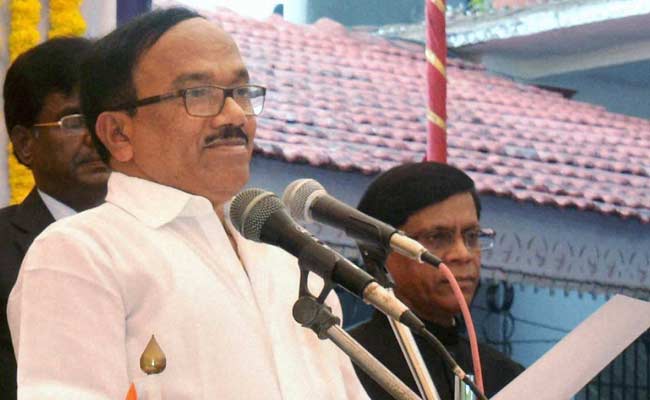
Goa’s Chief Minister, Laxmikant Parsekar, has been receiving flak ever since he took charge from November 2014. Not simply due to the faulty policies that his government seems eager to force down the throats of the Goan people, but also due to controversial and sometimes silly comments in the media.

However, over the last several months we have been witness to a modicum of clarity and good sense displayed by the same Parsekar on the issue of consumption of beef in Goa. In March this year, Parsekar issued a statement saying that there cannot be a beef-ban in Goa, as beef is part of the diet of a lot of people in the state. Since the issue of whether Muslims, Dalits, Christians, and Adivasis living in India should or should not consume beef is being raked up with alarming frequency, Parsekar did not shy away from issuing another statement earlier this month. Modifying his views a bit due to the existing political climate in North India and the debates surrounding the ‘rise of intolerance’ in India, Parsekar said, “I don’t feel the people of a community eat or use beef to hurt sentiments of others. It is part of their cuisine or preparation and we also accept the fact…” What one can also add to Parsekar’s statement is that rather than offending anybody, many Catholics (for example) feel quite awkward and embarrassed to serve pork and beef dishes at their own functions, thanks to a desire to accommodate the sentiments of their Muslim and Hindu friends. One can see that Parsekar is quite consistent in his views on beef-eating vis-à-vis the minoritized communities and to state something as plainly as he did is frankly quite remarkable.

But Parsekar did not stop at asserting that there was no intent for hurting sentiments by the consumption of beef. The problems in Parsekar’s comments arise when he tried to link the current situation of intolerance in rest of India to the tolerant ethos of Goa, which many believe existed for centuries. He said, “This maybe a tiny state, but our speciality is that Hindus, Catholics and Muslims can live together in harmony and peace. We know the importance of respecting each others’ feelings. Therefore, such issues are never blown out of proportion as in other state”. Reading such a view one should be ideally left with a few wrinkles on one’s forehead.

The question is how valid is the idea that Goa was always tolerant? While raising this question, allow me to also stress that Goa seems to witness a relatively ‘peaceful’ atmosphere as the ‘othering’ of minoritized groups like Christians and Muslims operate through means that appear as not overtly violent.

If we consider the politics of the Konkani language organized around the legitimization of the Nagri script as the official and de facto script of the culture and language of Goa, this vision of Goa having a long tradition of tolerance immediately fractures. By now it is common knowledge that a sizable population of the Catholic community has been excluded from the Goan public sphere. What’s more is that the people who asserted the right of Roman-scripted Konkani as legitimate in the Goan cultural and political sphere were (and are) frequently at the receiving end of vicious hate speech. Though I have said that this is common knowledge, yet it does not seem to have seeped into the common-sensical understanding of many prominent intellectuals and politicians in Goa. For why else would many in Goa celebrate the fact that many Nagri writers threatened to return their Sahitya Akademi awards, despite the fact that these very same people have presided over a regime that continues to marginalize and impose savarna hegemony over bahujan Hindus and various Catholic groups?

To further focus on the harmonious existence of various religious communities in Goa, one can ask about the extent to which Muslims are represented in Goan politics. Although there are many Goan Muslims, there is hardly any representation of that community in Goan politics from 1961. In a sense, one can observe the invisibilization of the Muslim population in Goa, as, right from 1961, the leadership of the community is solely in the hands of others. I think this is very serious as there is hardly anyone who will represent the needs and interests of the community, as for example in the fields of education, employment, and food habits. And since we are on the topic of political representation, I am reminded of the Pratap Singh Rane cabinet of 1980, wherein a sizable number of key posts were given to Christian MLAs, and apparently the mood prevailing then in Goa was that the government had turned into a Christian-controlled one (Kristanvancho sorkar). That a significant number of Goans at that time (which is not that long ago) felt uncomfortable with so many Christian MLAs in the Legislative Assembly, should ideally make us realize that the narrative about Goa’s harmony is a wee bit farcical. One would find many more such incidents.

So while Parsekar is absolutely right in asserting that consumption of beef is not linked to any desire to offend, the rising tide of ‘intolerance’ should not be viewed as an aberration to the normally tolerant and harmonious ethos, whether in Goa or India. In fact, if we think hard enough one will be confronted with a longer history of small and big incidents by which minoritized communities have been consistently and systematically subjected to discrimination. To not recognize this history is to miss a chance at furthering a truly egalitarian society. 


(First published in O Heraldo, dt: 11 November, 2015) 

Please also see a reaction to this article by Vikas Kamat and my rebuttal to it here.