Showing posts with label Laxmikant Parsekar. Show all posts

Wednesday, February 28, 2018

NUISANCE AND SOCIAL DRINKING


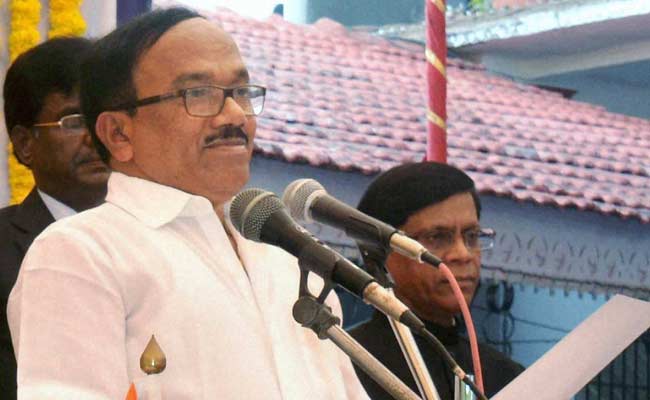
From 2016, the Government of Goa – starting from the term of former Chief Minister Laxmikant Parsekar – has tried to tackle the menace of drunken tourists by legislating a ban on drinking in all public spaces which are notified as “No Alcohol Consumption Zones”. Of course the law has been implemented neither in letter nor spirit. About a month ago, it was reported that the Chief Minister, Manohar Parrikar planned to introduce another law that would impose even more stringent fines than before, and also amend the Garbage Management Act to tackle the joint problem of drunken nuisance and littering.

The 2016 amendment made to the Goa Excise Duty Act, 1964 confirms that the ostensible motive for banning drinking in public spaces is the nuisance created by drunken tourists. When the proposed amendment was introduced in the assembly, the statement of Objects and Reasons set out that the “Government is receiving a number of complaints of consumption of liquor in open spaces, public places, beaches, State and National highways; mostly by visiting tourists. Upon consumption of liquor, the bottles and cans are strewn around causing environmental degradation and…harm to pedestrians accessing the area. Such persons after being in an inebriated state, cause nuisance to general public, disturb the peaceful order in the area and cause local tension, thereby posing a law and order situation on regular basis. The Bill, therefore, seeks to empower the Government to declare a space/place/area in the State of Goa as ‘No Alcohol Consumption Zone’”.

Though the logic of the amendment seems justifiable and the fact that the government will declare a particular place as ‘No Alcohol Consumption Zone’ through a gazette notification as eminently transparent, the situation is not that simple. For one, while the amendment has made drinking in public a punishable offense, it has not properly defined the parameters of which spaces can be notified as ‘No Alcohol Consumption Zones’. Even if we concede that the spirit of the amendment is directed towards regulating the public space of a beach, it still proves to be problematic as many local Goans picnic on the beach with friends and family. They take along with them alcohol and food. Is this activity, part of the lives of Goans for so many years, also to be criminalized and made punishable by law? After all, the law is applicable to all, even if it was made because, or to stop the nuisance, of unruly tourists. In this context, Parrikar’s comment in September 2017, gives us cause for concern. He reportedly said, “If someone wants to drink (liquor), they should drink inside and not in public places”.

At this point, one needs to ask if the solution to unruly and drunk tourists – a problem that concerns law and order – will be solved by banning it in notified public spaces. The activity of drinking – or rather, social drinking – in itself is not the problem. The fact that the government feels that the problem will be tackled by giving more teeth to the Goa Excise Duty Act, 1964, which regulates the production and sale of alcohol and has nothing to do with public disorder, is itself suggestive of the manner in which the government views liquor consumption as a problem, and not the fact that tourists feel entitled to do as they please in Goa. In any case, the law will provide ample space for future police harassment of those who consume alcohol because consumption of alcohol is criminalized and not public disorder.

The ideology that the current government and many members of various political parties subscribe to is well-known. Of late many politicians across party lines have made crass and ignorant comments that appear to fly right in the face of the liberal and susegad ethos of Goa. In this context, the history of temperance movements in India can give us valuable insights as how political activism and the legislation of the state can end up creating a smokescreen by which various cultural practices end up as collateral damage.

In his doctoral study, “A World Without Drink: Temperance in Modern India, 1880-1940” (2013), Robert Eric Colvard discusses how the earliest protests against policies regulating the sale of alcohol were lead by toddy tapping communities and other communities traditionally producing alcohol. These protests were against unjust taxes imposed by the British, particularly against the Bombay Abkari Act, 1878, and not about the consumption of alcohol per se. However, a combination of Christian temperance activists with their Victorian morality and Indian nationalists essentially believing in a brahmanical Hindu morality created the fiction that the people in India were teetotalers. This fiction served the basis of the several prohibition laws in India and also created the notion that the consumption of alcohol was an aberration to Indian culture. And the bans that the government, both central and state, bring in force or plan to bring in force also rest on this idea that the consumption of alcohol is foreign to Indian culture.

In the context of Goa, the government seems to be unwilling to let go of the revenue it earns from liquor sale while at the same time wants to alter the place alcohol consumption has in Goan society. Even though the Goan government actively promotes local spirits, such as feni for export, we frequently hear such expressions of irrational fears as girls drinking, amongst others. This might lead us to wonder whether misguided attempts to curb unruly tourists may, in fact, end up slowly eroding one’s right to consume alcohol without causing a nuisance in a public space. The government has to take steps to maintain public order without interfering in the cultural rights of Goans.

(First published in O Heraldo, dt: 28 February, 2018)

Wednesday, November 11, 2015

INTOLERANCE AND THE MINORITIZED GROUPS


Goa’s Chief Minister, Laxmikant Parsekar, has been receiving flak ever since he took charge from November 2014. Not simply due to the faulty policies that his government seems eager to force down the throats of the Goan people, but also due to controversial and sometimes silly comments in the media.

However, over the last several months we have been witness to a modicum of clarity and good sense displayed by the same Parsekar on the issue of consumption of beef in Goa. In March this year, Parsekar issued a statement saying that there cannot be a beef-ban in Goa, as beef is part of the diet of a lot of people in the state. Since the issue of whether Muslims, Dalits, Christians, and Adivasis living in India should or should not consume beef is being raked up with alarming frequency, Parsekar did not shy away from issuing another statement earlier this month. Modifying his views a bit due to the existing political climate in North India and the debates surrounding the ‘rise of intolerance’ in India, Parsekar said, “I don’t feel the people of a community eat or use beef to hurt sentiments of others. It is part of their cuisine or preparation and we also accept the fact…” What one can also add to Parsekar’s statement is that rather than offending anybody, many Catholics (for example) feel quite awkward and embarrassed to serve pork and beef dishes at their own functions, thanks to a desire to accommodate the sentiments of their Muslim and Hindu friends. One can see that Parsekar is quite consistent in his views on beef-eating vis-à-vis the minoritized communities and to state something as plainly as he did is frankly quite remarkable.

But Parsekar did not stop at asserting that there was no intent for hurting sentiments by the consumption of beef. The problems in Parsekar’s comments arise when he tried to link the current situation of intolerance in rest of India to the tolerant ethos of Goa, which many believe existed for centuries. He said, “This maybe a tiny state, but our speciality is that Hindus, Catholics and Muslims can live together in harmony and peace. We know the importance of respecting each others’ feelings. Therefore, such issues are never blown out of proportion as in other state”. Reading such a view one should be ideally left with a few wrinkles on one’s forehead.

The question is how valid is the idea that Goa was always tolerant? While raising this question, allow me to also stress that Goa seems to witness a relatively ‘peaceful’ atmosphere as the ‘othering’ of minoritized groups like Christians and Muslims operate through means that appear as not overtly violent.

If we consider the politics of the Konkani language organized around the legitimization of the Nagri script as the official and de facto script of the culture and language of Goa, this vision of Goa having a long tradition of tolerance immediately fractures. By now it is common knowledge that a sizable population of the Catholic community has been excluded from the Goan public sphere. What’s more is that the people who asserted the right of Roman-scripted Konkani as legitimate in the Goan cultural and political sphere were (and are) frequently at the receiving end of vicious hate speech. Though I have said that this is common knowledge, yet it does not seem to have seeped into the common-sensical understanding of many prominent intellectuals and politicians in Goa. For why else would many in Goa celebrate the fact that many Nagri writers threatened to return their Sahitya Akademi awards, despite the fact that these very same people have presided over a regime that continues to marginalize and impose savarna hegemony over bahujan Hindus and various Catholic groups?

To further focus on the harmonious existence of various religious communities in Goa, one can ask about the extent to which Muslims are represented in Goan politics. Although there are many Goan Muslims, there is hardly any representation of that community in Goan politics from 1961. In a sense, one can observe the invisibilization of the Muslim population in Goa, as, right from 1961, the leadership of the community is solely in the hands of others. I think this is very serious as there is hardly anyone who will represent the needs and interests of the community, as for example in the fields of education, employment, and food habits. And since we are on the topic of political representation, I am reminded of the Pratap Singh Rane cabinet of 1980, wherein a sizable number of key posts were given to Christian MLAs, and apparently the mood prevailing then in Goa was that the government had turned into a Christian-controlled one (Kristanvancho sorkar). That a significant number of Goans at that time (which is not that long ago) felt uncomfortable with so many Christian MLAs in the Legislative Assembly, should ideally make us realize that the narrative about Goa’s harmony is a wee bit farcical. One would find many more such incidents.

So while Parsekar is absolutely right in asserting that consumption of beef is not linked to any desire to offend, the rising tide of ‘intolerance’ should not be viewed as an aberration to the normally tolerant and harmonious ethos, whether in Goa or India. In fact, if we think hard enough one will be confronted with a longer history of small and big incidents by which minoritized communities have been consistently and systematically subjected to discrimination. To not recognize this history is to miss a chance at furthering a truly egalitarian society. 


(First published in O Heraldo, dt: 11 November, 2015) 

Please also see a reaction to this article by Vikas Kamat and my rebuttal to it here.

Monday, June 1, 2015

COLONIZING GOA: THE INVASION OF LOCAL, NATIONAL, AND INTERNATIONAL BHATKARS


by DALE LUIS MENEZES, ALBERTINA ALMEIDA, JASON KEITH FERNANDES, AMITA KANEKAR

Goa is constantly framed as the holiday capital of India. However, there is a good amount of violence that underwrites this project of providing fun. The recent incidents in Tiracol, a village in the northern-most tip of the state, highlight this clearly. Sometime around the midnight of 14 May, the residents of the village were awakened by the arrival of men and machinery hired by M/s Leading Hotels Pvt. Ltd., a five-star hotel company, who went on to bulldoze a large part of the orchard lands of the village as part of their plan to build a PGA standard golf course and resort. The villagers have been strongly opposing this project for the last several years, with the result that the project has now been virtually stayed by the courts; Leading Hotels’ response to this legal and popular opposition was to sneak their men and machinery in at the dead of night, protected by fifty-odd bouncers.

Work was halted only when the vigilant villagers alerted the police. However, when local reporters reached the scene, the bouncers were still there. Diana Fernandes, a journalist writing for O Heraldo (16 May, 2015), reported that the area was still swarming with twenty-odd musclemen the next day.

This instance of violent land grab is not confined to the village of Tiracol. In fact, as a result of the boom in mining, real estate, and tourism industries in Goa, it has become a trend over the last couple of decades. In most cases, the chief victims are agricultural tenants who tilled the land belonging to landlords, and mundkars living on this land, with various obligations towards its upkeep. The problem of land-grab in Goa needs to be understood through the manner in which the existing feudal land relations of Goa – the relation between the mundkars and agricultural tenants (henceforth tenants), and the bhatkar (landlord) – have been supplemented by the feudal-like powers of global capital that works in alliance with the feudal lords. Additionally, we also suggest that the existing sorry state of affairs that Goa finds itself in, due to excesses of ‘development’ in the real estate market and other industries that gobble huge chunks of land, can only be correctly understood, and effectively addressed, if one approaches the issue from the perspective of the tenants and their experiences .

In Goa, land was traditionally appropriated and tightly controlled by the bhatkars. In addition to being a class, these bhatkars were also upper-caste. The caste equation is important as the bhatkars could be of any religious background, but were invariably from the upper-castes. Relief to the mundkars and tenants came in the form of the Goa Agricultural Tenancy Act, 1964 and the Goa Mundkar Act, 1975, but this relief was eventually thwarted by a new and developing economic system that no longer made it economically viable to cultivate land and made it seem more alluring to sell land to the highest bidder and share the spoils, albeit disproportionately between the bhatkar and the tenants.

But Tiracol was different. The bhatkarial rights were held by the Khalap family, said to be a branch of the Deshprabhu family who still are the bhatkars of most of Pernem taluka. The bhatkar here was an absentee one who had long broken contact with the village, to the extent of not collecting either mundkarial services or tenant revenues. This, coupled with the relative homogeneity of the tenant population – a small village of about 50 Catholic households living off cashew orchards, fishing and the production of urrack and feni, along with some rice farming and coconut plantations – made the village a relatively egalitarian and developing space where caste hierarchy was not strongly evident and where many were making the socio-economic shift from tenants to entrepreneurs and workers in the modern economy.

Hence it is not surprising that the proposed golf course project by M/s Leading Hotels, which first hit the news in 2007-08, was vehemently opposed by the St. Anthony Tenant and Mundkar Association (SATMA) of Tiracol. It is also interesting, though again not surprising, that the local spokesperson of Leading Hotels, Gerson Rebelo, viewed the company that he represents as a bhatkar: “The land belongs to us, we are…the bhatkars in the traditional sense, and whatever claims that are there on the land will be settled in the appropriate fora. We have every permission in place”. Goa’s tenancy law echoes this outlook where it is clear that if a land parcel, which includes mundkars and agricultural tenants, is sold, then the purchaser buys the land with the obligations to comply with the provisions of the mundkar and agricultural tenancy laws. Normally, the practice is that when a bhatkar sells that land, the purchaser simultaneously settles the claims of existing tenants, creating in this process an unencumbered right to the property. But what the law, as well as the Leading Hotels’ spokesperson, hides is the fact that the clout of the new bhatkar in the form of a big powerful corporate entity makes it possible for both money and muscle to be flexed to take over physical possession of the land.

It is pertinent to note here that M/s Leading Hotels is a subsidiary of Asian Hotels (North) Ltd. and according to the Director’s Report of the latter, the company holds 100% equity as well as preference capital in Fineline Hospitality Pvt. Ltd., Mauritius (FHCPL). For its part, FHCPL is a significant player in the global tourism economy and holds substantial equity stakes in many other companies worldwide, including in the company which has a substantial stake in Leading Hotels. One can clearly see the power and reach of global capital that comes to bear on, or invade if you like, Tiracol.

As has been pointed out, the bhatkar of the village of Tiracol was absent in the years subsequent to the integration of Goa into India, giving the tenants the space with which to craft a relatively egalitarian order and use the benefits of quasi-land ownership to become small-time agricultural entrepreneurs. But the bhatkar made a comeback, to make a killing off the land. He sold the rights to the land to M/s Leading Hotels in 2007. Since SATMA questioned the legality of the sale, because the existence of the tenants was not acknowledged and recognized, M/s Leading Hotels began to approach individual village households to buy them off; about ten families agreed to sell at varying rates, from Rs 120 per square metre, then Rs 200, and finally Rs 500, showing how life-sustaining resources can be robbed from villagers for a pittance because of their ignorance. It also shows the complete failure of the Goan government to protect villagers, even while it boasts of its support to the farm economy – and thus its tacit support to the land-grab. ‘Tacit’, however, may be too obtuse a word, given the fact that newspaper reports of over a year ago claimed that the state government had actually planned this golf project under the Central Government’s ‘Large Revenue Generating Scheme’, in which a state subsidy of up to Rs 50 crore can be given!

Despite everything, however, the project was unable to take off for procedural and infrastructural reasons. But things seem to have changed with Modi’s rise to power at the centre. The project obtained environmental clearance despite the earlier assurances by Environment Minister Alina Saldanha to the contrary. Although the villagers went to court against the clearance and, with the Goa Foundation, obtained a stay on further felling of tress, M/s Leading Hotels apparently felt emboldened enough to try to terrorize their way into taking over the land and destroying the orchards there.

While the issue of Tiracol was thus on the boil, Goan newspapers also reported the opposition of villagers to a proposed Marina project in Sancoale, close to the port town of Vasco. The project proposal had been forwarded by the Investment Promotion and Facilitation Board to the panchayat of the village of Sancoale. The company intending to develop this marina is M/s Yacht Heaven (Pvt) Ltd, registered in the name of Umaji Vishwasrao Chowgule and Arjun Ashok Chowgule. The Chowgules, as is widely known in Goa, made their fortunes first-and-foremost through mining operations. The close links that many Goan real estate companies have with the mining industry is important to note, as this is how economic, political, and social capital already in possession of such class and caste elites, get transformed within the real estate industry, thus pushing tenants out of their lands.

In this context, it was interesting to note the editorial in O Heraldo (19 May, 2015), which talked about the popular opposition to such mega projects, taking two of the most recent examples, the blatant goondaism at Tiracol and the Marina project at Sancoale, as cases in point. The editorial revealed how the Investment Promotion and Facilitation Board (IPFB), which has the current Chief Minister Laxmikant Parsekar as its chairman, would try to circumvent the locals as well as government bodies like the Pollution Control Board and the State Bio-Diversity Board. One of the members of the IPFB in a private conversation revealed to the editor of O Heraldo that since the “IP[F]B has given its approval, the project proponents can go to the pollution board and tell them to better give permission since the IP[F]B has the CM [Laxmikant Parsekar] as its chairman”. The editorial further notes that this “shows the mindset of a body made to clear projects at a rapid pace to meet the very ambitious investment target of the government”. What we can see here is how a narrowly framed conception of ‘development’ is being used by the Goan government in collusion with corporates (bhatkars of a different kind) to push the people of Goa off their land.

So, what we see is that, although the mundkar and agricultural population in Goa is not able to forge alliances with similar beleaguered communities across India and the world, more bhatkars – in the form of national and global capitalists – are getting added to the old ones in Goa. These national and multi-national corporations have allied themselves with the local Goan bhatkars and thus combine modern as well as traditional power to drive out the mundkars and the agricultural tenants from their ancestral homes and the lands that they have long tended.

This is the process by which Goa gets colonized, one mega-project at a time.

First published in DNA (web) on 31 May, 2015, here.