Showing posts with label Vasco da Gama. Show all posts

Thursday, December 21, 2017

ENVIRONMENT AND CULTURE: TAKING STOCK OF 2017


Standing on the cusp of the New Year, it is useful to reflect on the year gone by. This we do with the hope that the inevitable new beginning will be better than what we experienced in the past, in terms of our personal and public existence. And in that spirit, I think, we should take every opportunity to evaluate our political, social, and cultural existence during the past year.

Environmental and cultural concerns can be argued to have dominated the political discourse in Goa in 2017. Indeed, the protests articulated in places like Mopa and Sonshi demonstrated how environment and culture influenced the present discourse on Goan identity. The year witnessed a massive public hearing on an environmental issue. Choking on coal dust, many gathered in Vasco to make their grievances heard. This unprecedented event signaled yet again the growing sense that Goa’s environment and ecological health is endangered, and, if not addressed urgently, will lead to an unmitigated disaster.

Similar to the urgency to address the issue of coal handling and pollution to stop Goa’s environment from deteriorating, the resistance to the development of mega infrastructure projects, such as the new greenfield airport at Mopa, in Pernem, was also in the news. We are also witnessing opposition to other projects, like the double-tracking of the Konkan railway route, the re-starting of mining and the effects there of. This time around, many activists have successfully tried to shift the discourse to demonstrate how aspects of Goan economy fit in a larger system of global capitalism. An increasing number of Goans can be said to have realized that they are being reduced to cogs in the larger system of capitalism. There is awareness that a remote Goan village is not isolated, on the contrary it is linked to distant industrial or commercial hubs. However, the awareness of how global capitalism is a continuum of feudal (or feudal like) system of land ownership and control prevalent in Goa is still lacking; one hopes that it will be a part of mainstream political discourse soon.

There are instances where the issues are old but the sites of protest and resistance have shifted to new villages or areas. Nonetheless, it is becoming increasingly clear to all that urban and rural Goa is categorically speaking out: Goa’s ecology and the quality of life of Goans are under threat.

Concerns with the environment were closely linked with those of preserving Goa’s culture. In fact, one’s identity cannot exist without the interplay of the environment and cultural productions. Identity, then, was a common thread that ran through the various protests and grievances articulated in the course of this year, as it has been over the last several years. The allusion to the intertwining of identity and environmental issues does not simply refer to the utterly cynical politicking over the coconut tree – being de-notified and re-notified on governmental whims – but rather upon instances wherein Goa’s identity and the belonging of Goans in a wider world was debated; indeed the discussion only deepened by acknowledging the complex history and culture of Goa.

António Costa, the Portuguese Prime Minister, who visited India in January, provided the occasion for re-thinking the cultural belonging of Goans; particularly their connections with Portugal and other Lusophone spaces. Costa, who has Goan ancestry, was celebrated in Goa as well as in India for possessing Indian roots. Minor details like Costa or his father, Orlando Costa, having no connection with the modern Indian nation-state did not deter the grandiose celebrations of homecoming. Even those most critical of Goa’s continued contacts with Portugal and Portuguese culture maintained a somewhat uneasy silence. Of course, it helped matters much that Costa came with the intention of fostering business ties with India and Portugal. But even while Costa’s Indian roots were celebrated, one thing became inevitable clear: Goa and Goans are still undeniably connected with Portugal through history, culture, and migration.

The major events within the spheres of environment and culture – the protests, debates, and discussions of future visions – occurred within a political system. This is the system that needs to hear our grievances and resolve them. We, the people, elect our representatives who are entrusted to run the system. Indian democracy that is built on periodic elections is based on the assumption that one person – or one citizen – has one vote, and this vote has one value. This means that everyone in the country, who has the right to vote, indeed exercises this franchise, are equal with other citizens of the country. This, however, is not the case in reality as caste and class differences obstruct the true realization of democracy in India.

In short, because of the existing social and economic conditions, the political system is unable to represent the interests of all – or at least most of us. Laws and policies are therefore made not to protect the interest of all constituents in the polity, but only to further the interests of a few. This is why one witnesses draconian laws enacted and executive fiats beings issued that impinge on the rights and livelihood of millions of people in the country. Of the many challenge in the New Year, and those that will follow in the years to come, the most important one is to make good of the promise that political representation would lead to the empowerment of all citizens.

(First published in O Heraldo, dt: 20 December, 2017)

Wednesday, November 22, 2017

THE ANATOMY OF RESISTANCE: SOCIETY AND PROTEST


India’s bid to be a superpower, or at least economically dominate the region of Asia has guided many policy decisions in the last decade or so. The Mopa airport is part of this scheme. Ever since the airport was proposed, circa 2000, India’s economic policy has consistently promoted airports and projected them as a way to allow small cities or towns, and rural areas to partake of the economic benefits of a surging economy, while also opening up these spaces for the investment of global capital and infrastructure development. The brunt of this ‘development’, as is all too familiar for Goans, has to be borne by the people on whom it is forced – especially the marginalized ones. The idea that smaller undeveloped areas can be included in the circuits of a surging economy – in turn benefiting the people of these regions – by massive injection of infrastructure investment simply does not hold water.

This neoliberal model of development has also met its opposition. In recent times we are familiar with the opposition to mega projects at Tiracol, Sancoale, Mopa, and Vasco as defining the political discourse in Goa. The massive, and hitherto unprecedented, public hearing in Vasco demonstrated that spirited public debate poses a challenge to governmental inefficiency and generally misguided policy making. The resistance that is shaping up in Vasco in comparison with other recent cases can help us identify the forces that are crucial in the success and failure of people’s resistance against development. Simply put, why did a public hearing this effective take place in Vasco and not in Mopa?

To begin with, one has to look at what is being opposed. Coal pollution is visible, its effects felt immediately through respiratory disorders, whereas clearing large chunks of forests changes the climate and ecology slowly, at times almost imperceptibly. This perhaps impacts the urgency with which people mobilize. The literacy rate and the access to higher education also have an impact on the protest and resistance for a particular place. Even if the literacy rate stands at 83.63% at Mopa, there is an absence of professionals such as lawyers, whose skills and clout come in handy in times of crises. Vasco on the other hand has a good number of such professionals – lawyers, teachers, doctors – who can contribute to the fight. Moreover, while Vasco contains a diverse population of people – diverse in terms of education and social background, Mopa’s villages largely have farming and pastoral communities, or communities belonging to the bahujan samaj. The 2011 Census reports that there are about 70 persons belonging to the Scheduled Castes communities. These communities are rather scattered from each other, while the area that is marked for the Greenfield airport is a lush green plateau that is largely forested.

If the fight for Goa’s identity and environment must go on and won in the favor of its people, it needs the active support of diverse sections of the society. In the same way, one can think of how certain pockets of Goa which contain small communities need the support from outside resources to make their voices heard. These ‘outside resources’ could be access to higher education or professional education to its members, access to centers of judicial and executive power, and access to media platforms so that grievances once articulated reach the widest possible people. Linked to the issue of internal collaboration is the ability to understand that local mobilizations are connected to other struggles elsewhere in the world. Thus, activists in Vasco were able to include the struggle of people in Carmichael, Australia as part of their own discourse of protest. The same, however, is not observed in Mopa despite the fact that there are global movements against aerotropolises, and many places in Poland, South Korea, Taiwan, and Nepal are fighting against the development of mega airports.

However, the most crucial factor that affects the success or failure of protest is the social background of the communities that are fighting to protect their rights and/or the environment. Many of these developmental projects are situated on lands that subaltern communities use for their sustenance. Further, marginalized communities are deliberately divided amongst themselves by selective offers of jobs, or some other largesse which is denied to other marginalized communities within the same area.

We can also think of the importance of literacy and education as being crucial in understanding the policies formulated by the government. Many of the families living in Mopa had received notices informing them of the government’s plan of acquiring the land. However, these notices were in English which resulted in most of the people having very little clue of what was happening. In this context, it was heartening to note that activists during the Vasco hearing demanding that all material pertaining to the project, including the minutes of the public hearing, be made available in other local languages – a procedure which the government machinery had failed to follow.

Thus, it would appear that the way a society is structured and the way this very society treats its subaltern members directly impacts its ability to resist power and annihilation. Moreover, if governmental policies and private capital is constantly able to move ahead despite the express wish of the people then it is an indication of how democratic processes have failed many communities within a particular society. And in the final analysis, how there isn’t equality amongst all Goans.

(First published in O Heraldo, dt: 22 November, 2017)

Wednesday, December 23, 2015

WHAT’S IN A NAME? EVERYTHING, EVERYTHING, EVERYTHING


Russell Peters, the Indo-Canadian stand-up comic, has a joke about Indians changing the names of their cities from British usages to more ‘Indian’ ones. Like most of his humor, the joke is rather a no-brainer. Indians, he says, waited for so long after the departure of the British only to be very sure that the Brits have indeed left and would never ever come back again. Since this is not a real reason, one could indeed ask what took the Vasco da Gama-Sambhaji Nagar controversy so long to erupt, given that it has been in circulation for more than 50 years since the Portuguese left?

Actually there were efforts to change the name of Goa’s only port-town right from the ’70s. One does not know the details of this attempt by the Dayanand Bandodkar regime, except that the change was vehemently opposed even then, including by tiatrists like the trio of Conception, Nelson, and Anthony.

Coming to the current Vasco da Gama-Sambhaji Nagar controversy, by and large, it has been represented in the media as a ploy to whip up communal sentiments, and polarize the electoral prior to the state assembly election in 2017. Given the BJP’s proven track record in using this strategy there is no denying this possibility. However, it appears that in the process commentators have missed the larger picture of obfuscating and erasing history. A focus on the longer time period is critical, because it helps us understand the process of how propagandists, demagogues, and ideologues would create a political controversy before transforming it into votes.

The names of places in India are often changed in order (or ostensibly) to move away from British colonial history. There is no doubt that an effort to change names (surreptitiously or otherwise) is easily achieved by groups who enjoy political representation and power. The marginalized groups within the nation, or those marginalized on the basis of caste and/or religion have to battle it out to inscribe their identity and icons onto the public sphere. Name-changes therefore is the display of triumphalism by dominant groups in power and one should be aware of the manner in which history is deployed through such a misuse.

The case of Goa, and the history and legacy bequeathed by the Portuguese, are in a sense different from the experience of British colonialism in the rest of India. This is the reason why Goan identity within the Indian nation itself is structured on foregrounding the influences of Portuguese culture and language on the Goans. A Goan self can be said to have slowly emerged from European and Catholic influences over four centuries. Though the upper caste Catholics assumed and appropriated for themselves the guardianship of this identity, this Europeanized-Catholic identity permeated almost all sections of Goans today, both Catholic and others. Therefore, for many of these diverse groups, taking away the element of Portuguese heritage would mean taking something fundamental out of their Goan identity or ‘Goan-ness’.

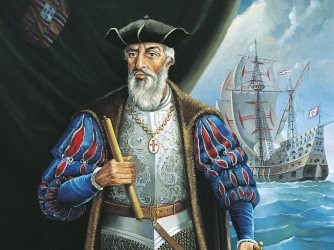
So, what does one do with a certain Vasco – glorified as well as reviled within the history of European colonialism? The Vasco-Sambhaji Nagar case illustrates the immaturity of the powers-to-be in Goa in handling such issues. It seems that one of the motives was to overwrite the history of the town of Vasco using icons that the Hindu right has appropriated. Whether Sambhaji was really a defender of Hindu dharma, as he is portrayed in some quarters, is not the question that I want to address in this column. What I would like to stress is that the Hindu right and the State today has neglected the complex geo-political maneuvering between the Portuguese, the Mughals, and the Marathas solely to appropriate Sambhaji as one who stood against a proselytizing Christian (and Muslim) power. In fact Sambhaji had allied with Prince Akbar, the son of Aurangzeb, against the Portuguese. Before that the Portuguese are believed to have provided refuge to Prince Akbar. Thus, the complex history of diplomacy, trade, and political strategies are completely forgotten in order to propagate a narrow Hindutva agenda.

We must also ask ourselves what exactly has the Maratha ruler to do with Goa or indeed the town of Vasco? Apart from the panic and terror that Sambhaji’s raids had caused amongst the residents of villages and towns of Bardez and the Portuguese administration, Sambhaji seems to have little connect with the history of Goa or the town of Vasco. Rather, Sambhaji seems to be a convenient figure to pit against that of Vasco da Gama in an easy binary scheme of ‘us’ (Hindus) against ‘them’ (colonizers/Portuguese/Christians).

This understanding of Portuguese colonialism and the overwriting of this history seems plausible as the Christians – the group that (despite internal divisions) is perceived to be the most Westernized and closest to the Portuguese – appears to be once again held suspect for steadfastly refusing to let go of their love for Portugal or the colonial hangover. In fact, this can be very clearly seen in the comment of Custodio D’Souza, a resident of Vasco: “This is an effort to change the very identity of our home town and our lives…Instead of giving us good governance, all this government is trying to do is needle the minority community with such tricks and upset Goa’s peace”.

If we think about the Vasco-Sambhaji Nagar controversy more deeply, we can place it in a series of events wherein Goa’s legitimate history, made by its people, is continuously undermined. One is reminded of the Jack de Sequeira incident, wherein his role in the Opinion Poll and the role of the Christian community  in leading the agitation for Goa’s statehood was sought to be undermined. Similarly, one can also ask why stadia in Goa are named after politicians like Shyama Prasad Mookerjee and Nehru, when they have nothing to do with Goan sports? Thus, if we would like such kind of events not to repeat themselves we would not only be vigilant to the ways in which history is twisted and erased in contemporary debates over Goa’s past.

(First published in O Heraldo, dt: 23 December, 2015)