Showing posts with label road rage. Show all posts

Wednesday, May 25, 2016

TRAFFIC ACCIDENTS AND STATISTICIANS


Some days ago, I came across an article in an online portal titled “Bad Drivers are a Good Indicator of a Corrupt Government” by Christopher Groskopf. This article offered a provocative conclusion: “If you’re in a country where everyone drives on the sidewalk and nobody stops at stop signs, you can be pretty sure the government isn’t working right”.  Most of the studies that Groskopf cited in this article were done by economists depending on statistical calculations, who specialized in traffic fatalities, natural disasters and their link to corrupt or inefficient government services.

These studies can help us in understanding the rampant problem of traffic accidents in Goa, as they attempt to discuss universal factors involved in people losing lives in motor vehicle accidents. Moreover, being exposed to different perspectives would help us see what is specific to Goa and what is not. While the link between corruption and traffic fatalities is important, we also need to read the narrative of ‘corruption’ with social and economic realities in Goa.

In the study titled, “The Direct and Indirect Effects of Corruption on Motor Vehicle Crash Deaths”, Law Teik Hua and others argue that “corruption” impacts the count of road accident deaths in two ways: the direct mechanism, in which corruption reduces the “stringency of road safety regulation and enforcement”; and the indirect mechanism, wherein corruption impacts the per capita income, thereby reducing/increasing motorization and consequently reducing/increasing road accidents. In another study titled, “Factors Associated with the Relationship between Motorcycle Deaths and Economic Growth” by the abovementioned authors, the role of inefficient political institutions is highlighted. Motorcycle deaths were observed to have dwindled as road safety policy measures were enforced by political institutions that were committed to do so. The infrastructure of health services and the response to casualties also influenced the statistics of road accident deaths.

An important distinction is made between ‘legal drivers’ and ‘safe drivers’ by Nejat Anbarci and others in their study “Traffic Fatalities and Public Sector Corruption”. Anbarci and others argue that it is public and governmental corruption that produces ‘legal drivers’ but not ‘safe drivers’. We are provided with a schema of how corruption works to produce ‘unsafe drivers’. Assuming that licenses can be easily procured by a payment of a bribe or that the authorities are lax when it comes to following proper procedure to issue licenses, a driver is more likely disposed to take the easy way out. Thus, he/she has a legal license, but is not skilled enough and is more likely to put himself/herself and others at risk on the roads. Not just road accident deaths, but economists have also written about the links of public sector corruption with natural disasters such as earthquakes. Factors such as substandard materials in construction, lack of checks and inspections, and an inefficient system to respond to natural disasters, all can have links, one way or another, to the levels of corruption in the public sector.

Thus, the idea that public sector corruption impacts directly or indirectly traffic-related and other deaths is credibly established by researchers discussed above. Yet again it is the role of the State that is highlighted as important in order to prevent motor vehicle deaths. In other words, the State should play the role of a neutral arbiter, enforcing a just rule of law. In India, this becomes an acute problem as widespread corruption relating to traffic management is reported frequently, and even acknowledged by high-level government officials. It is said that people end up paying more bribes to traffic cops, although most government offices are dens of corruption. Whether traffic related corruption is higher than other areas is not the issue. Rather we should think about how this traffic related corruption is antithetical to human dignity and realizing a democratic society.

In India and in Goa other factors come into play such as those of class and caste. The poor who are forced to live on the streets may sometimes get run over and become victims of road rage. By the logic and method of the studies discussed above, one could argue that such incidents are related to the income of the poor – they are forced to live on the streets because they have no income or very little income. However, the social structure in India denies the basic right to earn a livelihood to many. Road-related corruption can also be a symptom of the entrenched structures of caste and class, in this case. Thus, if at all income of persons is in any way linked to road accident related deaths, merely building wider roads would not suffice. A social and economic change in the lives of people is also needed. Further, the classist bias of the system in Goa and India is visible in the manner in which roads are seen as a privilege of the high-end car users. The pedestrian foot paths, for instance, are seldom given preference and a large part of these pedestrians come from the socially and economically lower castes and classes. How much a society is willing to accommodate the rights of pedestrians, the least powerful on roads, would indicate the seriousness to address the problem of road rage and deaths due to road accidents.

A holistic understanding of the problem is the need of the hour. All concerned – the individual drivers, the urban planners, and the government needs to recognize how they contribute to the problem of road rage and road accident deaths. Corruption does contribute to the problem, but it is also a symptom of existing societal structures.

Illustration: Angela Ferrao.

(First published on O Heraldo, dt: 25 May, 2016)

Wednesday, May 11, 2016

RESPONSIBILITY AND GOAN ROADS


Along with the rising temperature this summer, there has been a sharp increase in the deaths related to road accidents. The first half of 2016 produced some truly chilling statistics with the death toll for the month of January and February reaching 59 persons. April 2016 saw a staggering 11 deaths in just 5 days. While one may have heard, and received, cautionary advice at the beginning of the monsoon season owing to the slippery roads, perhaps we also need to caution each other at the start of every summer in a similar way. After all, the rising temperature seems to be making our roads, quite literally, hotbeds for fatal accidents.

How does one discuss the tragic deaths on the roads, and also the general usage of and safety on roads? The obvious question to ask is, “who is responsible?” Is it the State or the motorists? With academic studies and road accident reports reflecting that most accidents are caused by reckless motorists, it does appear that the individual driver is at fault for recklessness on the roads. I do not wish to argue against these findings, rather I would like to add to them so that when we debate the issue of road safety, we do not slip into an ‘either/or’ position.

There was a common thread running through the statements of the many activists working on road safety that O Heraldo’s Vibha Verma interviewed – that reckless driving was the cause of accidents. For instance, Ruan Mendes, an activist, observes, “One should not hold the authorities responsible alone, but he/she [the motorist] should take every precautionary measure and diligently follow traffic rules…” This reckless driving is more serious, it was argued, with persons who operate heavy-vehicles, as they are the ones who cause the most number of accidents. Thus, heavy-vehicles and reckless driving emerge as the deadly combo that is driving the accident rate through the roof.

However, the recent and tragic death of two women at Tilamol, Quepem should make us think about faulty economic policies of the State a bit more critically. This is not the first time that people have been killed at the very same spot in Tilamol. If we go back in time in 2010, a rasta roko was staged by the angry inhabitants of Curchorem and Quepem after a similar incident where a man was crushed to death. This was at the time when mining-related transportation was in full swing. Six years later, another mining-related heavy-vehicle is the cause of two deaths. While the residents of Quepem and Curchorem, then as now, demanded a separate bypass road solely for the purpose of mining transportation, nothing has come of the demand. What this also indicates is that the State is not able to effectively balance between the flow of economic activities – of which transport/roads form a major part – and the everyday life of the common people. Thus, while the person at the wheel of a heavy-vehicle is indeed indulging in reckless and potentially harmful behavior, the lack of foresight and planning on the part of the State aggravates the problem.

Similarly, one can think of road-widening projects as being counter-productive for the general safety on roads. It increasingly appears that roads are widened or repaired so that they would look good, rather than properly regulate the flow of traffic – for the traffic-flow does not improve substantially. What further complicates the situation in Goa is that the tiny or narrow roads in the villages can immediately meet a national highway, and cause confusion in the minds of the drivers. The new bypass roads constructed as an aid to the existing highways are a good example, as they run through rice-fields and villages. That land is fast depleting in Goa should also make us realize that road-widening is not a viable option.

So, we are slowly coming to realize the intervention by the State through policing, fines, awareness campaigns, regulations, and infrastructure development is not helping. Further the suitability of the urban and economic vision of the State, which privileges a neo-liberal, faster-bigger-is-better vision, should really be examined again. Rather than asking whom one should blame, it might be more useful to demand that thorough professionals be employed who are committed to a vision of streamlining and regulating the existing roads in Goa – with their close proximity to houses, trees, and other structures. Possibly, each and every road needs to be studied as to how this links to other roads and what is the best way to regulate it. In other words, the network of village, taluka, district, and city roads need to be studied as a particularly Goan problem, if we would like a meaningful solution. That and providing efficient public transport may be the only meaningful solution to the problems on roads.

I have in the past argued that the experience of Goan roads is marred by the aggression that motorists subject each other to. We need to recognize how individual behavior frustrates the implementation of state policies that are obviously beneficial, and how faulty state policies lead to chaos – and even death on roads. Both are two sides of the same coin.

Illustration: Angela Ferrao. 

(First published in O Heraldo, dt: 11 May, 2016)

Wednesday, February 17, 2016

ROADS, RECKLESS DRIVING, AND ACTS OF AGGRESSION


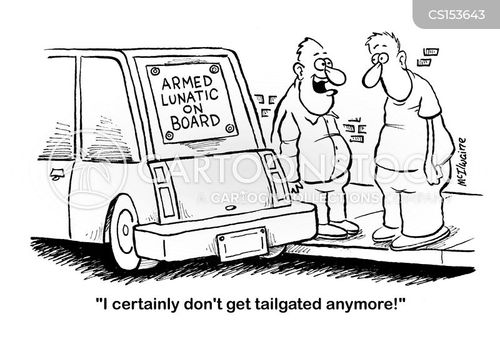
The alarming rate at which accidents are on the rise in Goa is an issue of major concern. While the number of victims in road accidents keeps on rising, repeated attempts to bring about policy decisions and laws seem to be destined to fail. This article is not a dissection of why these aforementioned measures fail. Rather, it will try to dwell on how we, as Goans, relate to each other whilst making use of roads. Think about it this way, why would the person behind you honk incessantly despite there being no place for you to give way and despite the fact that you are driving at a decent 50 kmph? Why is it that people in cars and on bikes rarely wait to allow pedestrians to cross the road? And why, when tables turn, does one indulge in the same behavior?

Goans with memories of having good roads and good traffic sense would today be quite rare. What would not be rare is the constant usage of the phrase “angar yeilo/yeta” to describe reckless driving. Interestingly, this is the exact same phrase that is used to describe physical aggression: “to mhojea angar yeilo”. So if one thinks about the two contexts in which this Konkani phrase is used, one can argue that driving on roads in Goa is an aggressive act. Thus, whilst on the road, we are either subjected to aggression or we inflict aggression upon someone else. These acts can be reckless driving wherein the vehicle driver endangers the life of others; in other circumstances, it can be loud and incessant honking, or using the full beam at night, or not recognizing the rights of other motorists and pedestrians to share the same space as you. And in the last instance, it can even be the use of verbal abuse and physically scuffling with others.

The next logical question to ask is why are roads sites of aggression in Goa? To answer this we would need to focus on power and privilege, as the architect and urban studies scholar Vishvesh Kandolkar does. Writing not so long ago, Kandolkar argued that one of the reasons is the privileges afforded to them by the Indian caste system that empowers ‘elites’ and/or high-end car owners to flout traffic laws as they do. To that we can also add the fact that as many are denied power and privilege in their social and political sphere, reckless driving can be a manifestation of this lack, enabling non-elites to momentarily feel a sense of power and privilege. As a result they assume themselves to be always in the right and above the law.

If we briefly focus on the history of who could afford cars and scooters in Goa, it would be apparent that privilege has a lot to do with why roads are sites of aggression. The wealthy and the landed class in Goa were the ones who could afford cars and scooters, back in the days when buses and bullock-carts were the more accessible means of transportation. I do not want to claim that only the wealthy and landed classes purchased cars in Goa, because others would as well. Many of the cars were purchased as a business investment, for providing transport facilities or taxi services. Generally, the one who invested would be driving the car and earning a living. However, cars purchased and used solely for the convenience and conveyance of the family members was a privilege that was only available to either those who owned land or those, due to employment in Gulf and on cruise liners, could afford cars from the ’80s. In other words, one could feel a certain entitlement – in the sense of owning the roads and driving on them.

With liberalization of the Indian economy and the availability of loans to the middle-class in the service sector, more and more Goans were able to acquire vehicles. This, in itself, is not a bad thing as more and more people could acquire prosperity. However, one cannot but help thinking if an anciently entrenched form of privilege along with a sense of entitlement is the only way through which we understand how to use roads. In other words, an ‘elite’ behavior and understanding that ‘I’ and solely ‘I’ am right – the other is not, is the only way we know how to behave on the roads and relate to each other. Ultimately, due to the virtue of owning a car or a scooter, ‘I’ do not recognize the right of others to share the same public space because ‘I’ think that ‘I’ am entitled (and above the law) and that everyone else should make way for me. Like in other public spaces such as parks, ‘we’ as a community have until now not been able to lay our collective claim on it. Only some of us can, while others resent it. There is always a friction which causes us to display aggressive behavior.

This is not to suggest that aggressive behavior is solely the cause of accidents on roads. Factors like sleep-deprivation and bad roads can also be major causes. However, the acts of aggression exhibited on Goan roads make the experience of moving from one place to another unpleasant and frustrating. This aggressive behavior on roads does not allow us to value human life, as it should be. While the efforts of the state, such as wider roads and more policing (which actually leads to harassing the citizenry) have not borne any results, checking our aggressive behavior could be a start at fixing the problem.

(First published in O Heraldo, dt: 17 February, 2016)