Wednesday, September 5, 2012

HAPPINESS AND OTHER PURSUITS


To lead a happy life, what do we need? Wealth? Acceptance? Friendship? Love? Or sage advice? Methinks it is a little bit of all-of-the-above. In a rapidly changing world, we have witnessed ourselves as well as others as being unhappy and dissatisfied. Our life has become a challenge that needs to be met head-on; a progression from being sad to satisfied, from being nobody to somebody. But this path is not so easy, fraught as it is with many obstacles. And as assistance, we have all come across books that act as guides to happiness and success.
            One such book is John M. Alfonso’s Jinnechi Vatt (2009). A Carmelite monk hailing from Canacona, Alfonso has a post-graduate diploma in Counselor Training programme and as such has given lectures on life skills and good living. He is a regular contributor to Konknni mastheads and the present book is the compilation of his essays that were first published in Gulab and The Goan Review. Sukhi Jinn was the author’s first book.
            John M. Alfonso writes about life skills because he is of the opinion that though injustice is rampant in the society, we – or the ones who perpetrate these injustices – are part of the society, and by focusing on the root causes and fundamentals of our behaviour, we would be able to take steps to resolve the problems facing our society.
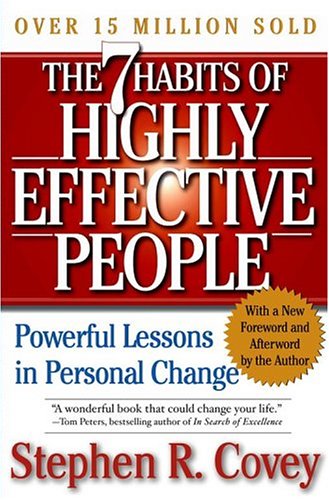
            John M. Alfonso’s text, as mentioned earlier, primarily deals with the leading of a fulfilled life and finding happiness. Being the subject of the author’s specialization and training, he draws on the already established literature in this field as the brief bibliography at the end of the book demonstrates. This goes to the credit of the author as the works are in English and John M. Alfonso has taken pains to adapt the terminology and concepts of such specialized literature into Konknni – a task by no means simple! It must also be said that the author advocates the greater use of counseling and therapy for resolving the issues that people might face. Having said so, one wishes that John M. Alfonso had introduced such works and the authors in an elaborate manner, considering the fact that many of his readers would not be familiar with such literature and their authors. A case in point would be Stephen R. Covey, the internationally renowned author and motivational speaker whose books have sold millions of copies.
            In introducing the subject of the essays, John M. Alfonso generally starts by using a statement of a person and then proceeds to expound his thoughts and reflections and at the same time providing some useful advice. This literary device helps him to get straight to the point, a necessity for writers in newsmagazines who have to be economical with words. But as I have pointed out in some of my previous reviews dealing with columnists who have compiled their works in a book, the topics could have been introduced in a much more leisurely manner. Konknni, as Dr. (Fr.) Pratap Naik points out, is our kallzachi bhas [language of our hearts] and as such I personally prefer some generous doses of florid prose!
            What I gather from the essays is that the aim of the arguments is to ultimately provide the keys to happiness to the reader. Very well! At the expense of sounding like a whiny skeptic, I would begin by questioning the actual concept of ‘happiness’. What is happiness? John M. Alfonso does not dwell on what is his idea of happiness. I would also maintain that this is not a simple concept and that ‘happiness’ could be very confounding. I recall a poem by E. A. Robinson called Richard Cory, where we encounter a similar question as posed above and whether true happiness always evades human beings. The protagonist of the poem had everything (or at least it seems to the observer): respect, wealth and acceptance. Yet, the poem ends tragically with Richard Cory committing suicide. Here is the poem:

 
Whenever Richard Cory went down town,
We people on the pavement looked at him:
He was a gentleman from sole to crown,
Clean favored, and imperially slim.

And he was always quietly arrayed,
And he was always human when he talked;
But still he fluttered pulses when he said,
‘Good-morning,’ and he glittered when he walked.

And he was rich – yes, richer than a king –
And admirably schooled in every grace:
In fine, we thought that he was everything
To make us wish that we were in his place.

So on we worked, and waited for the light,
And went without the meat, and cursed the bread;
And Richard Cory, one calm summer night,
Went home and put a bullet through his head

           
In suggesting a way to a fulfilled and enriched life, John M. Alfonso sees the individual as the driving force in the scheme of things and therefore s/he is the one who has to take steps to reform his/her life. Alternatively, I would like to stress on the role of the structures and processes of society that can also work in a counter-productive manner, restricting an individual to access a happy and contented life. I am highly doubtful whether such abstract concepts like happiness and satisfaction (though necessary) can be cast in a polarity of borem (good) and vaitt (or bad). Doesn’t it oversimplify things? Here is a quote which more-or-less, illustrates my point: Amchi jinn moladik. Tacho samball koso korop hem amcher dhorlolem asa. Tornatteponn, vo duddu asa mhunn somazant sobona toslem jivit jiyevpache yotn zaunche nhoi. Fattlea jivitant jem kitem ghoddlem tache bolli zavop amkam sobona. Moslotdaracho adhar gheun sodanch togta tosli khuxalkay zoddchi. Kitem mhonntat tumi? [Our life is valuable. How we nurture it depends, solely, on ourselves. Just because one possesses youth or wealth doesn’t mean that one can act as s/he pleases in society. Our past should not hold us down. Through counseling we can try to obtain everlasting happiness. What do you think?]
            My attempt to provide an alternate view to the major arguments and themes of John M. Alfonso is not to dispute his work; rather I want it to be an exercise in dialectics and heuristics, since the subject is so subjective! To end, I maintain that the work of John M. Alfonso is an insightful one, leading one to think further – and deeper. 


Jinnechi Vatt by John M. Alfonso (Margao: Carmelite Monastery), 2009; pp. 136, Rs. 60/-

(A version of this article appeared on Gomantak Times, dt: September 5, 2012).

Friday, August 10, 2012

TABLE FOR TWO: HISTORY AND TRADITION OF GOAN FOOD


If one were to browse through the cookery section of any reputed bookshop, one would definitely find a book (or many books) about Goan cuisine and gastronomy amidst several books dealing with diverse cuisines. What we eat and how we eat becomes part of our culture and identity. Food-related stereotypes are perhaps the few that we may not resent; that Goans are like fish out of water without fish, for there are Goans who are vegetarians and some do not like the taste of fish.
            For a person whose relationship with food has thus far been confined to only consuming it, reviewing a book about cooking and the history and tradition that surrounds such an act can be an unnerving task. Cozinha de Goa by Fátima da Silva Gracias is not a cookbook per se. It deals with the history and tradition of Goan food and includes some recipes as well. Along the way, Mrs. da Silva Gracias also reminisces about her own experiences with cooking and researching about Goan food. A historian who has authored books on colonial health and hygiene and women in Goa, Mrs. da Silva Gracias has crafted Cozinha de Goa in a Maria Aurora Couto-esque fashion, providing us with a daughter’s story in between.
            Along with acquainting the reader with the text of Mrs. da Silva Gracias, I would also like to situate her work as primarily trying to assert a Goan identity. I would try to point out a few possibilities and limitations as well. In trying to link cookbooks or books that deal with a particular cuisine to questions of identity, I shall refer the reader to a study of Caribbean cookbooks published in English which would help us in charting new understandings of books on gastronomy. B. W. Higman, the author of the paper titled, ‘Cookbooks and Caribbean Cultural Identity: An English-Language Hors D'Oeuvre’ says, “It can be argued that the emergence of the cookbook marks a critical point in the development of any cuisine and that the specialization and ramification of texts has much to tell about the character of national, regional, and ethnic identities. For these several reasons, a study of the history of cookbooks published in and having to do with the Caribbean can be expected to throw some light on what it means to be Caribbean or to identify with some smaller territory or grouping, and how this meaning has changed in response to social and political development.”
            The basic position that Mrs. da Silva Gracias assumes in writing this book and one theme that runs through the entire book is that of the east meets west. The meeting of east and west may have greatly influenced our food habits and culture but the use of this cliché over simplifies our understanding. Although Mrs. da Silva Gracias recognizes that Arab, Chinese, Brazilian, African, Anglo-Indian and other influences have enriched Goan food, the same is not reflected in the text; the treatment to these influences is meager. On the other hand, the picture that forms in the reader’s mind is that of Goan food being composed of the Catholic and Hindu cuisine. Such a line of thought is limiting, as is demonstrated by the following quote: “Portuguese rule created a culinary gap between the Hindus and Christians. On conversion, meat became part of the new diet of the Christians. Different measures and decrees introduced new food habits and discarded old ones.” We know today that tribal or aboriginal populations of South Asia before Hinduism and the advent of the Portuguese consumed meat on a regular basis and by making such assertions, Mrs. da Silva Gracias’ claims search for a pre-Portuguese past that is Hindu by conception.
            Food can be used to challenge the fascist arguments of what is Indian and foreign. This ‘Indian’ versus ‘foreign’ debate today has been defined by right-wing understandings of our history and culture. But nobody is aware about many of the food ingredients that were not native to the land and which should have effectively led us to question the whole idea of what is foreign in other spheres of social life: for instance, our dress. Although Mrs. da Silva Gracias could have used food to comment on such narrow tendencies, I still hold that some of her claims are useful to us, “The chili revolutionised Indian cuisine. Few realize that the chili, now widely used and deeply embedded in Goan and Indian cuisine, was a stranger to our continent and that it had been brought in from the Americas only a few centuries ago.” Or consider the following where the native is not Indian but Brazilian, “During my earlier visit to Brazil I noticed that even canjee [pez in our language] was popular in some parts. Some Brazilian researchers believe it came to them from sixteenth century Goa. In Brazil it went through changes. The Portuguese had already added chicken or chicken broth. The Brazilians included bay leaf, garlic, onions, pimenta-do-reino (pepper), carrots, cubed potatoes and so on. King D. Pedro II of Brazil, is said to have loved canja de galinha and even had it during intervals at the theater.”
            Mrs. da Silva Gracias, as mentioned before, peppers (to use a food metaphor!) her text with her own experiences and reminisces about Goan cuisine and food and also connects traditional practices to the preparation and consumption of food in her narrative, as food is an intrinsic part of any traditional practice and festivity. She is an accomplished writer and hence this account is delightful and one written with a pinch (food metaphor again!) of nostalgia. But she could have easily critiqued her own position and her memories. In recounting her memories, Mrs. da Silva Gracias paints a rosy picture of the past. “The life of a Hindu woman changed drastically when she became a widow. Although she cooked food for the rest of the family she could eat a very limited vegetarian diet.” This quote is cited as an example where a critical position could have been adopted by Mrs. da Silva Gracias.
            The book is written with much imagination and effort. The section where Mrs. da Silva Gracias has described a day in a Goan kitchen, albeit that of a rich family, is a splendid example of her imagination at work. In between the text, she has also provided trivia and recipes in a way that do not obstruct the main flow of the book.
            Although Cozinha de Goa is about the history and tradition of Goan food, it also concerns itself with the Goan identity in a subtle way. The parting lines of the book, in a way, make this concern abundantly clear, “Which road will Goan food take? Will it survive and thrive? Will it evolve further? Or will it simply lose out to stronger global trends? Only time can tell…whatever the outcome, this is undeniably an interesting cuisine, of a tiny region shaped by history from far and wide across the globe. It needs to be understood. It deserves to be cherished.”


(A version of this article appeared on Gomantak Times, dt: August 11, 2012).

Friday, August 3, 2012

IN SEARCH OF DHAMMA


  • If change could be brought by a king,
why did the Buddha become a beggar? (p. 382)

  • The Buddha preached his Way, they went theirs (p. 334)
Before Hinduism, in Ancient South Asia, Buddhism was a major religion. What the common man as well as the student of history knows about Buddhism has come, generally,  from the old Jataka story of how the Buddha who was a prince was isolated from all the ills of the world and a chance encounter with old-age, sickness and death transforms his whole life, eventually leading to his enlightenment. Sadly for all of us this legend has been – verbatim – passed off as history. The Buddha is viewed as godhead, when charting the history of Buddhism with the actual historical processes that the Buddha as a person had experienced, given scant attention.
            How we understand and construct the history of Buddhism (or for that matter the history of any other religion of Ancient India) is on many occasions found to be lacking in a rigorous imagination coupled with erudition. While studying Buddhism, I have always felt that the thrust is on the philosophy (and sometimes only philosophy!) rather than the historical conditions that required such ideologies and philosophies – such as Buddhism – to be produced. Hence, when I read the debut novel of the Goan writer and academic Amita Kanekar, now based in Miramar, I felt that my knowledge and imagination about the Buddha in particular and the historical setting of Ancient India in general was enriched.
            A Spoke in the Wheel (2005) by Amita Kanekar, to be simply put, is a novel about the Buddha and Buddhism along with other historical personages. In attempting the portraits of such historical personages like the Buddha and the Emperor Asoka, Amita Kanekar also interrogates the history of that time as well as critically examines the conventional wisdom that has been handed down to us. (In particular, the thrust is towards rethinking the whole nationalist historiography and construction of Ancient Indian history).
            The protagonist of the novel is a monk named Upali, who has been commissioned by the great Emperor Asoka himself to produce a biography of the Buddha in prose. The novel opens in 256 BC, four years after the bloodshed in Kalinga and three centuries after the death of the Buddha. Upali, a native from Kalinga, had witnessed first-hand the destruction of Asoka’s military campaign there. He is now based in a small monastery, in the middle of a thick and treacherous jungle. Upali is portrayed as a scholastic who has to work with legends or suttas which contain several discrepancies in their content as a primary source. He is caught between providing a faithful account of the life of the Buddha as well as staying loyal to the spirit that Gautam, the Enlightened One, had embodied. He is an upstart, getting into frequent arguments with the elders on the finer theoretical points of the Buddha’s life.
            Upali, through his keen, interrogative mind and fearless questioning of the handed-down-wisdom manages to produce an account that shocks and revolts a lot of elder monks. But the Emperor Asoka likes it. A Spoke in the Wheel gives a picture of the time when the first largest empire in history was consolidated in South Asia; the author describes the cities, the people and the social atmosphere in which the daily business was carried out with much élan. The Mauryan Empire under Asoka was vast containing equally varied identities: tribal, caste and class. Amita Kanekar is not just writing a novel, but is also arguing, informing and providing an alternate view of the history of Buddhism and Ancient India. For instance, consider the very popular myth about the 84,000 stupas that were constructed by Asoka. She says, “…since he ruled some thirty-seven years, averages 2,270 each year, or more than six a day, a feat clearly impossible for anyone not Beloved of the Gods.”
            Did the Buddha really lead a sheltered life totally buffered from the harsh realities of the world? Amita Kanekar argues otherwise, “He probably led the most luxurious life possible, but it was not that of a lotus-eater. Otherwise Shudodhan [Buddha’s father] could never have hoped to make his son Chief after him. It was a time of confusion, even chaos, and a Chief had to at least understand both the old and the new divides, to defend his own interests and also swing popular feeling behind him. It was a tall order, as Shudodhan knew only too well.”
            It is also interesting to note how perfectly Amita Kanekar weaves the importance of iron in the whole narrative. Yes, although this ubiquitous dark metal transformed our society and history, sadly this is not taken into much consideration by most established scholarship when discussing the history of Buddhism. Amita Kanekar’s concern and commitment to the cause of the subaltern is seen through the protagonist Upali (who is revealed to be a Chandala, a low born) as well as how she tries to represent the Nagas who were perceived to be racially inferior by the Arya society. Describing the first long-distance trek that the Buddha undertook, Amita Kanekar says, “It was a difficult trip, the first of many cross-country treks, and unforgettable. It was really the beginning of a new education, not in any lofty or esoteric philosophy, but in ordinary, even familiar things. Like the heat of the sun. He had never  noticed how it built up from a mild lighter of the path at dawn to a ferocious torch by midday, pulling out all the water from his body, burning his uncovered head, burning the top and the bottom of his feet, drying the skin of his eyes, tearing the skin of his nose and throat. The Shakyas worshipped the sun in every form, from Ushas, gentle goddess of dawn, to burning Aditya of the noon sky, and not surprisingly, for they too were rulers – arrogant, uncaring, robbing the earth and all who walked on it for their juices. Nobody dared to look the sun in the eye. How sharply different was the moon. Yes, now he could understand why so many of the low-caste worshipped that gentle lantern of cool white light. Anybody who had to expend sweat and energy through the day unprotected by the flimsiest of shades would. The moon was a reinvigorating friend, so that even the tiredest could think of poetry and love in the night, or sleep well and find the strength to rise and face the sun again.”
            The Enlightenment of the Buddha is spoken in a much nuanced way, situating it in the social and historical setting. The portrayal of the Buddha’s Enlightenment is minus the mystical glamour. It is more prosaic, “He thought and thought, till he was satisfied that he had some answers. Such was his enlightenment.”
            Amita Kanekar dwells on how the Emperor Asoka had appropriated the ideology of the Buddha and the Buddha himself and she also tries to show how such an ideology like Buddhism could be, thereby, helpful to the State. The religious ideas may have (unwittingly) helped the State to control its subjects. “Look at the issues of tolerance, peace and renunciation. They [rulers] liked them, they said. Enough to encourage them among their subjects. Tolerance in the poor and dispossessed made for a more peaceful kingdom. And renunciation was a brilliant idea – if people scorned wealth, they would not notice the inequities in its availability. The matter was different for themselves. Their own tolerance, of their neighbours for example, remained low. Their avarice for greater land and revenues remained largely unabated. Nor did they forswear violence towards anybody – their neighbours, their subjects, even their own kinsmen who chanced to cast a covetous eye on their throne,” Amita writes.
            History and polemics aside, there is murder and intrigue woven in the novel. Amita Kanekar also discusses how using subtle suppressive measures, the Asokan empire was kept intact, particularly when the established historiography can rarely see anything beyond the greatness of the tyrant and mass-murderer that Emperor Asoka was.
            The novel provides fresh insights into the life of the Buddha as well as the history of Ancient India. For a person interested in history and Buddhism, this book will be a smart and discerning read.


(A version of this article appeared on Gomantak Times, dt: August 4, 2012). 

Saturday, July 28, 2012

DELUGE AND DAMNATION


Writing a debut novel can be a tough task. Inexperience can be a major hindrance. The plot may digress and may not be able to hold the attention of the reader. If such manuscripts do not go through a process of critical surveying, followed by the tightest possible editing, then the end result could be a bad reading experience. The review of Budd’tti, a novel by Manuel Fernandes in the Roman script will discuss such a shortcoming and also try to read the plot (or plots) of the novel along with the contemporary social and political Goan world.
            Manuel Fernandes has written and directed a few tiatrs and has presented his plays on the All India Radio. He is a regular writer who has published his writings in many Konknni mastheads, especially Gulab.
            Budd’tti or flood is a novel which takes its inspiration from the Biblical tale of Noah and the deluge that God had sent on the earth. Manuel Fernandes has tried to use the symbolism of the Flood and how it inundates everything, in trying to comment about the abysmal and egregious conditions of Goan political life and also (I suspect) the declining moral values of Catholic families. But in attempting to invoke this symbolism as well as wrapping a moral message for his readers, Manuel Fernandes’ novel fails to live up to the expectations. The plot changes directions several times; to the effect that it seems that the author is abandoning one strand of narration and starting a new one, only to discard it once again.
            The novel opens with Ronald, a small-time cloth merchant and his wife Ravina who are very devoted to each other. But there is a sudden twist in the story: Ronald starts having an affair with a young widow, Sofia. Ravina is divorced by Ronald and he drives her out of the house – and into destitution. In another turn of events, Ronald is shown as leading an agitation against a pollution-causing factory. This agitation snowballs into a popular movement which propels him into politics. In due course of time he also becomes the Chief Minister of Goa. Agitation against big industries is an important theme in the book and I believe it is included in the narrative because in recent times Goa has gone through many such agitations. But though Ronald is the protagonist and contemporary politics a major space for comment, the author seems to be struggling to keep these strands tied together in a unifying narrative.
            Ravina is shown as migrating to Bombay, only to make a dramatic and somewhat surreal entry in the end. Manuel Fernandes had tried to keep the suspense for the last, but such a model does not succeed in providing a coherent and believable ending. Along with the revamping of the plot in the editing stages of the book, the author also had a lot of scope to expand and develop his existing narrative. Elaborating more on the characters and the plot at the beginning of the novel would have, in my opinion, provided a solid base to the narration.
            Meanwhile, due to his power and influence Ronald starts indulging himself in corrupt practices. He starts smuggling arms and precious metals as well as making under-the-table deals to set up pollution-causing industries. Ronald chances upon a hidden vault when constructing his house and he converts it into an underground cave; a haven for his contraband. This hidden cave is accidentally discovered by Felicio, a journalist who puts his principles and the ethics of the profession first and follows them to the book.
            After a lot of rather bizarre twists and turns, Ronald receives punishment for his evil deeds. His criminal activities are exposed (though in a way that would never stand a chance in a court of law!) and he has to run away from the long arm of the law as well as the frenzied fury of his voters. Ronald escapes to the surrounding jungle and returns in a state of destitution and injury to a dilapidated house, where he breathes his last. During his funeral, suddenly, the sky becomes overcast and there is a torrent of rain. And since the novel is set on the banks of the Zuari (Cortalim to be precise), the banks of the river overflow and the resulting flood washes the coffin and with it the corpse of Ronald into the sea.
            What Manuel Fernandes has tried to do is to use Ronald as a symbol for the rot in Goan society, where everything that we cherished has been destroyed or is on the verge of destruction. Ronald is the corrupt politician who is selling dear Goa for his own benefit, not for a second thinking about the general public or listening to the voice of his conscience. And somewhere, between so much gloom and doom, there is a longing for the good old days; for an ideal to be realized
We can find a caution in the novel, that if we don’t wake up fast, along with our “coffins” we will also be washed away in the sea of nothingness. This metaphor is primarily invoked to guard the Goan identity, an issue that has gathered a lot of storm in the recent times. But since the novel is an attempt to be a comment and a critique on the politics, society and morality and at some level is made to operate as a homily, it lacks nuance. Manuel Fernandes has tried to focus in this direction but has fallen short to provide a strong argument and narrative simply because his views are not nuanced and critical of the world he has observed and is a part of. Coupled with a lack of planning of the plot, the whole novel stands on shaky ground. Throughout the novel, Manuel Fernandes also tries to portray how an ideal woman should behave and conduct herself in the society. His portrayal of the woman being not just a seductress, but the very object of temptation seems shallow for our times.
            The cover of the book could have been a lot better. Budd’tti is published under the aegis of the Dalgado Konknni Akademi and as such there is a greater responsibility resting on the shoulders of this organization to think of including more checks and balances in the editorial department so that the end result may not lack in the most important aspect of a book: a good reading experience!

Budd’tti by Manuel Fernandes (Cortalim/Kutt’tthalli: Dog Bhav Prokaxon), 2011; pp. 164, Rs. 60/-; Phone: 91-0832-2221688 (Available at Dalgado Konknni Akademi, Panjim)

(A version of this article appeared on Gomantak Times, dt: July 28, 2012). 

Friday, July 20, 2012

POWER, POLITICS AND TRAUMA: THE CASE OF ROMI LITERATURE


The close interrelations of power, hegemony and history in the politics that surround a language and/or script were brought to the fore by Dr. Fr. Victor Ferrao, Dean of Philosophy and Professor of Rachol Seminary.  Dr. Fr. Ferrao was delivering the Late Fr. Freddy J. da Costa Memorial Lecture organized by the Dalgado Konknni Akademi (DKA) at Tiatr Academy’s Conference Hall, Panaji on July 19, the eve of Fr. Freddy’d birth anniversary. Fr. Freddy who is known for his journalism and writing in Konknni was incidentally the founding member of the DKA as well as its first President.
            Dr. Fr. Victor Ferrao who recently released his book, Being a Goan Christian: the Politics of Identity, Rift and Synthesis, was awarded PhD for his thesis on ‘Involving God in an Evolving Universe: Dialogue between Science and Religion’ and has taught at Jnana-Deepa Vidyapeeth, Pune. A highly erudite scholar, Dr. Fr. Ferrao who has published many papers in various journals, argued his case with finesse. He spoke on the topic of Romi Lipintlem Konknni Sahitya: Kal ani Az [Konknni Literature in the Roman Script: Past and Present]. Rather than providing a descriptive history of the books and authors in the Roman script, Dr. Fr. Ferrao took the debate to a very intellectual level, focusing instead on the larger and much malignant issues of power, hegemony, linguistic politics and the changes wrought by colonialism. (Incidentally, some felt that Dr. Fr. Ferrao was deviating from the topic). Needless to say, the thought-provoking lecture left the audience, which also included the Journalism students of St. Xavier’s College, Mapusa, with much to chew on.
            Driving straight to the point, Dr. Fr. Ferrao invoked the Swiss linguist Ferdinand Saussure and said that no language has a natural script. He then went on to explain how we create words and represent them with scripts and how meaning is then encoded in them. And drawing from the thesis of Sausure, he stated that he was not prepared to accept “that any script could be ‘natural’ and ‘scientific’ to a language.”
            Dr. Fr. Ferrao tried to locate the problems of script of Konknni as well as the Medium of Instruction (MOI) in the Portuguese colonialism and believed that there were close linkages between these issues, historically speaking. The proponents of ek bhas, ek lipi, ek sonskrutay [one language, one script, one culture] are misguided, he said. By making such an argument, Dr. Fr. Ferrao asserted that a “forgetting of history” takes place. And since Dr. Fr. Ferrao identified colonialism as intimately tied with our problems today, he dwelled quite at length on the differences between British and Portuguese colonialism as well the Orientalist and nationalist scholarship of the 19th century that had produced knowledge through racist and upper-caste lenses. Dr. Fr. Ferrao was of the firm opinion that such frameworks should be abandoned.
            He also brought to the discussion two insightful concepts of “colonial difference” and “coloniality of power”; the former being the difference between the foreigner and the native where the foreigner projects himself as superior while the latter concept was the acceptance of foreign power without any question. Dr. Fr. Ferrao while acknowledging the contribution of the missionaries in creating a corpus of Konknni literature also recognized the “side benefits” that it may have provided for the Portuguese state. This indeed was a new insight.
            Elaborating on the theme of “forgetting of history”, Dr. Fr. Ferrao cited the example of Manthan, a recently-released book in nagri by the Professor of Konknni at the Goa University, Dr. Madhavi Sardesai. Commenting on Eduardo Jose Bruno de Souza’s novel (which was the first in Konknni), Dr. Sardesai claimed that this novel gave a picture of the state of the Konknni language when it was released while at the same time expressing regret that there were many Portuguese words used in the text. “Madhavi Bai forgets history yet again. For the spoken language always borrows and lends,” said Dr. Fr. Ferrao.
            Although Dr. Fr. Ferrao conceded that the literature of Konknni in the nagri script is great or “mahan”, he admitted that this literature was relatively young. He said that there was an attempt to invent a long and glorious past. This, Dr. Fr. Ferrao said, was being achieved by finding the roots and origins of Konknni in Sanskrit. If we keep the many scripts of Konknni aside from the mainstream, can we develop the language, he questioned.
            Dr. Fr. Ferrao stressed that the events of the 16th and 17th centuries are evaluated by the frameworks of the 19th century Hindu lenses. Taking the help of established scholarship that has convincingly demonstrated that ‘Hindu’ was a relatively recent invention due to foreign invasion and colonial intervention (for instance, the work of Romila Thapar and David Lorenzen), and asked a very provocative question whether it was correct to superimpose 19th century frameworks on the 16th and 17th centuries and when did the Goan Hindu actually become “Hindu”? These questions are significant as the burden of conversion has to be borne by the present day descendents of the converts, most of whom are the protagonists of the Roman script. Readers would remember that more recently the protagonists of the Roman script have been dubbed as “anti-nationals” and “agents of the Portuguese” by stalwarts of the nagri lobby.
            Along with the power, politics and history, Dr. Fr. Ferrao also included “trauma” in his analysis. He said that if conversion has hurt the Hindu community, it has also instilled a shame in the Catholic community. And such a trauma (or the hurt to put it in more simple terms) produces its own politics, he said.
            Dr. Fr. Ferrao was very critical of the thinking and policies of ek bhas, ek lipi, ek sonskrutay persuasion. Rather than wait in hope for the unity of Konknni under one script, why can’t we accept its diversity and move ahead, he asked.
            In the ideas and arguments that were presented, Dr. Fr. Ferrao has demonstrated that he is a capable intellectual and a scholar who has presented his case with sensitivity. There can be no doubt that Dr. Fr. Ferrao, with his remarkable insight, is slowly emerging on the Goan intellectual scene.

(A version of this article appeared on Gomantak Times, dt: July 21, 2012).