Showing posts with label Marathi. Show all posts

Wednesday, August 31, 2016

LANGUAGE WARS AND HOW TO WIN THEM


The recent resolution passed by the Goa Legislative Assembly to include Marathi as an official language has once again ignited the conflict surrounding languages in Goa. That this resolution, proposed by independent MLA Narendra Sawal, was passed on the last day of the Assembly session, and when elections are just round the corner, indicates that it has more to do with shifts and machinations of political power than with the emotional connect of many Goans with the Marathi language. Whether we like it or not, the ‘language issue’ is a potent force for political mobilization and one needs to fight the communal polarization of the ‘language issue’ by opening the language-sphere of Goa to English, Romi Concanim, Portuguese, and Marathi.

The resolution produced the same old frustrating responses from most Goans. Many felt that “Konkani” was their “mother tongue” with which they shared an emotional mother-child relationship, and that there was no place for any other language. Others felt, erroneously so, that those Goans who were demanding official recognition for Marathi should go to Maharashtra. Still others felt that the existing Official Language Act of 1987 (OLA) should not be changed, thus effectively implying that Romi Concanim should also not be given official status. While the Marathi activists were understandably jubilant, this jubilation seemed to be misguided on many levels, as the resolution was passed without any mention of Romi Concanim. To be fair, a week later the Marathi Rajbhasha Samiti demanded that Romi be included in the OLA. This resolution probably owes its existence to recent calls for Marathi-Romi and Hindu-Catholic unity. However, with this resolution by the Samiti coming too late, it would perhaps end up doing too little.

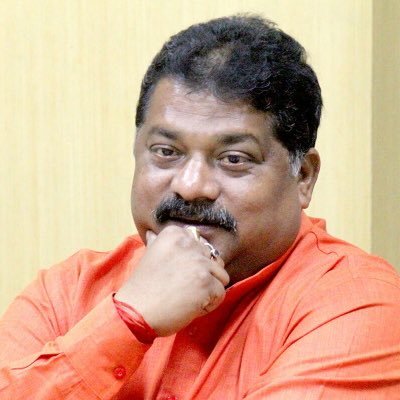
In this context, it is interesting to note the comments that the MLA of St. Andre, Vishnu Surya Wagh, made in the Assembly as well as in his recent writings for a prominent Marathi daily in Goa. Wagh, who is, at the moment of writing, recovering from an illness, had vociferously written against the casteist, communal, and chauvinist politics of nagri Konkani. While supporting the cause of Marathi, Wagh had also made the strong case that Romi Concanim was a legitimate language of Goa, and one that was older than the nagri-scripted Konkani. Wagh also spoke in the Assembly on the Medium of Instruction (MoI) issue. In his characteristic oratorial style, Wagh argued that because Romi was denied to a large number of Catholics, and nagri Konkani foisted on them, Catholics were demanding English education for their wards. While one can partially agree with Wagh, his opposition to English is problematic. For one, English is not just the demand made by Catholics, but bahujan Hindus too, as their socio-economic aspirations are tied to that language. The ‘Marathi-lovers’ must necessarily recognize this fact. Further, to not recognize the importance of English would be to drag the people of Goa back into the narrow and parochial linguistic politics, endangering the education and futures of Goa’s children.

In recent times, Wagh has emerged as the one politician and language activist who has taken a holistic stand on the language question. His arguments extended beyond language per se, to recognize that language is linked to power and communities. However, all the good work that he did proved to be fruitless by the one resolution that was passed in his very presence. So, how are the language wars to be won as well as ended once and for all? To do this one needs to think differently from how we have been thinking so far. One should begin by seeing the MoI issue as not separate but one which emerges out of the already existing language problem. Thus, the problem will fade away if grants to English medium schools are immediately legalized, irrespective of whether they are diocesan or not. It is quite ridiculous that the Goan state which makes laws in English, and conducts state business in English, does not want its young citizens to study in English. One should also think about expanding the linguistic sphere of Goa by recognizing the Portuguese language as important for Goa’s people in terms of legal frameworks, history, culture, and mobility.
Most importantly, Romi Concanim needs to be recognized as official post haste.  Not just this, it is the need of the hour to privilege Romi Concanim over nagri Konkani or even Marathi. With nagri Konkani as official and Marathi allowed to be used for all official purposes, the status quo needs to be shaken. This is so because a lot needs to be done to make Marathi politics work in favor of all Goans. Marathi-supporters have not yet been able to tell us how the interests of Catholics will be safeguarded, considering that jobs have been secured by many with the knowledge of Marathi (and nagri Konkani), despite Marathi being not recognized as fully official. The Marathi-supporters haven’t been able to tell us how they will stop the use of the Marathi language for the spread of Hindutva, for many know that it is through the emotional and cultural bonds of Marathi that Hindutva has mobilized in Goa over the last few decades. The Marathi-supporters haven’t told us why the Marathi movement which began as a pro-bahujan, anti-brahmin, anti-caste movement was compromised in favor of Brahmanism and Hindutva. Marathi activists need to clearly think about how to move away from the ‘Marathi-equals-merger’, a political fear not entirely baseless, which emerged out of the politics of Dayanand Bandodkar and the Maharastrawadi Gomantak Party in the 1960s.

Thus, it is imperative that the language-sphere of Goa is expanded to include Romi Concanim and legalize grants to English as MoI, and only subsequently recognize Marathi as official. Doing so, one would not only escape the claustrophobic language politics of Goa, but also craft a more international Goan citizenry, while effectively challenging the rise of Hindutva.

(First published in O Heraldo, dt: 31 August, 2016)

Wednesday, March 30, 2016

TEMPLES AND MAHAJANS


Post-colonial Goan politics has always been about playing the Hindu bahujan against their Catholic counterparts. Fear of the Hindu bahujan is repeatedly instilled in Catholics using the bogeyman of Marathi and merger; the Hindu bahujan are constantly made hostile by falsely stating that the government panders to every Catholic demand, and by stoking communal sentiments about forced conversions, the Inquisition, western culture, food habits and so on and so forth. Of course, both these sections are quite often pitted together against Muslims. In all of this the hegemony of the Hindu upper-caste is left untouched. This pattern is amply clear if we look at the Konkani language agitation in the past, and the present mobilization of the Bharitiya Bhasha Suraksha Manch (BBSM) and RSS, along with some Marathivadis. Note also the manner in which Nagri Konkani in the Antruzi dialect (which is the dialect of the Saraswats) is still the official language of Goa.

The movement by the Forum for Rights of Children in Education (FORCE) launched in 2011, took a clear stance against this hegemony. More recently, the issue of replacing the old idol at the Marcaim temple in Ponda is on the boil, and is rightly termed as a “Mahajan v/s Bahujan” issue. Of course the antecedents of these two movements are not recent. The demand made by FORCE – that of government funding for English medium primary schools through an act of legislation – can be traced to the resentment over the imposition of Nagri Konkani as medium of instruction (MoI) from 1994. The conflict between the “Mahajans v/s Bahujans” also has a history, with bahujan communities repeatedly trying to gain greater access and control of the temple properties and management, currently in the control of the mostly Saraswat Mahajans. The Nagri Konkani writer N. Shivdas, for instance, has been part of movements to gain access to such brahmanical shrines.

With a judicious and cautious use of the imagination, if we try to put these two movements together, it can be argued that it is not just the temples across Goa that are jealously controlled by Mahajans, but also the ‘temples of learning’ (pardon the metaphor), thus sustaining their hegemony in Goan public sphere.

Allow me to explain a bit more. By demanding that the Mahajan Act, or the Regulamento of 1886, be scrapped, the bahujan communities are in effect asking for a greater control of temple resources, the upkeep of which uses their labour and devotion. They are asking for the freedom and liberty to exercise their choice of deciding how the temples are to be run. Similarly, the movement launched by FORCE is also a movement that demands the freedom and liberty to make a choice to educate children in the language that the parents deem fit. This choice, as we all know, is currently held hostage to the irrational and casteist worldviews and politics of the BBSM-RSS combine – in other words, ‘Mahajans’ of the temples of learning. Isn’t it after all the futures of bahujan children that are being held hostage by these ‘mahajans’?

It is a similar form of power and hegemony that FORCE and the temple movement at Marcaim are fighting. However, we need to point out and understand some shortcomings within such movements.

In relation to the movement spearheaded by FORCE, there are some crucial gaps in their political mobilization that have come to light. Despite many views asserting that FORCE’s demands are not just the demands of the Catholic community, FORCE was cornered into being an organization which represents the demands of Catholics alone. As O Heraldo’s group editor Sujay Gupta recently observed, “…when the government was clearly trying to split the movement for rights of all [emphasis added] children by catering to – or ostensibly catering to – just minority institutions, FORCE allowed this to happen by not pointing out that the government was trying to shift the goalposts”. In other words, there was complacency in FORCE’s mobilization of making more and more allies.

Thus, one can observe that FORCE failed to sustain a consistent articulation that its demands are beneficial for the whole of Goa. Although the bahujan movement at Marcaim does aim for larger political gains beyond the control of temples, yet these aims are not articulated as such; or at least not discussed in the Goan press. The ongoing debates only highlight the potential impact that the Marcaim temple movement could have on the next elections. Limiting (or allowing to limit) the Marcaim issue or the movement by FORCE to shifts in electoral politics would mean that we set our eyes on short-term goals. Both FORCE and the people leading the Marcaim temple movement should think of themselves as fighting similar ‘Mahajan’ control and hegemony.

In the past, we have seen some notable – though short-lived – attempts to unite Catholics and bahujan Hindus through an alliance of the Marathi Rajbhasha Andolan and Romi Konknni Andolan. Perhaps, the only way lasting change can be brought about is by a sustained attempt over a number of years to build solidarity between bahujan interests across religions, that is, assert universal caste and class interests over other sectarian ones. It is in such solidarity that the hope for a common, nurturing, and secure society lies. 

(First published in O Heraldo, dt: 30 March, 2016)

Wednesday, August 19, 2015

FALA FARSI? NOTES ON MULTI-LINGUAL PRACTICES FOR GOA


By
DALE LUIS MENEZES & VISHVESH KANDOLKAR

The indefinite hunger strike of Savio Lopes and members of Forum for Rights of Children to Education (FORCE) for government grants to English as Medium of Instruction (MoI) have exposed the shallow and undemocratic language politics – under the guise of ‘mother tongue’, ‘Goan identity’, ‘Konkani’, ‘Marathi’, etc – in Goa. While arguing for a robust multi-lingual outlook as well, we would like to open up the conversation to a host of other languages that Goans can profitably engage with.

Arguably, when one talks about expanding the access to languages other than Konkani, Marathi, and English, the obvious choice that immediately comes to mind is Portuguese. The importance of the Portuguese language for Goa cannot be understated. Briefly, since a lot of legal and historical/archival material is available in Portuguese, a good grasp on this language would help thousands of Goans to access their own history. Further, as matters relating to land and properties are recorded in Portuguese being conversant with the language will help many to access this information, thus preventing frauds through fudging. Though, familiarity with the Portuguese language may not instantly result in overcoming the balance of power between the have and have-nots, learning it has a potential of creating a more level playing field. This is because in Goa, Portuguese as a language – then and now – was the preserve of a few elites, which allowed them to hold onto power and privilege.

The condition of the access to the Portuguese language, historically, is not so different from that of the English language today. The large non-elite population of Goa (across religious lines) demands English as MoI as it seems to be the preserve of the few; the rich can afford the exorbitant fees of private institutions. Therefore ending this monopolistic and hegemonic hold that a few people have over languages can lead to the emancipation of the have-nots by giving them access to power, privilege, and least of all, respectable employment.

To further open up the conversation about languages that can help us understand Goan history, we would like to suggest that Persian or Farsi is also very important. The territories that came to be known as Goa from the fifteenth-century onwards were part of the Deccan Sultanate and can be said to live in its cultural, and political, shadow. In fact, before Portuguese intervention, Persian (as well as Arabic) terminology was much in use for legal, administrative, and taxation matters in the territory which became Goa and it continued to do so even during the subsequent Portuguese period. Moreover, Goa was in a constant interaction with the cultural and political hubs of the Deccan, such as Bijapur and Golconda.

Along with Persian, a case can also be made for acquiring skills in Arabic. Given the decades old migration of Goans in the Arab world, teaching Arabic in schools may also be useful. Further learning to read and write the Perso-Arabic script may also help many to access Konkani written in that script in pockets across the Konkan and Canara coasts!

Sign language, although not a spoken language might also be useful as it might help us interact with people with hearing handicap. This suggestion might seem out of context but it does help us to extend the idea that many people who understand sign languages consider those who don’t as handicapped, and why not. Of course there are cognitive benefits of learning a sign language for all children, but the larger concern is that the learning for, and communicating with, people with disabilities, is completely ignored in Goa.

The article thus far has made reference to a number of ways in which Goans can engage with multiple languages. To take this point forward, we would like to suggest that contrary to the rhetoric of groups like the Bharati Bhasha Suraksha Manch, identity is not tied to a singular language or ‘mother tongue’. To demonstrate this, we would like to make reference to the literary career of the Goan writer Laxmanrao Sardesai (1904-1986).

As Paul Melo e Castro writes in his essay ‘Of Prison Walls and Barroom Brawls…’ (2012), for most of his literary career Sardesai wrote in Marathi, with most of his stories being “anti-colonial, a bold stance when Salazarist propaganda depicted Goa as part and parcel of Portugal” (p. 128).  Having started his literary career by the 1930s, despite being considered an eminent Marathi writer, Sardesai shifted to writing in Portuguese and Konkani from the 1960s. As Castro explains, Sardesai wanted to craft a different identity for Goa to oppose the merger with Maharashtra. As such “Sardesai’s turn to writing in Portuguese (and Konkani) after a lifetime of renown as a Marathi writer” (p. 130) was a demonstration of the unique singularity of Goan identity within the Indian nation.

Today, none would dare to suggest that there were any contradictions in Sardesai’s choices; neither would anybody argue that he was ‘denationalized’. What is important to note is that Sardesai could choose from a pool of languages, which he learned due to his privileged background. It is this privilege of choice that needs to be opened up to the Goan masses as well.

(First published in O Heraldo, dt: 19 August, 2015)

Wednesday, August 5, 2015

THE POLITICS OF LANGUAGE AND GOA’S TRAGEDY


With the Forum for Rights of Children to Education (FORCE) commencing an indefinite hunger strike to make governmental aid to English medium schools as part of a law, the often ugly linguistic politics in Goa looks poised for another round of jousting. Things seem to have settled down a bit with FORCE receiving written assurance from some MLAs that the matter will be resolved in the next assembly session. But as assurances and promises go from those in power, there is no reason to celebrate right now. Nothing is clearly stated whether the Bill on the Medium of Instruction (MoI) would be passed and made into a law. The opposition to the demands of FORCE came from activists clustered together under the Bharati Bhasha Suraksha Manch (BBSM).

The different constituents in Goan polity should see to it that the rightful demands of FORCE are taken to their logical conclusion. While we agree to the legitimacy of the demands by FORCE, and the right of parents to decide the future of their children, it is also important to consider the politics of language in Goa in a holistic manner. To be clear right from the beginning, language politics in Goa is not just centered around the opposition of Konkani and Marathi. It is much more complex as contestations of scripts, such as the Romi-Nagri issue, are as important as contestations regarding languages in deciding the political fates of the people of Goa. Thus, much of the rhetoric of BBSM-type of activists misguide the people owing to the ignorance of such complexities.

Primarily, there are three agitating groups that form part of the dominant linguistic politics of Goa: the Marathi language supporters, the Romi Konkani supporters, and the Nagri Konkani supporters. The boundaries of these groups are not necessarily fixed, as is seen in Marathi language and Nagri Konkani script supporters teaming up to form the umbrella organization of BBSM. Almost all of the Nagri Konkani activists have been vociferously against the implementation of English as MoI in government-aided primary schools. This is not surprising given the hegemonic hold of Nagri Konkani activists in politics as well as the many governmental institutions and bodies that make and direct the language and pedagogic policies in Goa. Furthermore, these governmental bodies jealously guard literary and cultural awards, as was seen when Nagri script supporters opposed the move by Kala Academy to restart literary awards for Romi Konkani writings. While the Nagri Konkani supporters would never give-in to the demands of equal recognition to the Romi script, they would occasionally ally with some Marathi language activists in order to check the mobilization of Romi script activists.

The MoI controversy and the demand for English in primary schools did put the activists of the Romi script in a somewhat uncomfortable situation. This was so because while on the one hand Romi script supporters were standing firm behind the demand for equality, on the other hand they had to be careful to avoid being accused of abandoning the cause of Konkani, and the Goan identity constructed around the Konkani language. The Roman script activists had also to make sure that the constituency of Romi script supporters does not see them as aligning in any way with Marathi language activists as well. Within the language politics, Romi script supporters are shown the bogeyman of Marathi taking over Goa, in the sense that it is made out to be a problem that will affect Catholics thus playing the Catholic against the Hindu bahujan. And hence the Romi supporters are sold to the idea that Nagri Konkani is necessary to check the ‘threat’ of Marathi. The Romi script activists did, however, skirt the contentious issue of MoI by giving a choice between Nagri and Roman scripted Konkani to the parents.

The Romi script activists failed to recognize that for the Romi Konkani supporters English is as important as Romi Konkani in their lives. This bi-lingual requirement was not adequately represented by the Romi Konkani activists, thus missing a golden chance to democratize and expand the scope of language politics for the betterment of all Goans.

I however argue that the Marathi activists also face a similar situation like the Romi Konkani activists, as far as betrayal of their respective language causes is concerned. The Marathi activists could also be seen as compromising with English, and thus ‘betraying’ Marathi. This is quite unfortunate, as Marathi language politics in Goa was not started to further the literary cause of Marathi, but to counter upper-caste, in particular Saraswat, hegemony in Goa. Supporting the cause of English would have also allowed Marathi language activists, especially the bahujan, to challenge oppressive social structures. The Marathi language activists also do not recognize that the Hindu bahujan have aspirations tied to the English language. Another problem that can be seen is the compromise and alliance that a section of Marathi language activists have forged with Hindutva ideologues and/or upper caste ideals.

The alliance between Marathi Rajbhasha Andolan (MRA) and Romi Konkani Andolan (RKA) some years back was arguably a bold move. But it was short-lived. Although these two groups aimed (quite commendably) at creating a unity of Hindu bahujan and Catholics, very little was done to actually forge these bonds on the ground level and assuage the mistrust present in the communities about each other. On a legal and systemic level, MRA had no proper vision of protecting Catholic interests as far as jobs are concerned since the Hindus who know Marathi (and Nagri Konkani) would automatically be more qualified against Catholics who only know Romi Konkani.

Which brings me to what activists in FORCE are trying to do: to my mind it is a rejection of the decades-old and quite often ugly politics in the name of ‘mother tongue’, ‘Konkani’, ‘Goan identity’ etc. What FORCE is doing, by standing up for the right to English as MoI, is democratizing language politics by rejecting the hold of a few class and caste patriarchs. FORCE is rejecting an oppressive model of mono-lingual practices imposed by largely upper-caste activists. In this there is a recognition that as Goans we need at least two languages in our lives. To not publicly accept this will be hypocrisy. To not change quickly will be Goa’s tragedy.

See also other articles on the issue of MoI: on the Supreme Court terming the imposition of 'mother tongue' as MoI as unconstitutional, see here; for an open letter to the Goan government's advisory committee on MoI, see here.

(First published in  O Heraldo, dt: 5 August, 2015)