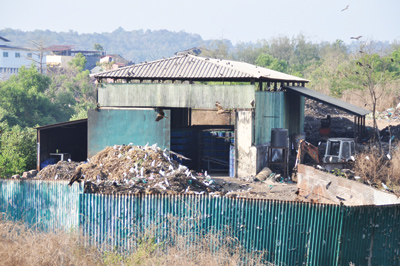
Showing posts with label garbage. Show all posts

Wednesday, June 7, 2017

TEJAS EXPRESS: PUBLIC PROPERTY AND CIVIC DUTIES

The high-speed, high-tech Tejas Express, plying between Bombay and Goa, was launched a couple of weeks ago. The launch of this train was much hyped because it offered state-of-the-art facilities to the passengers. The Tejas Express boasts of automatic doors, infotainment screens, vacuum bio-toilets, touch-free taps in the toilets, and much more. While the train’s maiden voyage was expected to be a triumphant heralding of a new era in rail transportation, the news that filtered in afterwards suggested otherwise.

It was reported that even before the journey began in Bombay, a window pane was smashed. By the time the train reached Goa 12 headsets were reported to be missing or stolen; there was garbage littered all over the train, and the toilets were also reported to be filthy. Opinion-makers reacted stating that Indians do not deserve nice things and lack the civic sense to take care of public property. Given the manner in which urban Indian liberals are blind to the most fundamental problems of the society, it was not surprising to observe that absence of civic sense being discussed without reference to caste.


The Indian Railways is said to be the largest employer of manual scavengers in the country – under the guise of employing sweepers – as contract workers across the length of the rail network. Almost all of these people who dispose human waste with their bare hands come from the Dalit castes. Though manual scavenging has been outlawed by law since a long time ago, the Indian Railways only started addressing the issue – albeit incompletely – from 2016. In other words, if the railway platforms and tracks bear the slightest resemblance of ‘clean’ it is only because of the thankless and demeaning labour provided by thousands of workers from such castes. If guests on board the maiden journey of the Tejas Express had left behind garbage and dirty toilets and/or wash-basins it was only to be expected as that is how things are done – it is simply someone else’s problem.

The South Asian idea of cleanliness is that someone else is responsible for doing the cleaning. While it is true that the authorities are responsible for collecting and disposing of garbage, there is no justification for collecting wet waste in plastic bags and dumping them along the side of roads, for someone else to collect. There is blindness to the fact that the labour provided come from persons who are denied the basic right of human dignity, let alone benefits like health insurance and proper working conditions. This is a problem that concerns not only the government but everybody.

This behavior with regards to disposing garbage tells us something about the way in which Indians approach public spaces and public property. On the one hand, one doesn’t view public spaces and public property as deserving care and maintenance. On the other hand, the full burden of maintaining public spaces and property is dumped (pun intended) on the members of the most discriminated-against strata of society, who, not ironically, are excluded and pushed either to the margins or outside the boundaries of villages and cities. There is simply an absence of a ‘collective feeling’ or of a ‘community’ when the issue of public spaces emerges. The reason many argue, is the existence of the caste division. (In fact it was Dr. B. R. Ambedkar who argued that it was impossible to build a common community in the form of a nation when thousands of castes or jatis were in existence in British India).

In a slightly different context, the theologian Philip Vinod Peacock in his essay ‘Hostility, Hypocrisy, Hospitality: Rethinking the Politics of Theology and Hospitality from a Dalit Perspective’ (2013), offers an interesting suggestion to understand the relationship that Indians share with public spaces. Peacock suggests that public spaces, containing hundreds or thousands of people unfamiliar to us, tend to be sites of repelling strangers: “Within the caste system all strangers are automatically considered to be lower in the caste hierarchy than oneself.” Public spaces therefore are sites where aggressive behavior is displayed or performed that goes against any form of civil behavior, in response to the underlying structures of casteism. Thus, he further suggests that “it is perhaps this logic or spirit [of the caste system] that is at work when Indians jump queues or push themselves before others, or basically choose not to follow the norms of what can be considered publicly acceptable behavior”.

Peacock’s suggestion can be used to argue that the physical location of public spaces – be they parks, roads, beaches, trains or anything else – are sites or spaces wherein the development of civic sense is constantly subverted because we are unable to relate to one another as persons outside of our narrow and individualistic identities. There is something that prevents us from being publicly-oriented citizens. Being in a public space leaves us supposedly vulnerable to physical overpowering, caste pollution, and even diseases. This is the reason why public property is often repeatedly vandalized or left to decay without any care. In many ways, it can be argued that a sense and concept of the ‘public’ is yet to evolve within Indian society. 

The unfortunate episode of the Tejas Express is not an aberration; in fact, one of the maintenance staff remarked that the amount of garbage left behind was just like any other train. As expected the educated, ‘middle class’ who can afford such expensive fares are the ones who are causing all the problems.  

(First published in O Heraldo, dt: 7 June, 2017)

Wednesday, July 20, 2016

PUBLIC HEALTH AND THE CITY OF GOA


The piles of garbage across Goa remind me of an event in Goa’s history. Goa’s recorded history does provide us with instances that enable us to draw a parallel and see the disastrous effects of waste management when not checked properly and seriously. While my attempt in this essay will be to draw parallels with the past, it must also be stated that the problem of garbage management is a recent one associated with factors of rampant urbanization, large-scale use of non-biodegradable materials, and lapses on the part of the State.

After becoming the capital of the Portuguese Empire in Asia, the City of Goa or Velha Goa was ravaged by epidemics at least a couple of times. The fortunes of the City as a great entrepôt or a metropolis were impacted by these epidemics. The Goan scholar José Nicolau da Fonseca writing about the city in his book An Historical and Archæological Sketch of the City of Goa (1878) makes a mention of the devastating epidemic of 1570.

Along with the siege by Ali Adil Shah’s large army that led to food shortages, Fonseca argued that it were the unsanitary conditions then prevailing in the City that were responsible for the outbreak of an epidemic. “The city was in the first place surrounded by marshes and stagnant pools, emitting noxious exhalations, whilst little or no attention was paid to the hygienic conditions essential for the preservation of public health. The muddy banks of the river outside the city were generally covered with the detritus of animal and vegetable matter, which being exposed at low tide to the tropical sun underwent putrefaction, and thereby bred the germs of disease” (p. 150).

Moreover, Fonseca wrote that open defecation took place (with the permission of the Government) within the limits of the City, that there was a lack of access to potable drinking water (due to Governmental neglect), and that garbage littered on the main thoroughfares of the City so much so that “nobody was prevented from throwing any quantity of filth he chose into the streets” increased the devastation. Even before the epidemic, the dirty streets and lack of clean water had contributed to creating unhygienic living conditions.

If one drives around Goa, one is quite shocked (or not) to see piles of garbage dumped along the sides of roads. What is also alarming is the manner in which places close to habitation or water bodies are used as landfill sites. The garbage dumped at the Campal Parade ground in Panjim is a case in point. That garbage is dumped in an area that hosted exhibitions and events, or was an open space for the public is a shocking lapse on the part of the authorities, not to mention an acute health hazard. There are more examples in Panjim itself that enable us to see parallels with the conditions then prevailing in the City of Goa.

The area close to the new building of the Central Library at Patto is being used as a landfill for quite a number of years. Apart from a lack of planning or vision that the authorities and the city administration have displayed, there is also the danger of noxious gases poisoning scholars and general readers or fires causing permanent damage to an institution that houses some of the rarest books, newspapers, magazines, and manuscripts in Asia. Such a premier library should have had a prominent place as an institution symbolic of intellectual production in Goa and not enveloped by the stink and danger of garbage.

It is precisely such State apathy and a crisis of management that increases the danger to the lives of citizens and reduces the quality of life. Recently, O Heraldo reported that the newly operational Solid Waste Management plant in Saligao was functioning only up to half of its capacity. There were talks about transferring the garbage from Campal to the new plant in Saligao, but it is evident that bureaucratic insouciance and an attitude to pass the responsibility to some other department or individual would result in more garbage piling alongside roads and open spaces right in the middle of cities.

The case of the epidemic of 1570 and the rising problem of garbage management today seems to have striking similarities. For one, the then administration which had a duty of regulating and enforcing laws regarding public health had failed miserably. It can be argued that the present administration is also failing in a similar duty. Secondly, people then as today have no qualms in dumping garbage along the roads. There are also important differences in terms of technology and the manner in which it contributes to the generation and the disposal of waste. But it does appear that history is coming full circle. One may think if this is a case of ‘history repeating itself’ or if it is a case of cyclical history wherein things move from being good to bad and back to good again. For many would recall that public order and civic sense was prevailing in Goan towns and cities during the last few decades of Portuguese rule. Whatever may be the case, it cannot be denied that all of us are facing a major crisis of public health if the status quo in the functioning of public affairs is maintained. And perhaps thinking about such instances in the past might help us in being alert to problems of the present that are increasingly threatening us.

(First published in O Heraldo, dt: 20 July, 2016)

Wednesday, November 12, 2014

FOOTBALL AND ALL THAT TRASH


While the performance of FC Goa in the inaugural Indian Super League on the pitch is offering little cheer to its fans in Goa, off the pitch these fans seem to have won many hearts. Reference is made to the cleaning drive by a handful of young fans which began soon after FC Goa’s second home game against Atlético de Kolkata and who posted pictures of their activities online. The post having gone viral on Facebook, the next home game against Delhi Dynamos saw a crowd of more than fifty joining in the efforts to clean the Fatorda stadium of the trash. While some linked it to the story of the efforts of Japanese fans cleaning up after the game during the World Cup in Brazil, and the ‘Swachh Bharat’ campaign recently launched, this ‘shot’ at cleaning received good press coverage in Goa as well as national and online portals.

Amongst many of the photos that were posted online, there is one that particularly caught my eye. This was a picture showing a large portion of the trash that was accumulated. Consisting largely of FC Goa banners and festoons, and soft drink cups, this picture gave a sense of how much trash was generated at Fatorda during the match against Delhi Dynamos. This image will be the basis on which I shall proceed in my reflections. While it is no doubt commendable and laudable that a handful of youngsters (like me) have taken leadership and indeed made others also join them in their efforts for cleanliness, the celebration  and reassurances that followed the drive tend to overlook crucial issues that are very much related to the issue of cleanliness and civic sense. This column would like to draw attention to some of these issues in the hope that a better understanding may be achieved.

What I would like to point out is that such an act of individual sacrifices, though useful in some ways, only goes to reassure us that something is being done to address a larger systemic problem. The issue of garbage is not simply about one person littering and hence the problem cannot be approached from a position of guilt: I litter therefore I am responsible for my trash and also that of others. The systemic problem that I refer to can best be represented by the picture that I discussed above. The question that needs to be asked generally of cleaning drives is where will all this trash go? It is by asking such a question that we can confront the obstinate problem of effective garbage management and disposal. The reassurances that such cleaning drives allow us to feel, now are exposed for the problems that they hold within them.

As with many of the cleanliness drives, including the ‘Swachh Bharat’ campaign, what missed the mark yet again were the people or workers who actually dispose our garbage. To their credit, the youngsters at Fatorda did try to empathize with the plight of the workers there, after they realized how backbreaking and thankless their job was. The stark reality is that these workers are ill-paid. Most likely the workers engaged in managing garbage are hired on contract basis which allows for the most vulgar flouting of labour laws. The worst form of such violations can be seen in the manner in which manual scavenging is allowed with impunity in India. Ill-paid and stigmatized due to the caste-based occupation, these workers sometimes pay a hefty price, either with their actual lives, or through life-long suffering from diseases such as TB. So while we applaud the persons who took it upon themselves to clean the stadium at Fatorda, the debate never goes any further to secure the rights of workers who actually have to deal with trash on a daily basis.

Apart from the game against Delhi Dynamos, the amount of trash also generated after the game against Atlético de Kolkata was sizeable, “at least half a truck full of garbage” in the words of one of the members of this group. This brings me to the next issue of how the very things that we enjoy – largely driven by an excessively consumerist logic – itself is generating so much trash. Rather than thinking of ways to clean the trash that gets generated everyday (though it is also very important), one needs to also seriously think about how to reduce the very generation of this trash on a daily basis. Ultimately, no matter how much we clean our houses, our neighbourhoods, our streets, and our stadiums, there is absolutely no mechanism to deal with the accumulated trash except to dump it in a garbage dump to rot.

This should ideally raise the question of what types or kinds of actions taken in relation to the problem of garbage should reassure us as a society. To be honest, very little has been done.  The problem is that the debate in Goa hardly ever goes beyond demanding cleanliness either from the individual or the civic authorities, or blaming the defunct garbage disposal technology in various landfills in Goa. We fail to recognize that this systemic malaise has a variety of people involved it in, not confined to a middle-class, urban, and upper-caste demographic. If our society feels that an occasional, well-intentioned act of cleaning by people who are not engaged in the occupation of cleaning be celebrated, this is adding insult to injury to the millions who toil everyday without getting any recognition.

In trying to attempt something well-intentioned like cleaning the stadium at Fatorda, there is the fear that we might end up understanding the problem divorced from its specific context and realities. Rather than suggesting that some kind of high-end machinery be immediately set up to deal with the systemic failures of garbage management, we should first think about putting in place worker-friendly labour laws. Laws that are sensitive to issues of caste, gender, health care, insurance, and other benefits for people engaged in garbage disposal and management. Perhaps the good folks who lent a hand to the workers at Fatorda could also lend their voice to this.

(First published in  O Heraldo, dt: 12 November, 2014)