Sunday, September 7, 2014

‘GUNAAJI’: GUNN ANI OGUNN


Gunaaji hem Konkani cholchitr kaim satolle zale Gõychea sinema halls-amni dakhoitat. Hanvem hem cholchitr polleun ghetlem ani mhojea koplak mirio poddleo. Kiteak tem hanv hea lekhant uzvadd ghalunk sodtam.

Sahitya Akademicho puroskar favo zalolo borovpi, Pundalik Naikachea eka novolikecher hem cholchitr adarun asa. Pustok rupant prokaxit zaunche poilim, hi novolika 1998 vorsa Konkani Bhasha Mondollachea vorsuki Konknni hea masikacher ani Raxttrmot hea disalleacher bhagamni (serialized) uzvaddak ailoli. Tor ami oxem mhonnonk zata ki cholchitr zaunche polim he novolikentli kanni  boreach vachpeam meren pavloli asa. Khub pavtti filmachi kanni pustokant asa toxi nasta dekhun hanvem hem pustokui vachun kaddlem.

Gunaaji hi eka raknneachi kanni, zo Gõychea eka ganvgirea vattharant ravta ani zaka sogleant boro rakhnno mhonn raxttriya inam favo zata. Gõyant savn Novi Dil’li to koso provas korta ani uprant puroskar gheta tem hea filmant dakhoilam. Gõykarank manovta tosle dixttave hea filmant asat. Pustokant ani filmant zaite hansovpi ani mon dhados korpi khinn asat, ani choddant chodd kodden pustokant asa tich kanni filmantui dakhoilea.

Punn jea suvantancher pustokantli kanni filmant veglli dakhoilea tachi mat ami nond gheunkuch zai. Chodd korun je don prosong asat tacher ami nodor marunk zai. Pustokache/filmache survatek Gunnaji aplea jivitantlo ek khinn sangta, koxe bhaxen tannem ek pavtt eke gayek marunk vhortoleank addailolem tem, kiteak gayek marop mhollear vaitt dekhun, ani kanniechea xevottak aplo puroskar svikarlea uprant Gunnaji bhaxonn ditanam hoch ‘point’ porot sobhemazar manddta. Cholchitrantlea hea donui prosongant jem Kristanvanchem patr (character) dakhoilam tachem vornonn pustokant khoinch kelolem mellona.

Punn, hea filmant  oxem dakhoilam zache vorvim amcheamni somzunk zata ki hea donuim prosongantlim patram Kristanv mhonn. Poilea prosongant Konknnichi ji boli vapurlea  ani  dusrea prosongant Gunnaji-n aplea bhaxonnant voir ul’lekh kelolo ‘point’ kelea uprant, rokdoch kemera machier boslolea eka “Shri. Melvin Pereira”-acher focus zata. Tedna tache  hav-bhav matxe nervoz zalolea ani lojek poddlolea bhaxen distat.

Hea pustokacho borovpi, Naik,  filmachi ‘screenplay’ toyar korpant aslolean  ami   ho prosn vicharunk zai: Goroz nastanam kiteak ani koslea karonnank lagun  Kristanv patram filmant dakhoileant?  Pustokant ekuch zagear borovpi Kristanv monxeacho ul’lekh korta ani to mhollear jednam Gunnaji ‘airport security’-cher pavta. Punn ho prosong kannientlea mukhel kolpone kodden matui sombondhit nam.

Tor Gunaaji-n mhojea koplak mirio kiteak ghatleo? Hachem karonn mhollear  gayek marop (mhonnche gayechem mas khavop) ani Kristanvam modem aslolo sombondh, zo hea filmant dakhoila. Gõyant Kristanv ani Musolman lok gayechem mas khatat, ani halinchea kallar  gayechem mas  khavpacher zo bhovxik virodh zata tachi amkam zanniv asa. Tor oslea vatavoronant  koxe toren ami hi novolika somzun gheunchi, ji 1998 vorsa uzvaddailoli ani 2014 vorsa filmachea rupant porot loka mukhar ailoli? Amcheamni oxem mhonnonk yeta ki gayechem mas khavop ani Hindu bhavna dukhovop hachem rajkaronn Gõyant vo Bharotant novem nhoi. Gõyant ‘right wing’ xoktimni gayechem mas khavpacher, Evropi sonvskruticher, Purtugez vosnnukponn ani Kristanvanchea jevnna-nhesnnacher, ani her dusrea sonvskutik chali-ritincher virodh korche adim  pasun ho ‘process’ chalu aslolo.

‘Anti-minority’ rajkaronnant Naik fuddakar gheta oxem ami mhunnonk sodinant. Punn Naikan je toren Bharoti raxttr-jinnentle kaim vichar – zoxe porim olp-sonkhechea lokanchem mot kana-monar sarkem ghevop na – kolltta vo na-kollttam mandun ghetlolea karonnank lagun amcheamni tachea Gunaaji-k prosn korunk yeta. Hem film amkam inosent disot (ani kaim zageamni tem inosent-ui asa) punn je toren ukteponnim ani lipovn kaim khinn hea filmant asat te Kristanv vo olp-sonkhechea monxeak ugddas korun ditat ki tanchi sonvskruti ani tancheo rit-roviseo sodanch ‘majoritarian’ (bhov-sonkhyea) sonvskruti poros veglleo asat mhunnon ani tannim sodankal ‘majoritarian’ sonvskrutiche xeka khal ravpak zai mhunnon. Naikan hi bhirankull stithi nirmunk nam zait punn tannem tika urba dilea hantunt dubhav nam.

Tor Gunaaji kitlem borem cholchitr zaun asa? Hacher mhaka bhasabhas korunk naka. Punn mhaka oxem sangunk zai ki hi novolika ani hem film sadheo ghoddnuko nhoi. Kaim gozali distat titleo sadheo nastat ani tantuntlim gupit karannam amche modem aslolea boreantlea boreank pasun tim kaim pavtti disti poddonant. Jeo sonvskrutiyo ani rit-roviseo Hindu nhoi teo poisavpachi pod’dot   (trend) Bharotant atanch suru zaunk na. Taka xembhor odhik vorsancho itihas asa. Zor tor amkam hea itihasacho ugddas na zalear olp-sonkhechea lokank ami  rajki ani her molla voilean poisavunk zababdar thartole.

(Ho lekh Amcho Avaz-acher uzvaddak aila, tarik: 6 Setembr, 2014)

Wednesday, September 3, 2014

'TIATR' AND THE GOAN PUBLIC SPHERE


With the declaration made in the Goa Legislative Assembly that the right-wing Hindu outfit, Sri Ram Sene will not be allowed to set up its base in Goa, the ‘drama’ (pun intended) over Tousif de Navelim’s Akantvadi Goeant Naka, seems to have finally ended. The successful staging of the tiatr was viewed as the triumph of Goemkarponn or Goan-ness (and indeed it seemed all and sundry were clamoring to give and receive credit for the staging of the tiatr). What was actually quite disappointing to note was the myriad other issues that were not discussed/raised in the interest of Goemkarponn.

First and foremost we should recognize the fact that if the tiatr as a medium of cultural expression has thrived, it is solely due to the steadfast support of working-class and subaltern caste Goan Catholics, though it is not restricted to Catholics alone. This recognition is important as for most of tiatr’s history, tiatrists and the people who patronized them were held to be lacking in standard and sophistication by elite Goans. One can suggest that the reason why Tousif, being a Muslim himself, could capture the imagination of different sections of Goan society is because tiatr as an art form has been developed largely outside the fold of upper-caste and -class Goan cultures and discourses. To extend this point a bit further, we can also suggest that if Goa would like to further its image as a society with plural ethos, the tiatrists and tiatrs need to be accepted as bases crucial for ‘secularism’ in Goa.

The power and importance of the subaltern Catholic groups of Goa was on full display during the staging of Tousif’s tiatr. Naysayers could only bicker and complain about how the tiatrists themselves lacked moral integrity. To my mind, this is a non issue for the simple reason that right from the days of Antonio Salazar when the civil liberties were curtailed, tiatrists have spoken out and have not let their voices be censored (though one wonders the extent to which the Portuguese censors understood the references in the tiatr!). Thus, there is no justification for tarnishing the entire community of tiatrists in one brush and colour. Further, such a tarnishing is no different from the elite Goan assertion that tiatrs and tiatrists ‘lack standard’. In the triumphal celebrations that followed Tousif’s tiatr, Goa (it seemed) willingly forgot that the very people they were celebrating had been repeatedly told that their art (and by extension their social background as well) were not ‘good enough’.


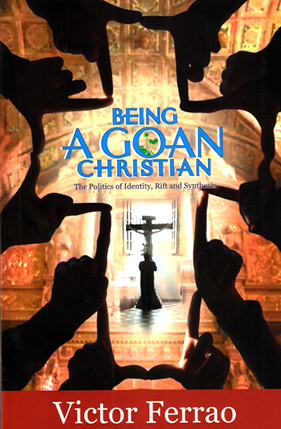
This kind of ‘tarnishing’ should ideally make us confront another issue: that of the Roman script in Goa. Tiatr is not isolated from the politics of the Roman script and Portuguese colonialism. Fr. Victor Ferrao forwards an interesting argument in his book Being a Goan Christian, suggesting that owing to the fact that the era of Portuguese colonialism was perceived by the dominant (Hindu) discourse in Goa as an ‘era of pollution’, the cultural practices and productions such as writings in the Roman script and tiatrs, were seen as not being able to represent the authentic culture of Goa. Though the Tiatr Academy and the Dalgado Konknni Akademi receive government funds, the Goa government has not recognized Konkani in the Roman script as one of the official languages. The problem of the recognition of the Roman script may lie in such an understanding that Ferrao discusses in his book, as even in the staging of Tousif’s tiatr it was immediately hailed as a victory for Goemkarponn (and not Romi Konkani culture, for instance), thus leveling any differences in the bargain. What sort of Goemkarponn is this that refuses to recognize the legitimacy of the Roman script, without which tiatr is impossible?

Since this column seeks to contextualize tiatr within the Goan public sphere, a note on how the various events leading to the staging of Tousif’s tiatr reported in the media would not be out of place. While I acknowledge that most of the media had stood behind Tousif, the reportage failed to highlight the various voices that were alarmed by the threats issued to him. This is not the first time such threats have shaken up the minorities in Goa and as such this could have been a great opportunity to talk about the problems of the minorities in a sensitive and sympathetic manner. The ‘why’ and the ‘how’ of the insecurities and fears of these people (many of whom are ardent tiatr-lovers) found little or no space. Instead, hateful comments against Catholics and Muslims found their way to the front pages of leading Goan dailies. The reason why the reportage in the media should be critically analyzed and viewed with a healthy balance of skepticism is for the fact that for too long and for too many times, the promises of a better tomorrow have not really translated into any concrete action. The staging of the tiatr may have been a vital step in combating communalization, but it cannot be said that the problem of communalization has been addressed. In the celebrations that had followed, the contribution of the minority communities of Goa in actually providing a bulwark against communalization has so far not been acknowledged.

To reiterate an earlier point, we have to acknowledge that it is these men and women who through their support and patronage of tiatr are the ones to be credited for maintaining and nurturing the plural ethos of Goa. That Goa even remotely resembles such a plural space is because of the fact that such subaltern men and women have a critical voice in the politics of Goa. To keep them away from the mainstream political life, wherein their help is only sought when an external threat is poised to jeopardize the status quo of Goan politics, will itself be detrimental to all of us who genuinely believe in a peaceful and inclusive Goa.

To all the under-recognized tiatrists and more particularly their faithful audience, thank you for the laughs, thank you for the drama, thank you for the sharp political satire, and thank you for your sacrifices.

(First published in  O Heraldo, dt: 3 September, 2014)

Wednesday, August 20, 2014

READING REGINALD: INSIDE AFRICA


The last time I had written about the Konkani novelist Reginald Fernandes, I had suggested that to understand such writings as romans (and even tiatrs) we would have to think anew and look more closely into these writings. Accordingly, I had hinted that the way Reginald Fernandes understood and conceptualized ‘dignidad’ could be one of the many ways to understand the corpus of writings written in the Roman script. In response to my article, many felt (through social media) that Fernandes’ books should be put back in circulation. Though such an initiative would be welcome, this was not the point I was trying to make. Rather, what I wanted to do was to initiate critical discussion on the possibilities that are available in Fernandes’ writings.

To further explore this possibility, this column would like to look at Fernandes’ Khoddop Rannim (1955) which has Valentino Vaz as its main protagonist. The novel opens with Valentino’s mother on her death-bed, who tells him the importance of being humble, for humility would allow Valentino to succeed in life. Valentino’s mother worked as a randpinn or cook, whose husband, a seaman, was dead when Valentino was a mere infant. Thus, facing impending poverty and with no family support base in Goa, Valentino packs his bags for Africa. There he finds employment with a great Goan trader of ivory called Robin Saukar. It is here that Robin Saukar’s daughter Thelma and Valentino fall in love with each other. Valentino initially was uncomfortable as he was a mere servant of her father’s and according to him Thelma was placed higher as far as ‘dignidad’ was concerned. However, it is Thelma who insists that they should not believe in such things.

The twist in the novel occurs when, to procure ivory Robin Saukar takes Valentino and another employee Martin Monteiro, in the African jungle. Because Monteiro wants to make Robin Saukar’s wealth his own as well as marry Thelma, he deliberately misguides Valentino into the dense and dangerous jungle. Here, the element of magic as a device for the progression of the plot comes into play, both for good and bad. Monteiro chances upon a witch-doctor who gives him some magical fruits that would turn the hearts and minds of Robin Saukar and Thelma in his favour, when in fact the preferred person was Valentino. On the other hand while Valentino survives his ordeal, he also meets certain persons who direct him to a particular kingdom which is situated inside a huge rock, shaped like a human head. The astonishing fact of this kingdom is that its queen has lived for more than 2000 years, for she has access to “Jivitachem Udok” or the elixir of youth.

As it turns out, this queen or Khoddop Rannim owned a very large diamond that is lodged in the temple that belongs to her family. It was, apparently, the largest in the world. And because Valentino refuses the advances of the queen, who madly falls in love with him, he is made a prisoner. Valentino now has to escape this make-believe world, if he wants to maintain any hope of being united with his beloved Thelma.

What should also be discussed at length about this novel is the way Africa and blacks are represented in Khoddop Rannim. Africa was a part of the Goan diaspora and as such it was part of the Goan imagination as well. Fernandes is not the first or only person to write stories set in Africa. Indeed, many of the romi writers following the 1950s (or, perhaps even earlier) did train their literary lens on Africa. The scenes that are set in the dense and dangerous jungle of Africa would obviously involve the depiction of peoples living in the forest. The language or the collective nouns that are used to refer to these peoples would definitely qualify to be racist by our standards. The point that I am trying to make is not that Fernandes is consciously being racist, but for readers today, to be aware and be sensitive to this issue while ‘Reading Reginald’ (and also other writers who set their stories in Africa).

Though love between social un-equals is part of the story, however it is not a preoccupation of the author in this novel. Although the images of the African jungle that are displayed to us draw on colonial accounts of adventure and exploration that were definitely circulating during his time, the African jungle also becomes a site of struggle for achieving ‘dignidad’. Whatever Valentino achieves or manages to make his own, he can only do it by fighting for it. Though magic may have helped Valentino’s pursuits, yet his human capabilities and strengths seems to have sailed him through rough waters in this novel. But magic does play a vital part in keeping the reader engrossed in the novel.

As a setting, if Africa is given deeper reflection in novels or stories written in Konkani then it also points out to the complexities and diversity of interactions and influences that Goa had with the larger world. One could also profitably look at how the Portuguese colonial world – just before formal decolonization – featured in Konkani literary space. The fact that Africa had formed the setting of so many stories written in Konkani in the Roman script, suggests deeper connections not just of travel and migration but also of the movement of stories and colonial fantasies.

By keeping in mind certain vital components that went into the making of a Reginald romans, we now have some basic markers to understand the thought behind his novels, apart from enjoying them the way we do with any good novel.

For more of 'Reading Reginald' see here.

(First published in  O Heraldo, dt: 20 August, 2014)

Wednesday, August 6, 2014

THE ‘DOUBLE BIND’ OF MINORITY IDENTITY


Regular viewers of prime time national news would remember the recent incident where India’s tennis star Sania Mirza broke down on live television, following some legislators from Telangana questioning her right to be the brand ambassador of the newly formed state of Telangana. In an exclusive interview given to NDTV’s Barkha Dutt, Mirza said that it was “Extremely hurtful” that she has to “keep justifying our Indianness, keep asserting our Indianness again and again, and time and again…I don’t know why…” On her part, Dutt tried to brush aside the controversy claiming it to be “unnecessary”, “petty”, “absurd”, and “an aberration”.

However, to her credit, Dutt did broach Mirza’s Muslim identity as perhaps causing the said controversy. But Mirza still maintained that she did not know why. This column is in agreement with Dutt and Mirza that the nature of the comments made were indeed sexist and patriarchal. However, if we also factor in the ‘patriotism’ that both Dutt and Mirza defended – indeed asserted – as a way out of the unholy mess that was created, reality appears to be much more complex. That the identity of a ‘woman’ and an ‘Indian’ took precedence over Mirza’s Muslim identity allows us to analyze minority identity politics afresh.

Mirza’s interview allows us to approach the problem of a ‘double bind’ that minorities have to face in India. This ‘double bind’ holds the loyalty of the Indian Muslim as suspect (being anti-national) on the one hand; while on the other, the Indian Muslim is simultaneously called upon to actively participate in the workings of the secular nation-state, by asserting themselves as Muslims. But the problem gets further complicated as such participation can only happen by consciously sidetracking one’s Muslim identity. So in other words, one is damned if one does participate and damned if one doesn’t. The historian Ayesha Jalal, in her essay ‘Exploding Communalism: The Politics of Muslim Identity in South Asia’, puts the matter in a longer historical context when she says, “The original sin of being communalist for the most part have been reserved for the [Indian] subcontinent’s Muslims”. Further, Jalal also echoes the argument that has been made by other scholars as well when she says, “The tolerant secularist and the bigoted Hindu are really after the same pound of flesh – Muslims have to stop drawing upon the religious and cultural strands of their identity if they want complete integration in the secular and democratic framework of the Indian nation-state”.

The abovementioned interview provides another perspective for those of us who are worried about the growing communalization in Goa to understand the problem. We should recognize that the predicament that the Muslims find themselves in is not very different from that which the Catholics in Goa experience. On the one hand the Catholic cultural practices informed and inflected by the Portuguese presence were and are used to define Goa to a larger Indian imagination (via the manner in which tourism is marketed, for instance), and on the other hand any political demands that are perceived to come from a Catholic location (though the reality may suggest otherwise) exposes Catholics in Goa to charges of being communal and anti-national. In other words, the loyalty of the Goan Catholic to Goa (as well as India) is held suspect, a point that Fr. Victor Ferrao makes in his Being a Goan Christian.

Recognizing the similar ways in which Muslims and Catholics have to negotiate a tricky dance with the working of the nation-state one can see how particular lines can or cannot be crossed by certain persons. Thus in September 2013 when the Chief Minister Manohar Parrikar had erroneously asserted that a Goan Catholic is culturally Hindu, it had resulted in a national controversy. Cut to 2014, when the Deputy Chief Minister, Francis D’Souza asserted that he is a “Christian-Hindu”, it also resulted in a controversy at the national level. But here is a twist that I would like to draw attention to: bowing to intense pressure and criticism, D’Souza retracted his statement and apologized for it, maintaining that it was his personal opinion and he was not wrong to make such a statement. Parrikar, on the other hand, did not withdraw his statement and neither did he apologize for it. It must be noted that D’Souza’s statement, in essence, is no different from Parrikar’s. The asymmetry that exists in the two incidents is clearly visible. An asymmetry that exists, I suspect, due to this selfsame ‘double bind’ of minority identity in India.

The controversy that D’Souza raked up was followed by predictable assertions of ‘Goanness’ and ‘Indianness’ on social media. Indeed some even went to the extent of suggesting that if we consider ourselves ‘humans’ first and foremost, it would be enough. Well, clearly it is not enough. Making such overarching, ‘national’ assertions only obscures the complexity of identity politics. In the case of Goa, the observable fact is that one cannot participate in Goan political, public, and cultural life by simply being Catholic; one has to also give in to certain notions of ‘Hinduness’.

Linking the predicament of Muslims in India to that of the Catholics in Goa may seem like a long shot to some. However, I would like to suggest that by juxtaposing the problems of the Muslims and Catholics with each other, one can broaden one’s understanding of how minority identity and the concomitant politics works in India. Though the comments referred to above were made in seemingly different contexts, yet recognizing the similarity of the politics and power structures that drive the visions behind them, can allow us to think about ourselves in new ways. The drive towards asserting one  identity, but remaining willfully blind to other identities – even suppressing them – will only allow inequalities to thrive.

Thanks to Shahrukh Alam and Rubina Jasani.
  
(First published in  O Heraldo, dt: 6 August, 2014)