Wednesday, August 20, 2014

READING REGINALD: INSIDE AFRICA


The last time I had written about the Konkani novelist Reginald Fernandes, I had suggested that to understand such writings as romans (and even tiatrs) we would have to think anew and look more closely into these writings. Accordingly, I had hinted that the way Reginald Fernandes understood and conceptualized ‘dignidad’ could be one of the many ways to understand the corpus of writings written in the Roman script. In response to my article, many felt (through social media) that Fernandes’ books should be put back in circulation. Though such an initiative would be welcome, this was not the point I was trying to make. Rather, what I wanted to do was to initiate critical discussion on the possibilities that are available in Fernandes’ writings.

To further explore this possibility, this column would like to look at Fernandes’ Khoddop Rannim (1955) which has Valentino Vaz as its main protagonist. The novel opens with Valentino’s mother on her death-bed, who tells him the importance of being humble, for humility would allow Valentino to succeed in life. Valentino’s mother worked as a randpinn or cook, whose husband, a seaman, was dead when Valentino was a mere infant. Thus, facing impending poverty and with no family support base in Goa, Valentino packs his bags for Africa. There he finds employment with a great Goan trader of ivory called Robin Saukar. It is here that Robin Saukar’s daughter Thelma and Valentino fall in love with each other. Valentino initially was uncomfortable as he was a mere servant of her father’s and according to him Thelma was placed higher as far as ‘dignidad’ was concerned. However, it is Thelma who insists that they should not believe in such things.

The twist in the novel occurs when, to procure ivory Robin Saukar takes Valentino and another employee Martin Monteiro, in the African jungle. Because Monteiro wants to make Robin Saukar’s wealth his own as well as marry Thelma, he deliberately misguides Valentino into the dense and dangerous jungle. Here, the element of magic as a device for the progression of the plot comes into play, both for good and bad. Monteiro chances upon a witch-doctor who gives him some magical fruits that would turn the hearts and minds of Robin Saukar and Thelma in his favour, when in fact the preferred person was Valentino. On the other hand while Valentino survives his ordeal, he also meets certain persons who direct him to a particular kingdom which is situated inside a huge rock, shaped like a human head. The astonishing fact of this kingdom is that its queen has lived for more than 2000 years, for she has access to “Jivitachem Udok” or the elixir of youth.

As it turns out, this queen or Khoddop Rannim owned a very large diamond that is lodged in the temple that belongs to her family. It was, apparently, the largest in the world. And because Valentino refuses the advances of the queen, who madly falls in love with him, he is made a prisoner. Valentino now has to escape this make-believe world, if he wants to maintain any hope of being united with his beloved Thelma.

What should also be discussed at length about this novel is the way Africa and blacks are represented in Khoddop Rannim. Africa was a part of the Goan diaspora and as such it was part of the Goan imagination as well. Fernandes is not the first or only person to write stories set in Africa. Indeed, many of the romi writers following the 1950s (or, perhaps even earlier) did train their literary lens on Africa. The scenes that are set in the dense and dangerous jungle of Africa would obviously involve the depiction of peoples living in the forest. The language or the collective nouns that are used to refer to these peoples would definitely qualify to be racist by our standards. The point that I am trying to make is not that Fernandes is consciously being racist, but for readers today, to be aware and be sensitive to this issue while ‘Reading Reginald’ (and also other writers who set their stories in Africa).

Though love between social un-equals is part of the story, however it is not a preoccupation of the author in this novel. Although the images of the African jungle that are displayed to us draw on colonial accounts of adventure and exploration that were definitely circulating during his time, the African jungle also becomes a site of struggle for achieving ‘dignidad’. Whatever Valentino achieves or manages to make his own, he can only do it by fighting for it. Though magic may have helped Valentino’s pursuits, yet his human capabilities and strengths seems to have sailed him through rough waters in this novel. But magic does play a vital part in keeping the reader engrossed in the novel.

As a setting, if Africa is given deeper reflection in novels or stories written in Konkani then it also points out to the complexities and diversity of interactions and influences that Goa had with the larger world. One could also profitably look at how the Portuguese colonial world – just before formal decolonization – featured in Konkani literary space. The fact that Africa had formed the setting of so many stories written in Konkani in the Roman script, suggests deeper connections not just of travel and migration but also of the movement of stories and colonial fantasies.

By keeping in mind certain vital components that went into the making of a Reginald romans, we now have some basic markers to understand the thought behind his novels, apart from enjoying them the way we do with any good novel.

For more of 'Reading Reginald' see here.

(First published in  O Heraldo, dt: 20 August, 2014)

Wednesday, August 6, 2014

THE ‘DOUBLE BIND’ OF MINORITY IDENTITY


Regular viewers of prime time national news would remember the recent incident where India’s tennis star Sania Mirza broke down on live television, following some legislators from Telangana questioning her right to be the brand ambassador of the newly formed state of Telangana. In an exclusive interview given to NDTV’s Barkha Dutt, Mirza said that it was “Extremely hurtful” that she has to “keep justifying our Indianness, keep asserting our Indianness again and again, and time and again…I don’t know why…” On her part, Dutt tried to brush aside the controversy claiming it to be “unnecessary”, “petty”, “absurd”, and “an aberration”.

However, to her credit, Dutt did broach Mirza’s Muslim identity as perhaps causing the said controversy. But Mirza still maintained that she did not know why. This column is in agreement with Dutt and Mirza that the nature of the comments made were indeed sexist and patriarchal. However, if we also factor in the ‘patriotism’ that both Dutt and Mirza defended – indeed asserted – as a way out of the unholy mess that was created, reality appears to be much more complex. That the identity of a ‘woman’ and an ‘Indian’ took precedence over Mirza’s Muslim identity allows us to analyze minority identity politics afresh.

Mirza’s interview allows us to approach the problem of a ‘double bind’ that minorities have to face in India. This ‘double bind’ holds the loyalty of the Indian Muslim as suspect (being anti-national) on the one hand; while on the other, the Indian Muslim is simultaneously called upon to actively participate in the workings of the secular nation-state, by asserting themselves as Muslims. But the problem gets further complicated as such participation can only happen by consciously sidetracking one’s Muslim identity. So in other words, one is damned if one does participate and damned if one doesn’t. The historian Ayesha Jalal, in her essay ‘Exploding Communalism: The Politics of Muslim Identity in South Asia’, puts the matter in a longer historical context when she says, “The original sin of being communalist for the most part have been reserved for the [Indian] subcontinent’s Muslims”. Further, Jalal also echoes the argument that has been made by other scholars as well when she says, “The tolerant secularist and the bigoted Hindu are really after the same pound of flesh – Muslims have to stop drawing upon the religious and cultural strands of their identity if they want complete integration in the secular and democratic framework of the Indian nation-state”.

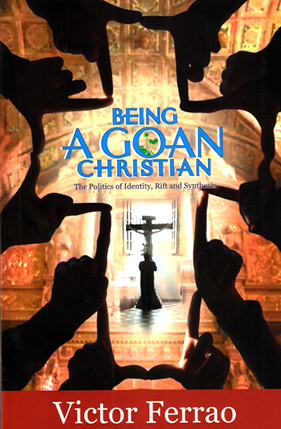
The abovementioned interview provides another perspective for those of us who are worried about the growing communalization in Goa to understand the problem. We should recognize that the predicament that the Muslims find themselves in is not very different from that which the Catholics in Goa experience. On the one hand the Catholic cultural practices informed and inflected by the Portuguese presence were and are used to define Goa to a larger Indian imagination (via the manner in which tourism is marketed, for instance), and on the other hand any political demands that are perceived to come from a Catholic location (though the reality may suggest otherwise) exposes Catholics in Goa to charges of being communal and anti-national. In other words, the loyalty of the Goan Catholic to Goa (as well as India) is held suspect, a point that Fr. Victor Ferrao makes in his Being a Goan Christian.

Recognizing the similar ways in which Muslims and Catholics have to negotiate a tricky dance with the working of the nation-state one can see how particular lines can or cannot be crossed by certain persons. Thus in September 2013 when the Chief Minister Manohar Parrikar had erroneously asserted that a Goan Catholic is culturally Hindu, it had resulted in a national controversy. Cut to 2014, when the Deputy Chief Minister, Francis D’Souza asserted that he is a “Christian-Hindu”, it also resulted in a controversy at the national level. But here is a twist that I would like to draw attention to: bowing to intense pressure and criticism, D’Souza retracted his statement and apologized for it, maintaining that it was his personal opinion and he was not wrong to make such a statement. Parrikar, on the other hand, did not withdraw his statement and neither did he apologize for it. It must be noted that D’Souza’s statement, in essence, is no different from Parrikar’s. The asymmetry that exists in the two incidents is clearly visible. An asymmetry that exists, I suspect, due to this selfsame ‘double bind’ of minority identity in India.

The controversy that D’Souza raked up was followed by predictable assertions of ‘Goanness’ and ‘Indianness’ on social media. Indeed some even went to the extent of suggesting that if we consider ourselves ‘humans’ first and foremost, it would be enough. Well, clearly it is not enough. Making such overarching, ‘national’ assertions only obscures the complexity of identity politics. In the case of Goa, the observable fact is that one cannot participate in Goan political, public, and cultural life by simply being Catholic; one has to also give in to certain notions of ‘Hinduness’.

Linking the predicament of Muslims in India to that of the Catholics in Goa may seem like a long shot to some. However, I would like to suggest that by juxtaposing the problems of the Muslims and Catholics with each other, one can broaden one’s understanding of how minority identity and the concomitant politics works in India. Though the comments referred to above were made in seemingly different contexts, yet recognizing the similarity of the politics and power structures that drive the visions behind them, can allow us to think about ourselves in new ways. The drive towards asserting one  identity, but remaining willfully blind to other identities – even suppressing them – will only allow inequalities to thrive.

Thanks to Shahrukh Alam and Rubina Jasani.
  
(First published in  O Heraldo, dt: 6 August, 2014)

Thursday, July 24, 2014

‘GUNAAJI’ AND THE OTHER ALLUSION


Over the last couple of weeks the Konkani film Gunaaji has been screening in some theaters in Goa and not wanting to miss it, I decided to watch it one evening. Two hours later, when I walked out of the theater I had an uneasy feeling about the movie. This column would like to reflect deeply on the feeling of unease that I experienced after viewing Gunaaji.

The film is based on a novella of the same name written by Pundalik Naik, recipient of the Sahitya Akademi award. Before it was published as a book in 1998, this novella had appeared in Konkani Bhasha Mandal’s annual magazine Konknni and was also serialized in the Sunday supplement of Rashtramat, both in 1998 itself. Thus one can conclude that this story has already enjoyed a fair share of circulation, even before it was made into a film. Knowing that generally films tend to depart from the plot of the book, I also decided to read Gunaaji before talking about my unease.

Gunaaji is a story about a cowherd living in a remote village of Goa, who gets selected to receive a national award for being the best raknno or cowherd in the country and about the journey he undertakes from his village to New Delhi to receive the award. The film is saturated with colour-rich images of a bucolic landscape, like the ones that gladden the hearts of any true-blooded Goan. The book as well as the movie has many funny and lovable moments, and in most places the film has remained faithful to the plot of the book.

But the places in which the plot of the movie departs from the book are very interesting to note. There are particularly two instances that need our attention. In the beginning of the book/film Gunaaji recounts an incident where he had stopped a cow from being taken for slaughter as it was not the right thing to do, and towards the end of the book, after receiving the award he makes a speech reiterating the same point. In both instances in the book there is nowhere a hint that a Catholic character is involved in the progression of the plot. However, in the film there are some obvious and not-so-obvious markers that allow one to understand that these point towards Catholic characters. In the first instance, the accent that is employed is enough to establish that it is a Catholic person who has purchased the cow for slaughter. In the second instance, after Gunaaji makes his point about stopping cow-slaughter, immediately the camera zooms-in on a “Shri. Melvin Pereira” who is seated on the dais of the awards ceremony in New Delhi and who seems visibly uneasy and embarrassed about what Gunaaji has just said.

Given the fact that Naik, the author of the book, was closely associated with the screenplay of the film, one has to ask the question why Catholic characters or markers of a Catholic person were incorporated in the film, whose original story had so little to do with any Catholic subjectivity? To go back to the book, there is only one place where the author consciously identifies a person as Catholic and that is when Gunaaji has to go through the airport security check, where the police officer is depicted as Catholic. But this instance is in no way related to the larger plot.

So why have I felt uneasy with the way the abovementioned two instances from the story by Naik are portrayed in the film? The reason lies in the manner in which cow-slaughter (thus beef-eating) and Catholics are juxtaposed in the film, whether wittingly or not. It is common knowledge that beef is consumed by Catholics and Muslims in Goa, and it is also common knowledge that of late the selling and consumption of beef in public have been encountering opposition. Against this background how do we understand a story that was published in 1998 and made into a film in 2014? What one can immediately suggest is that the politics of cow-slaughter, beef-eating, and hurt Hindu sensibilities is not a recent one for either Goa or India. It was a process that was set in motion much before right-wing groups started creating a fuss in Goa around beef-eating, western sanskriti, Portuguese colonialism, Catholic dietary, dress and other cultural practices.

This column is not suggesting that Naik is at the forefront of – or championing – anti-minority politics and rhetoric. But his uncritical conformity (knowingly or not) to certain given ideas and ideals within Indian national life that have become normalized, such as (for instance) not seriously considering the minority perspective, certainly allows us to question his Gunaaji. The film may seem innocent (and perhaps it is in many places) but the subtle and not-so-subtle codes that are found in the movie reminds the Catholic (and other minority groups) that their cultures and being is not always allowed to co-exist with the dominant, majoritarian cultures. Indeed, it has to remain subservient to it. Naik may have not created the monster, but he has certainly fed it. 


So is Gunaaji a good movie? This column would not like to sit on judgment on this issue. Neither was this the intent of my column. The point I would rather like to forward is that the book and the film are not isolated incidents. There is something that operates on a deeper and insidious level that can escape the best of us. The trend to de-legitimize non-Hindu cultures in India has a long history of more than a hundred years. If we are not aware of this history then we shall only further a brand of politics that distances minority groups from mainstream discourses and politics.

(First published in  O Heraldo, dt: 24 July, 2014)

Wednesday, July 9, 2014

WHEELS WITHIN WHEELS: THE AGENDAS OF ‘SECULARISM’


With Pramod Muthalik of the Sri Rama Sene threatening to set-up his base in Goa, the last two weeks have seen spirited debates about the place of ‘secularism’ and ‘communalism’ in the public sphere of Goa. To add to the conundrum, Goans have been at the receiving end for their own elected representatives making sexist and anti-women remarks, with very little done to curb the Hindu right. This is not the first time that such remarks have been made that have blatantly abused the dignity of the minorities and women living in Goa. As such, asking the same questions or reacting in the same manner as done in the past does little good. While it is certainly true that such tendencies should be vehemently protested and opposed, this column would like to suggest that a rather critical look at the history and politics of Indian secularism would provide fresh perspective into the problem.

Since the Indian nation-state was founded on secular ideals, it is important for us to know how this came about. The present understanding of ‘secularism’ is an ahistorical and timeless one. In other words, a term like ‘secularism’ is believed to have a universal and unchanging meaning across time and political realities. It is this very fact that Shabnum Tejani in her book Indian Secularism: A Social and Intellectual History, 1890-1950 points out. If today the binary opposition of ‘secular’ with ‘communal’ is well established and entrenched in our minds, Tejani demonstrates that in a longer historical context this was not the case. She notes that between the years from 1928 and 1931, a broad range of political opinion considered Indian nationalism as a “unity of the (Hindu) majority” with any challenge to this understanding by marginalized non-Hindu and Dalit communities being branded as communal.

Shifting the focus from a concern of religion to a concern of caste, the abovementioned study has shown that the creation of a liberal democracy in India was shaped by an imperative to create a “definition of a democratic majority as broadly Hindu”. Tejani also states that the reason why ‘secularism’ became important in Indian nationalist thought was due to the fact that “the architects of the new nation-state – overwhelmingly middle-class, upper-caste Hindu men – saw it as providing a counterpoint to challenges posed from the margins by Muslim and Dalit communities”.

Immediately, what we can recognize is that ‘secularism’ as an ideology was used as a bulwark against sharing power and privilege with the minority and disempowered groups. The problem of ‘communalism’ and the apparent challenge it poses to ‘secular’ ideals is not just confined to hard-line right-wing persons like Pramod Muthalik. Part of the problem also lies with secular-liberal Hindus in the context of how they understand ‘secularism’ and its place in the Indian identity and how these two ideas are uncritically conflated. For many secular Hindus (as well as Christians) the ideal of ‘secularism’ is only threatened when right-wing groups create a ruckus. The inadequacy of ‘secularism’ as an ideal as well as an analytical category is seen when anti-women and anti-minority remarks are made by persons who are not perceived to be of the extreme right.

Take the recent comments of Sudin Dhavalikar, the PWD minister in Manohar Parrikar’s cabinet. His comments about pubs, drinking, and short skirts not being compatible with Indian culture, were largely seen as sexist and anti-women. The point I am trying to make is that such comments are not just anti-women, they are also anti-minority. How? In Goa, Catholic women wear skirts and consumption of alcohol (along with meat such as beef and pork) is a necessary component in celebration in all Catholic households, indeed their everyday diet as well. Why hasn’t this being perceived as going against the tenets of Indian secularism?

Dhavalikar’s case and the reaction to it is a recent one. One can also excavate the case of the Romi script and hold it up to the assertions of ‘secularism’. When the demand for the Romi script was made, Goan Catholics were seen as anti-national, their demand was considered as “emotional” and hence irrational, and the demand was viewed as a very threat to the ‘secular’ fabric and unity of Goa. The Goa government is yet to recognize Konkani in the Romi script as an official language, despite the fact that Goan Catholics are not the only users of the Romi script in Goa. Why isn’t the denial of the Romi script to the people of Goa a problem for ‘secularism’? Why don’t we beat our chests and cry hoarse about the loss of ‘secular’ ideals? It must be noted that whether it is Muthalik, or Dhavalikar, or the Romi issue, or even the Medium of Instruction fiasco, what is threatened is either Indian culture or the unity of Goa/India or both.


If the ideology of ‘secularism’ worked as a tool to obstruct the sharing of power with Muslim and Dalit groups in the context of the Indian nationalist movement, I would suggest that a similar situation occurs in Goa as well, wherein power is not adequately shared with groups such as Catholics and Muslims in Goa. That Hindus are a majority in Goa and control most positions and institutions of power is a fact that gets erased when ‘secularism’ is debated in the Goan public sphere. If we are really serious about maintaining peace in Goan society, power needs to be shared with minority groups, and greater representation needs to be granted to marginalized groups across religion, caste, and class in Goan society and politics (and not just confined to electoral representation). It is not just enough to throw out Muthalik and his ilk. What do we do about Hindu majoritarianism that has been a part of Indian ‘secularism’ for such a long time?

See also 'Not Skirts or Bikinis, but the very Idea of Goa is at Stake' by Rochelle Pinto here

(First published in  O Heraldo, dt: 9 July, 2014)