Wednesday, November 26, 2014

ST. FRANCIS XAVIER AND THE HEALTH OF THE PORTUGUESE EMPIRE


The symbolic importance of St. Francis Xavier to the people of Goa need not be repeated every time we discuss his miracles, or every ten years when his mortal remains are thrown open for public veneration and display. Venerated as Goencho Saib, the importance of his incorruptible body for the colonial as well as the post-colonial administration of Goa (for purposes of tourism) can also be clearly seen.

His importance as someone who watches over Goa, has clearly outlived the colonial times. As I write this column, the preparations for this year’s Exposition seem to be slowly progressing: hopefully, from Old Goa looking like a “war zone”, in the words of a friend, to being orderly and organized. While many of the stories surrounding the miracles of Xavier are fairly commonly known in Goa with more emphasis placed on the religious and spiritual efficacy, they are rarely told as stories that had a particular historical context. What else, other than the healing and efficacious powers of the saint, can these miracles tell us?

While dwelling upon the symbolic importance of Xavier through time, let me refer to Pamila Gupta’s essay, “‘Signs of Wonder’: The Postmortem Travels of Francis Xavier in the Indian Ocean,” to locate the miraculous powers of Xavier in a particular historical context. Through her reading of biographies and/or hagiographies of Xavier written by his fellow Jesuits, largely around the time when the drive for his canonization was gaining momentum, Gupta argues that these ‘signs of wonder’ or miracles (in common parlance) associated with the remains of Xavier tell us about alternate networks of circulation of trade and colonialism in Portuguese Asia.  As such these networks of circulation and stories associated with Xavier’s incorruptible body were not directly linked to imperialism and colonialism emerging from European centers. Rather, they opened up new experiences of colonialism through travel by sea, Christianization, and the patterns of monsoon winds.

Gupta broadens her field of analysis to view Xavier’s incorruptible body as simultaneously “a commodity, a gift, a relic, a person, and a thing” that allows her to see how the mortal remains were treated in Sancian, Malacca, and Goa against the backdrop of the reach of Portuguese commercial and political power, and the success of Jesuit missionary activities in these regions. These three places are not simply associated with the mortal remains in Xavier’s postmortem travels, but they were also actively part of his travels and missionary activities while he was alive.

After Xavier’s death in Sancian, his mortal remains could not be fully appreciated there “because of the limits of Portuguese statehood – Sancian was less a colonial outpost than a temporary safe haven for commercial traffic at this time” that necessitated the transfer of his incorruptible body to Malacca. Though, Xavier’s mortal remains did show miraculous signs in Sancian, the Portuguese settlers there failed to honor him with a proper burial. Moreover, though there was an absence of a “sustained church and state activity”, Xavier still exhibited numerous signs of incorruptness and sanctity.

In Malacca, however, Xavier’s mortal remains were received with a greater honour. His mortal remains were taken out in a procession in that city, where immediately some people were healed. Xavier also rid Malacca of an ongoing plague, his sanctity “rubbing off onto this colonial outpost [that is, Malacca] in a way reminiscent of European relics which often acted to protect and secure its new community”. But during the five months that Xavier’s mortal remains were kept in Malacca, they were damaged yet again due to the grave being too small. Moreover, the burial in Malacca happens in the absence of his fellow Jesuits (like in Sancian) and the Governor of Malacca, suggesting an absence of the powers of the church and the state. Gupta states that “in the end, Xavier’s poor treatment during his internment here exposes the vulnerabilities of church, state, and [Portuguese] public, thus prompting his subsequent removal from Malacca”.

The city of Goa being the capital of the Portuguese presence in Asia, and a place whose importance is not just confined to the political and commercial, but also encompasses the symbolic, receives the would-be saint with much honour and celebration. Gupta makes a fine observation in this regard: “Unlike both Sancian and Malacca, where his corpse was intermittently valued and poorly treated, Xavier is fully appreciated in Goa. Moreover, the elaborately ritualized reception of Xavier’s holy relic in Velha Goa will be unlike either of the events that were staged in Sancian and Malacca; that Xavier intercedes in exposing a perfect balance of church, state, and public at this valued site also explains why his postmortem travels end here”.

If we try to reflect on Gupta’s view of the telling of Xavier’s remarkable story of postmortem travels as an act that bestows a different value on the object of the story – Xavier and his incorruptible body – we can appreciate how Xavier was simply not a missionary who wanted to convert people to Christianity, but as in life and death somebody who ‘performed’ miracles and exhibited ‘signs of wonder’ within a specific and definite historical context. In life and in death, Xavier emerges as a person who struggled against the Portuguese administration in Asia. Like Xavier, the Portuguese administration also struggled to maintain the health of its Empire.

Miracles do happen – perhaps even on an everyday basis – but it is important to also see them within a historical framework and not outside of it.

(First published in  O Heraldo, dt: 26 November, 2014)

Wednesday, November 12, 2014

FOOTBALL AND ALL THAT TRASH


While the performance of FC Goa in the inaugural Indian Super League on the pitch is offering little cheer to its fans in Goa, off the pitch these fans seem to have won many hearts. Reference is made to the cleaning drive by a handful of young fans which began soon after FC Goa’s second home game against Atlético de Kolkata and who posted pictures of their activities online. The post having gone viral on Facebook, the next home game against Delhi Dynamos saw a crowd of more than fifty joining in the efforts to clean the Fatorda stadium of the trash. While some linked it to the story of the efforts of Japanese fans cleaning up after the game during the World Cup in Brazil, and the ‘Swachh Bharat’ campaign recently launched, this ‘shot’ at cleaning received good press coverage in Goa as well as national and online portals.

Amongst many of the photos that were posted online, there is one that particularly caught my eye. This was a picture showing a large portion of the trash that was accumulated. Consisting largely of FC Goa banners and festoons, and soft drink cups, this picture gave a sense of how much trash was generated at Fatorda during the match against Delhi Dynamos. This image will be the basis on which I shall proceed in my reflections. While it is no doubt commendable and laudable that a handful of youngsters (like me) have taken leadership and indeed made others also join them in their efforts for cleanliness, the celebration  and reassurances that followed the drive tend to overlook crucial issues that are very much related to the issue of cleanliness and civic sense. This column would like to draw attention to some of these issues in the hope that a better understanding may be achieved.

What I would like to point out is that such an act of individual sacrifices, though useful in some ways, only goes to reassure us that something is being done to address a larger systemic problem. The issue of garbage is not simply about one person littering and hence the problem cannot be approached from a position of guilt: I litter therefore I am responsible for my trash and also that of others. The systemic problem that I refer to can best be represented by the picture that I discussed above. The question that needs to be asked generally of cleaning drives is where will all this trash go? It is by asking such a question that we can confront the obstinate problem of effective garbage management and disposal. The reassurances that such cleaning drives allow us to feel, now are exposed for the problems that they hold within them.

As with many of the cleanliness drives, including the ‘Swachh Bharat’ campaign, what missed the mark yet again were the people or workers who actually dispose our garbage. To their credit, the youngsters at Fatorda did try to empathize with the plight of the workers there, after they realized how backbreaking and thankless their job was. The stark reality is that these workers are ill-paid. Most likely the workers engaged in managing garbage are hired on contract basis which allows for the most vulgar flouting of labour laws. The worst form of such violations can be seen in the manner in which manual scavenging is allowed with impunity in India. Ill-paid and stigmatized due to the caste-based occupation, these workers sometimes pay a hefty price, either with their actual lives, or through life-long suffering from diseases such as TB. So while we applaud the persons who took it upon themselves to clean the stadium at Fatorda, the debate never goes any further to secure the rights of workers who actually have to deal with trash on a daily basis.

Apart from the game against Delhi Dynamos, the amount of trash also generated after the game against Atlético de Kolkata was sizeable, “at least half a truck full of garbage” in the words of one of the members of this group. This brings me to the next issue of how the very things that we enjoy – largely driven by an excessively consumerist logic – itself is generating so much trash. Rather than thinking of ways to clean the trash that gets generated everyday (though it is also very important), one needs to also seriously think about how to reduce the very generation of this trash on a daily basis. Ultimately, no matter how much we clean our houses, our neighbourhoods, our streets, and our stadiums, there is absolutely no mechanism to deal with the accumulated trash except to dump it in a garbage dump to rot.

This should ideally raise the question of what types or kinds of actions taken in relation to the problem of garbage should reassure us as a society. To be honest, very little has been done.  The problem is that the debate in Goa hardly ever goes beyond demanding cleanliness either from the individual or the civic authorities, or blaming the defunct garbage disposal technology in various landfills in Goa. We fail to recognize that this systemic malaise has a variety of people involved it in, not confined to a middle-class, urban, and upper-caste demographic. If our society feels that an occasional, well-intentioned act of cleaning by people who are not engaged in the occupation of cleaning be celebrated, this is adding insult to injury to the millions who toil everyday without getting any recognition.

In trying to attempt something well-intentioned like cleaning the stadium at Fatorda, there is the fear that we might end up understanding the problem divorced from its specific context and realities. Rather than suggesting that some kind of high-end machinery be immediately set up to deal with the systemic failures of garbage management, we should first think about putting in place worker-friendly labour laws. Laws that are sensitive to issues of caste, gender, health care, insurance, and other benefits for people engaged in garbage disposal and management. Perhaps the good folks who lent a hand to the workers at Fatorda could also lend their voice to this.

(First published in  O Heraldo, dt: 12 November, 2014)

Tuesday, October 28, 2014

GOAN HERITAGE AND MUSEUMS OF INNOCENCE


A number of Goans tend to be very proud of their cultural heritage and traditions. With the changing political, economic, social, and demographic scenarios in Goa as well as across the globe, fears are being increasingly expressed that the cherished traditional ways of Goan life will be lost and the future generation would have no knowledge of their cultural heritage.

Of the many responses to such anxieties of losing a cherished way of life, one is to go back to these traditions and celebrate them anew, by organizing public displays of old Goan traditions, food, and cultural practices. Enthusiasts of the villages of Soccoro and Carmona recently organized the Patoianchem Fest and Ekvotacho Dis respectively in the month of August. These festivals were also given rave reviews in the media. From what was reported and broadcast on social networking sites like Facebook, it is noticed that these festivals, while concerned with showcasing and preserving Goan traditions, were also deeply affected by ecological concerns affecting Goa.


From the photos available online of the festival at Soccoro, one can observe that the organizers had managed to get people engaged in traditional occupations such as making brooms, peeling coconuts, and even massaging infants with coconut oil to create a live demonstration or tableaux. Goan food and games were also featured. What can be suggested is that a ‘makeshift museum’ was created as part of these celebrations. This is not the only time we create museums when talking about Goan heritage and culture, but many of the discussions about Goan culture are centered around preserving this culture in its pristine authenticity and purity, the way objects of art are preserved in a museum.

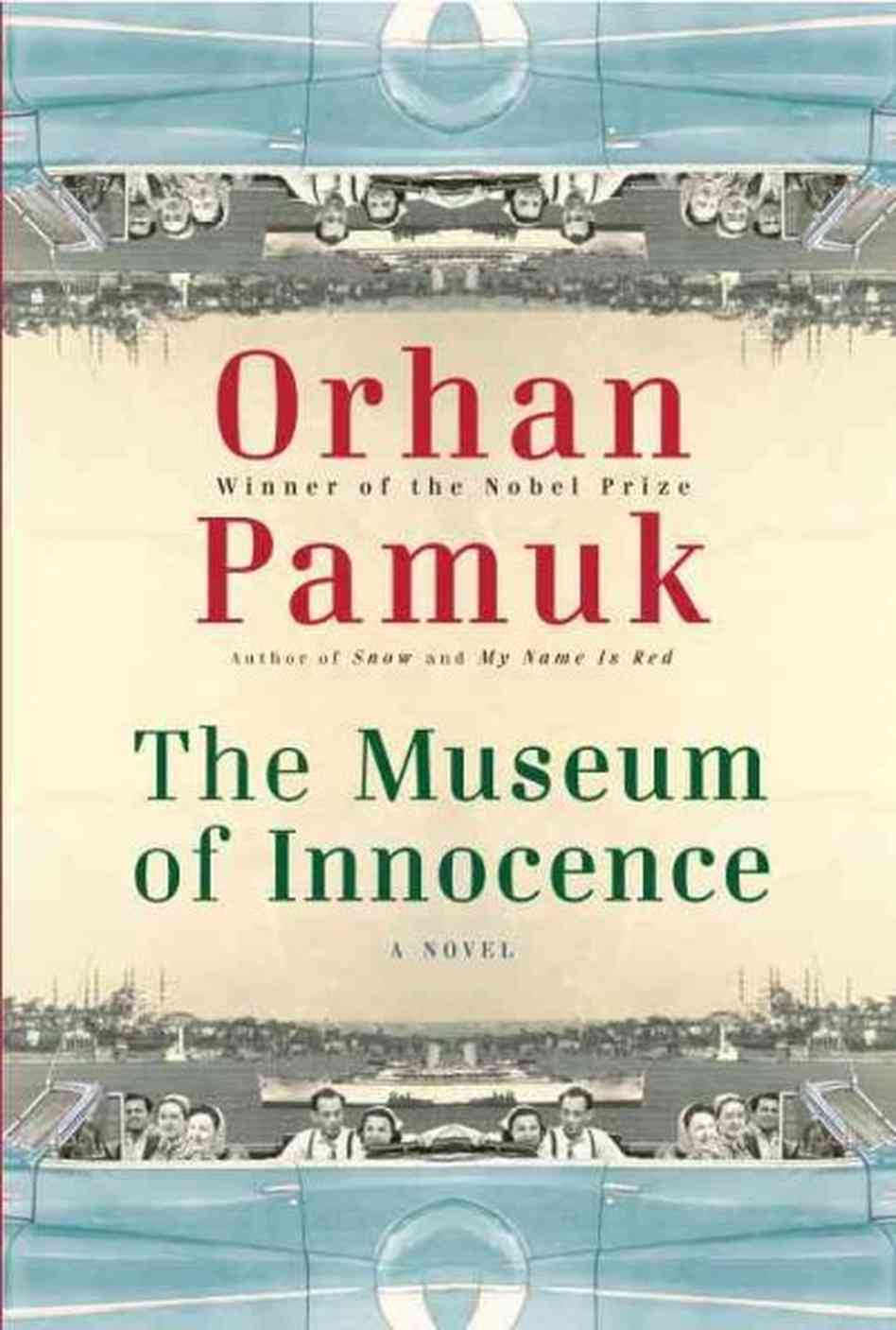
Orhan Pamuk’s novel The Museum of Innocence (2009), could serve as a useful metaphor for thinking about ‘museums’ – whether makeshift or otherwise – and the seemingly innocent enterprise of preserving Goan culture and heritage.

Pamuk’s novel, set in Istanbul, is about a love affair that a rich, bourgeois Kemal has with a breathtakingly beautiful shop-girl, Füsun, who also happens to be his distant cousin. Pamuk portrays the conflicts within Turkish high society, of the need to be modern like Western Europe and also balance the demands of a tradition inflected by Islam. Since Kemal is engaged to another girl who is his class- and social-equal, his love for Füsun pretty soon runs into troubled waters, just as his affair with Füsun also leads to the break-up of his engagement.

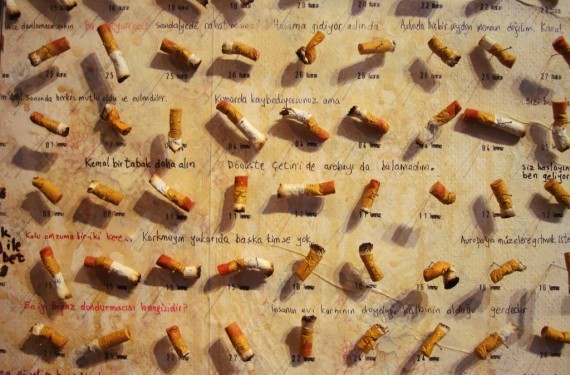
Love soon turns into an obsession, with Kemal desperately clinging to any small thing that Füsun used or touched, finding solace in them for his aching heart. In fact, his obsession goes so far that he even collects the cigarette butts that Füsun had smoked and other trinkets that she may have touched, and so great is his longing, he even starts stealing them. Füsun knows exactly the price she has paid for her love for Kemal, by keeping her dreams and aspirations of being an actress on hold. Kemal loses Füsun under tragic circumstances and decides to establish a museum in her honour and in memory of the love that they had shared, by displaying the seemingly insignificant items that he had collected over all those years.

Kemal’s museum project is not solely to commemorate Füsun, for he also has a message for the Turkish people. He says, “With my museum I want to teach not just the Turkish people but all the people of the world to take pride in the lives they live. I’ve traveled all over, and I’ve seen it with my own eyes: While the West takes pride in itself, most of the rest of the world lives in shame. But if the objects that bring us shame are displayed in a museum, they are immediately transformed into possessions in which to take pride.”

In the Goan scenario, are we not battling the same sort of problems that the characters in Pamuk’s novel deal with? Are we not also under undue pressure from the demands of tradition and modernity, albeit of a different type? Are not many of the Goan traditions also associated with shame? The argument that I would like to make is that it is because of multifarious pressures that are exerted on the Goan from various directions that the celebration of Goan traditions – indeed taking pride in them – becomes necessary. Perhaps, it is here that we need to ask ourselves: what is it that we are celebrating?

The problem is that these museums contain a selective display of cultural artifacts that we are proud of. But what they can hide is the fact that many of these traditional occupations and practices are based on caste; that those engaged in these occupations even today are not paid more than a pittance; that in trying to celebrate certain cultural practices we might forget the real people who toil behind them. While not being against the idea of celebrating Goan culture for a better Goan identity, a case needs to be made that the welfare of the Goan must be given priority before any Goan traditions and cultural practices.

Thus, taking cultural practices and people out of their specific contexts can mask certain unpalatable realties that can challenge our very understanding of Goanness and Goan culture. This masking prevents us from understanding why these practices were given up in the first place. Füsun may have been commemorated in a museum, but she suffered in real life. The problem with museums that take into consideration only a part of reality, is that they fail to look at the suffering and pain hidden behind commemorations of pride.

Photos: Joel D'Souza and Socorro Socio-Art and Cultural Association.

(First published in  O Heraldo, dt: 29 October, 2014)

Wednesday, October 15, 2014

READING REGINALD: BETWEEN “VENICE” AND “RUSSIA”


During a recent visit to the Central Library in Panjim, I stumbled upon an entry in the database titled “Theatr Neketr Fuddarachem” authored by “Reginaldo Fernandes”. Knowing that generally Reginald Fernandes used an anglicized version of his name in most of his romanses, I decided to make sure if it was the same Reginald that I was interested in. The book procured for me was a small, pocket-sized one with no more than 70 pages which had badly yellowed and had become brittle as well. This book was published from Bombay in 1936.

1936? There hung a question in my mind: was the author the same Reginald Fernandes who wrote romanses from the 1950s onwards? To be moderately sure about this, his date of birth needed to be ascertained. Help came in from the editor of Gulab and The Goan Review Fausto V. da Costa who informed me that Reginald was born on June 14, 1914. This meant that when Reginald had authored and published this tiatr he was only around 22 years old. This means that if Reginald’s literary history is to be charted we have to go back to as early as 1936.

Reading this text no doubt raises more issues and questions about this genre of Konkani literature. This is because, first and foremost, when views are being expressed that tiatrists do not publish and document their scripts, here was someone quite young and already printing his works. Was he an exception? Indeed, Reginald seems to be the exception as even today a lot needs to be done as far as documenting the scripts of tiatr. Secondly, why was a young writer publishing his script? What were the conditions and factors that allowed such a person like Reginald to publish his work? Is it the only tiatr that he wrote and/or published? And if so why did he shift to writing romanses later in his life? Suffice it to say that these are questions for the future, for our purpose in Reading Reginald is quite different: to see what unfolds in his tiatr.

The story revolves around two young lovers Boby and Flora. In keeping with many of his writings in later times, Reginald portrays these two lovers as not equal to each other. In the very first scene or the opening act set in a garden, Boby tells Flora that she is from “Venice” and he is from “Russia”. The reference is at once enigmatic as it is revealing. What it immediately reveals is that because they are not same socially or economically, the young lovers will face opposition, and indeed later in the tiatr this is exactly what happens. The reason why this reference is enigmatic is because it is not clear from where Reginald is taking his inspiration from. Immediately, what comes to one’s mind, considering the fact that many Romi writers would adapt from English and other literatures, is some Shakespearian influence. But as one reads further, this reference never gains any clarity as far as its provenance is concerned.

Considering the fact that towards the climax of the tiatr, the characters engage in sword fights, the hero of the tiatr being thrown in jail and his lover entering the prison dressed like a man to free the hero, it would not be surprising that detailed study would reveal a mixture or medley of influences that is not just confined to Shakespearian drama. Thus, the act of Reading Reginald involves not just locating the provenance of the influences on the writer, but also acknowledging the influences of European literatures as legitimate in the development and progress of Konkani literature.

The story is simple: two young lovers, with the girl hailing from an economically well-off family. There is a third person, Alvaro, who is jealous of the love of Boby and Flora and tries every scheme in the book to separate them, and thereby inherit the wealth through marriage to Flora. If we would like to know more about the influences and thought process of Reginald and try to link them to his later writings, then I think this tiatr that he wrote can be used as a starting point considering the fact that he was just 22 years old when he wrote it.

Another reason why Neketr Fuddarachem is a fascinating text is because not only does it include the cantaram (songs) that accompanied the tiatr but also the musical notations. So Reginald is not just an able writer, a composer, but also a musician and all these facets of his personality come together in this text. Most of the dialogues rhyme, perhaps to provide the necessary dramatic or theatric effects. Such texts wherein prose, dialogues, cantaram, and music come together can also point to us alternate ways in which to conceptualize the nature and function of Konkani writings in the Roman script. More so because if one compares how scenes or podd’ddes change in a tiatr, similarly in Reginald’s romanses he deliberately makes the reader know that the focus of the story is being shifted to some other aspect and/or location of the story. So, a Reginald romans, in a sense, also works like a tiatr.

I admit that I have not been able to give a definite answer to the meaning of the reference to “Venice” and “Russia”. However, by reflecting on such references in Romi writings one can come up with new ways to engage with Konkani and Goan culture.

For more Reading Reginald, click here.

(First published in  O Heraldo, dt: 15 October, 2014)